In China, funeral culture has existed for a long time, encompassing the ideas and concepts of three major sects: Confucianism, Taoism and Buddhism. In addition to the common burial and cremation, people also practice hanging coffins, burial in cliffs, burial in trees.
If the deceased is buried in the traditional way, before lifting the coffin out of the funeral home or private home to bury it in the ground, the Chinese will "break the pot".
The ancients believed that after death, the dead had the same life as the living. Therefore, when someone in the family died, the clay pot would be broken and "sent" to the other side so that the deceased could continue to use it as a cooking and eating utensil.
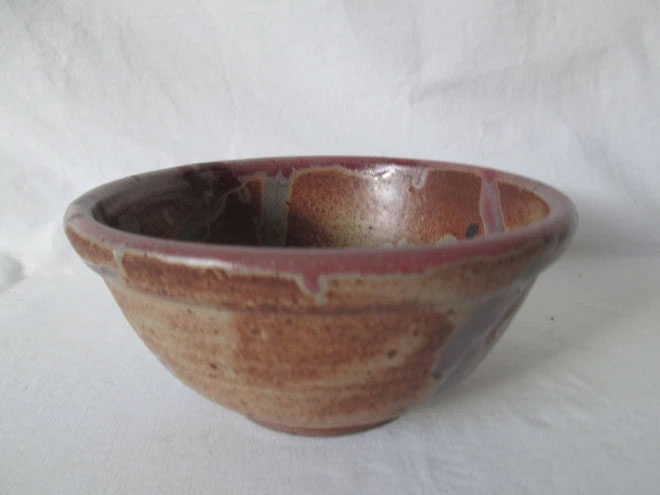
Earthen pots are often used in this ritual. (Source: Baidu).
Another theory suggests that the origin of this custom is related to Fan Li , a man with excellent pottery skills. He passed on this pottery technique to the people and helped the local people escape poverty.
Before he died, he left behind an old pot that he made himself and left it to a young man. When burying Pham Lai, the young man broke the pot so that it would follow him forever. From then on, people had the custom of "breaking pots".
The Chinese also have a saying: "Suì (岁) is a wish for eternal peace". In Chinese, the word for broken (碎) is pronounced as "suì", which is homophonous with the word for age (岁). Therefore, the pot is broken into as many pieces as possible. This writing is also known as "yin-yang pot, tang-face pot".
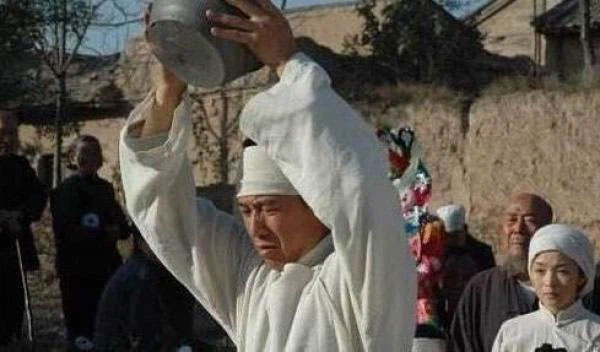
The ritual of breaking pots helps to show the care and filial piety of children and grandchildren. (Source: Baidu).
The "pot-breaking" ritual will be performed by the eldest son. If the eldest son is unfortunately deceased, the eldest grandson (son of the eldest son) will "break the pot".
If there is no eldest son or eldest grandson, this will be given to the second son, or in case there is no son, the eldest daughter will be the one to personally do it.
For the Chinese, "breaking the pot" is the final care and filial piety that descendants show to the deceased before their coffin is buried.