Current estimates of the total damage caused by feral pigs in the United States are around $2.5 billion. Over $100 million is spent each year trying to reduce their numbers, but the damage remains high and appears to be increasing.
Domestic pigs are often considered pink in color, many of them are extremely cute in appearance, even the small sized ones are kept as pets.
However, when those same pigs escape from human-controlled areas and return to the wild, things get much more serious. Feral pigs (sometimes feral pigs, hybrids between domestic pigs and wild pigs) are not just a nuisance. They are also extremely dangerous, causing billions of dollars in damage to the United States each year.
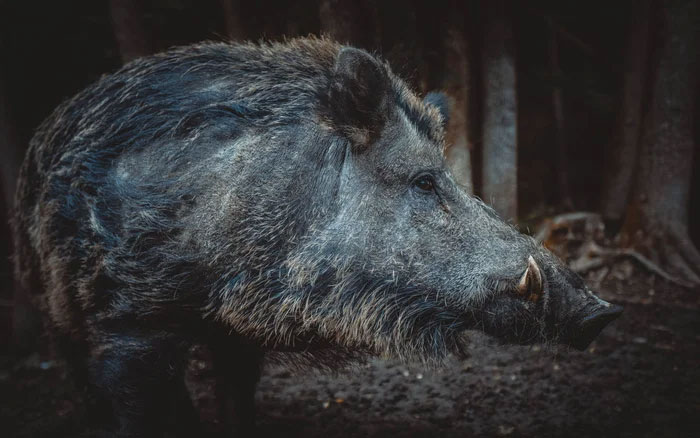
Pigs are divided into wild boars and domestic pigs , domestic pigs are wild pigs domesticated by humans, belonging to a subspecies of wild boar. They were first domesticated by the Chinese in 4,900 BC, but there are also studies suggesting that West Asian wild boars were domesticated from 6,000 to 7,000 BC.
Wild pigs in North America
In the past, there were no pigs in America and they followed the Europeans to America. They were released on ships and sometimes when they reached the port, the wild pigs and domestic pigs ran away and went into the foothills, then these domestic pigs gradually became American wild pigs.
The American wild boar is a member of the Eurasian wild boar family . Columbus first brought eight domestic pigs to the Caribbean in 1493 to meet future food needs. Spanish explorer Hernando de Soto later brought thirteen domestic and wild pigs to Florida in 1539.
Since then, domestic pigs and wild boars have been introduced to the Americas sporadically. Beginning in 1890, more Eurasian wild boars and Russian wild boars were also brought to the United States by ship for hunting purposes.
Since then, feral pig populations have spread to most states in the United States and caused severe damage to all types of agricultural crops and infrastructure.
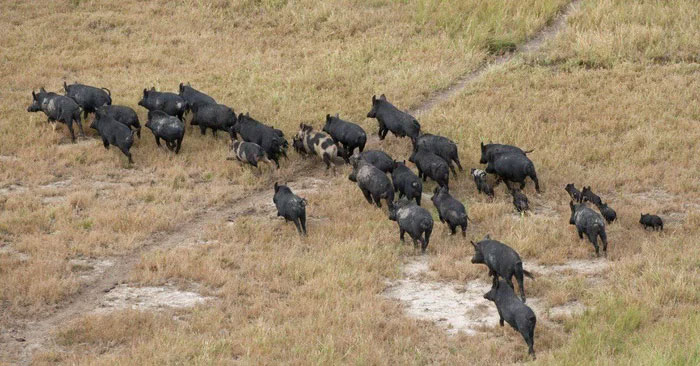
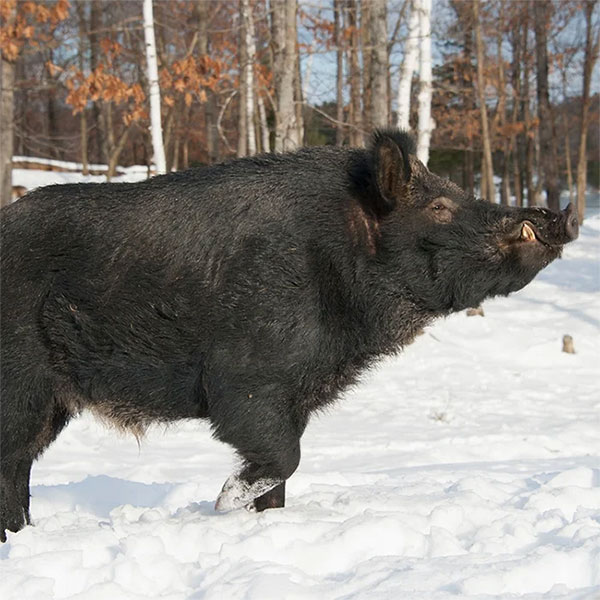
Wild pigs in the US have narrow and deep eyes, long and wide ears, thick and short necks, each can weigh up to 600 to 700kg, with the head alone accounting for 1/3 of the total body length. Therefore, they are also described as a real "big-headed monster" . In addition, they can move quickly, with a maximum running speed of 40km/h.
According to the USDA: "Wild pigs can reproduce faster than any other large mammal; females begin breeding at about 8 months of age and can have two litters of 4–12 piglets every 12–15 months."
Currently, the feral swine population in the United States is between 6 and 9 million, and they cause problems on all levels. These pigs cause billions of dollars in property and agricultural damage each year in the United States, largely due to the way they forage .
Feral pigs forage by digging into the soil with their snouts and tusks, which can cause serious ecological damage to native wildlife and plant root systems will also be disrupted by their foraging activities.
In addition to crop and environmental damage, they are also potential hosts for at least 34 pathogens that can be transmitted to livestock, wildlife and humans.
In 2013, the 36-hectare Willow Wild Cemetery in Texas was severely damaged, with grass uprooted, soil dug up, and tombstones cracked, and none other than wild pigs were responsible.
Estimated damage
Current estimates of the total damage caused by feral pigs to the United States are around $2.5 billion. Each year, more than $100 million is spent trying to reduce the numbers, but the damage remains high and appears to be increasing.
For example, Georgia farmer Adam McLendon has about 8,000 acres of farmland devoted primarily to peanuts, corn, and cotton. Every year for the past 15 years, McLendon has estimated at least $100,000 in costs related to feral pigs on his property alone. When the pigs find a crop field, they dig up depressions, which humans then need to fill in and level before more crops can be planted.
The problem is so big that there are government programs dedicated to dealing with feral pigs. For example, the APHIS National Feral Swine Damage Management Program was created in 2014 to try to reduce the damage. The program hopes to reduce the number and range of feral pig populations while also monitoring them nationwide.
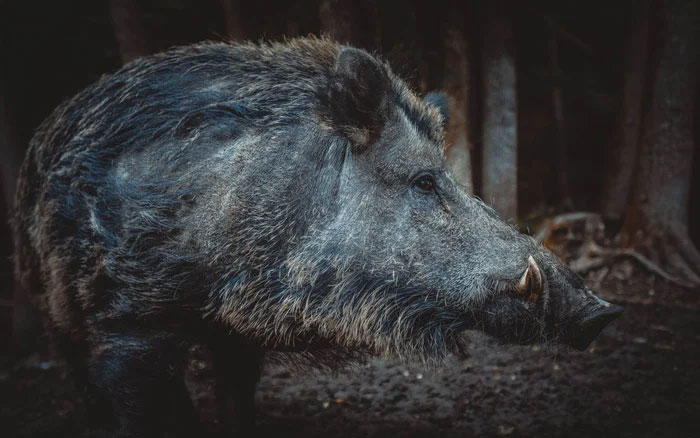
Wild pigs carry at least 30 pathogens and 37 parasites, some of which can be directly life-threatening. For example, in the infamous 2006 'tainted spinach' outbreak in the US, 205 people in 26 states and Canada were infected with E. coli, three of whom died. Research showed that pigs themselves had carried the deadly bacteria to spinach fields in California, and the factory used them to produce 42,000 bags of ready-to-eat spinach that made many people sick after eating it.
When it comes to direct contact with wild pigs, they can be extremely dangerous. After many generations of living in the wild, wild pigs have developed sharp fangs and unpredictable behavior, especially when humans are around.
In fact, they are known to be very aggressive towards humans and livestock, even when they are not necessarily cornered. Additionally, feral pigs can cause car crashes, causing damage to cars and the people inside them, while the diseases they carry can be spread through water or crops. There have been more than 100 feral pig attacks on humans in the United States since records began in 1825.