Cicadas, beetles with distinctive chirping sounds, are often associated with hot summer days. However, one strange thing that many people wonder about is why some cicadas only emerge every 17 years?
Cicadas spend 99.5% of their lives underground. Most live in large colonies underground for years. However, there are a few species that stay underground and only emerge once every 13 or 17 years - the Magicicada cicadas , which include three main species: Magicicada septendecim, Magicicada cassini, and Magicicada septendecula. They live mainly in eastern North America.

Magicicada cicadas spend a long underground larval stage, which can last up to 17 years (or 13 years), before emerging above ground to molt, mate, and reproduce. Compared to common cicadas, Magicicada are larger.
In fact, not all cicadas live and molt in cycles. Some species are annuals, emerging every summer.
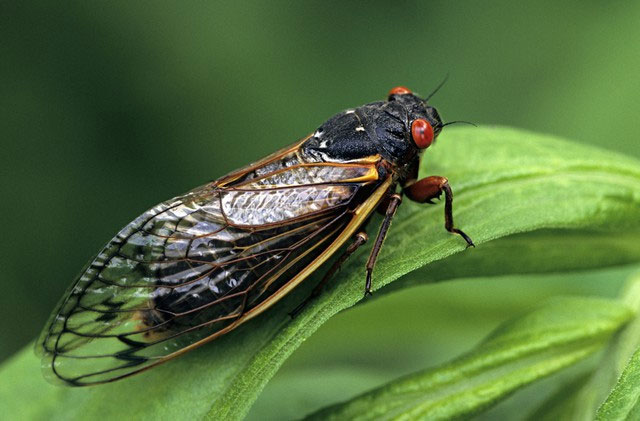
The most distinctive feature of Magicicada cicadas is their long life cycle of 13 or 17 years. Their larval stage is completely underground, sucking sap from plants to grow. After completing the larval stage, they emerge to the surface, molt, and spend a short adult stage of just a few weeks mating and reproducing. The loud chirping of 17-year cicadas can be a nuisance to humans, especially at night.
In 1907, entomologist Charles Lester Marlatt studied different broods of cicadas in the United States, noting the length of their life cycles. These broods could number in the millions—another part of the cicada's evolutionary strategy.
Some have more than 1.5 million individuals per acre. Once they start to emerge from the ground, they become easy prey for reptiles, birds, cats, even squirrels.
So the cicadas do something pretty simple: they overwhelm these predators with numbers. This is a survival trait called predator satiety, and it basically means there are so many cicadas that the predators can't eat them all.

Magicicada cicadas are typically larger than common cicadas. They are black or brown with orange or red stripes, while common cicadas can be a variety of colors, including green, brown, and black. Magicicada cicadas' calls are typically louder and higher-pitched than those of common cicadas. Overall, Magicicada cicadas and common cicadas are two different species of insects with distinct characteristics and behaviors. The unique 17-year life cycle and specific habitat make Magicicada cicadas a unique species that has attracted the attention of scientists and the public.
Contrary to popular belief, cicadas do not hibernate underground and are very active. As wingless nymphs, they tunnel and travel, feeding on xylem from tree roots. They mostly live within 2 ft (61 cm) of the surface, moving deeper and feeding on thicker roots as they mature.
However, cicadas cannot get all the nutrients they need from tree roots. They also rely on symbiotic bacteria to provide essential vitamins and nutrients in exchange for some of the cicada's energy.
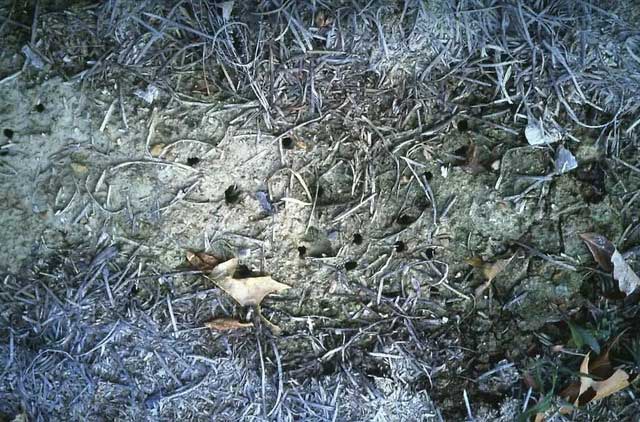
When cicada larvae burrow underground, they help loosen the soil and promote the decomposition of fallen leaves, helping plants absorb nutrients better. Magicicada cicadas play an important role in controlling other insect populations, helping to maintain ecological balance in deciduous forest ecosystems.
The exact mechanisms that cause cicadas to emerge simultaneously after 17 years are not fully understood, but researchers believe it involves a combination of hormonal changes triggered by the tree sap they feed on and environmental cues.
In addition, scientists have also proposed many hypotheses to explain this strange life cycle of cicadas. Some of the most popular hypotheses include:
- Taking advantage of food sources: Trees shed their leaves periodically, and tree roots are the main food source for cicada larvae. The 17-year cycle coincides with the leaf-shedding cycles of many trees, ensuring that cicada larvae have an abundant food source during their long underground development.
- Energy conservation: The long life cycle allows cicada larvae to develop slowly but steadily, saving energy and avoiding wasting resources. Spending many years underground helps them avoid dangers above ground such as extreme weather changes and human threats.
- Reproductive advantage: When adult cicadas emerge en masse after 17 years, they have the opportunity to mate more effectively, ensuring a high fertilization rate and the creation of the next generation. The concentration of breeding in a short period of time helps to minimize competition for food and shelter for larvae.
The 17-year life cycle of the Magicicada cicada is not only a biological mystery but also a testament to the extraordinary adaptation of organisms to their environment. It shows us the importance of survival strategies in preserving and maintaining the species.