The Moon, Earth's only natural satellite, has always fascinated and intrigued humanity from ancient times to the present day.
Since the three American astronauts Neil Armstrong, Buzz Aldrin, and Michael Collins became the first people to set foot on the Moon on July 20, 1969, humanity has continued to undertake numerous expeditions to the Moon to conduct research, collect samples, and more.
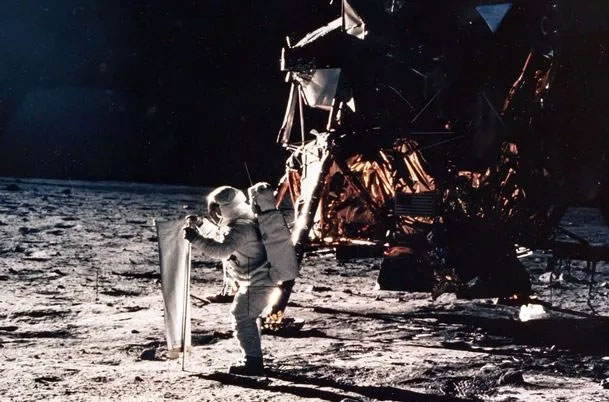
Neil Armstrong was the first person to set foot on the Moon in 1969. (Photo: NASA).
Superpowers have developed exploration vessels to land on and find ways to return humans to the Moon. So why do humans always seek to explore the Moon? What is so fascinating about this tiny sphere and Earth's only natural satellite?
Here are a few explanations for this question.
Racing to assert one's position in the political arena.
On October 4, 1957, the Soviet Union was the first country to launch an artificial satellite into space. Then, on April 12, 1961, the Soviet Union achieved another great feat by becoming the first country to send a man into space. Astronaut Yuri Gagarin was the first person to fly into space aboard the Vostok 1 spacecraft.

In April 1961, Yuri Gagarin became the first person to fly into space. (Photo: Getty).
On February 3, 1966, the Soviet Union achieved another milestone in space exploration when the unmanned Luna 9 spacecraft became the first man-made object to successfully land on the Moon.
The United States, a rival power to the Soviet Union at the time, did not want to be outdone. On July 29, 1958, the National Aeronautics and Space Administration (NASA) was established, with the goal of helping the US compete with the Soviet Union in the space exploration race.
Falling behind the Soviet Union in satellite launches and sending humans into space, NASA set the goal of putting Americans on the moon before the Soviets. After numerous failed attempts, including serious disasters, in July 1969, Apollo 11 successfully landed on the moon, allowing three American astronauts to leave the first footprints on the lunar surface.
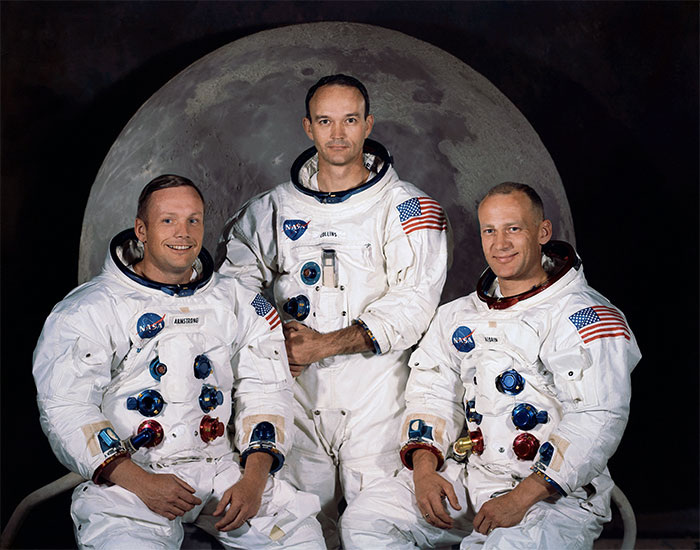
The Apollo 11 crew, from left to right: Neil Armstrong, Michael Collins, and Buzz Aldrin (Photo: NASA).
Since then, space powers have viewed the Moon as a target to demonstrate their technological prowess and space exploration capabilities.
To date, five countries have successfully landed spacecraft on the Moon, including the Soviet Union (Luna 9 in 1966), the United States (Surveyor 1 in June 1966), China (Chang'e 3, landed in December 2013), India (Chandrayaan 3, landed in August 2023), and Japan (SLIM, landed in January 2024).
The moon could be an important "transit point" for further space exploration.
Besides political motivations, exploring and discovering the Moon also allows scientists to learn more about Earth's only natural satellite, helping humanity answer questions such as "How was the Moon formed?"; "What are the components of its surface?"; "What does Earth look like from the Moon?".
During the Apollo 12 lunar exploration mission in November 1969, astronauts brought back soil and rock samples from the Moon. Subsequent Apollo missions have brought back a total of 382 kg of lunar material to Earth.
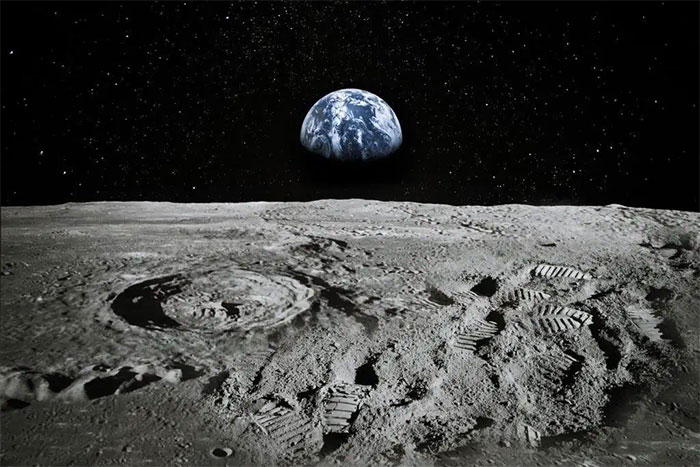
The moon could become an important "transit station" in humanity's exploration of space. (Image: Pinterest)
Studying samples from the Moon has helped scientists determine how its crust formed, which objects may have collided with the Moon, and more.
Samples collected by NASA's Clementine and Lunar Prospector robots during their 1990 lunar exploration mission show evidence of the existence of water there.
Where there is water, there is life, or at least the potential to sustain life for a time. Water is made from hydrogen and oxygen (H2O), so scientists believe it is possible to split water on the Moon into hydrogen to fuel spacecraft and oxygen for astronauts.
This allows the Moon to become an important "transit point" for probes before undertaking further journeys to the rest of the solar system.
Lunar exploration for tourism purposes.
Aerospace technology companies like SpaceX and Blue Moon have been conducting flights to take tourists on space exploration expeditions, with prices reaching millions of dollars per ticket.
Imagine if it were possible to conduct tourist flights to explore the Moon; the amount of money these aerospace companies would earn would be enormous. However, to carry out such flights, SpaceX or Blue Moon would also have to invest billions of dollars in research and testing to safely send humans to the Moon.
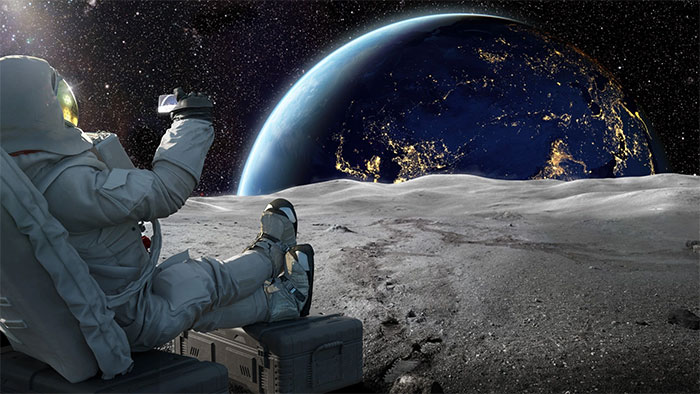
Will the moon become a favorite travel destination for the world's billionaires? (Photo: Getty).
If the experiment is successful, the Moon will certainly be an attractive tourist destination for billionaires, as conventional tourist destinations on Earth no longer hold the same appeal for them.
Why haven't humans been able to return to the Moon yet?
The last time humans set foot on the Moon was in December 1972, when the Apollo 17 spacecraft carried three American astronauts, Eugene Cernan, Harrison Schmitt, and Ronald Evans, to the Moon.
So, it has been more than half a century since humans last set foot on the Moon, yet no one has returned, even though the level of science and technology today is far more advanced than it was 50 years ago.
One of the reasons is that governments are no longer as enthusiastic about the race to send humans to the Moon as before; instead, they want to send unmanned probes to explore the Moon, which is both more cost-effective and safer.
In addition, safety standards for launching human spacecraft into space are becoming increasingly stringent, making long-distance and risky flights to the Moon no longer feasible.
However, as mentioned above, with private companies like SpaceX and Blue Moon aiming to send humans on a trip to the Moon, the day humans return to the Moon is certainly not far off.
- The enigmatic artifacts left behind by humans on the Moon.
- Billionaire plans to "mine" the Moon to earn trillions of dollars.
- The Moon's tumultuous evolutionary history