Between 2018 and 2022, the country will create 70 millionaires every day. However, nearly 800 million people here still depend on the government's food security program.
Nasreen Khatoon, 32, and her two children are starving. They live in a slum in the Indian capital New Delhi. "There are days when I have milk in the kitchen but no sugar. There are days when I have sugar but no milk. I worry about every meal, will I have anything to eat tomorrow? I'm not sure if I'll survive this hunger when my children keep crying because they're hungry," Khatoon told VICE World News.
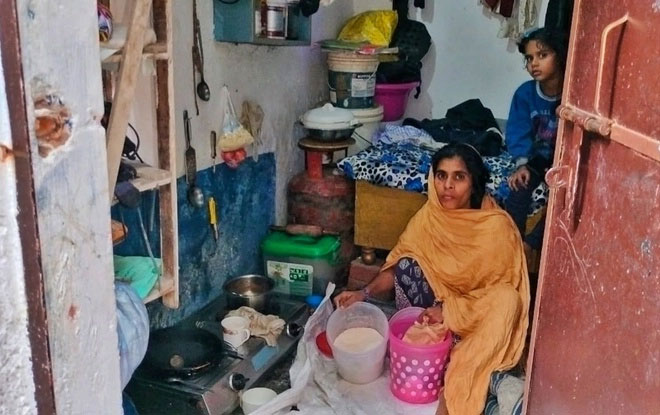
Besides tea with milk and sugar, their diet consists mainly of bread.
Extreme poverty and soaring inflation are rampant in India . Nearly 800 million Indians rely on the government's food security program. Researchers estimate that as many as 100 million Indians need subsidized food to survive but are not covered by the program, Khatoon being one of them. The Indian government recently announced that it would add another 10 million poor people to the program. Khatoon hopes she will be one of the lucky ones to receive a ration card.
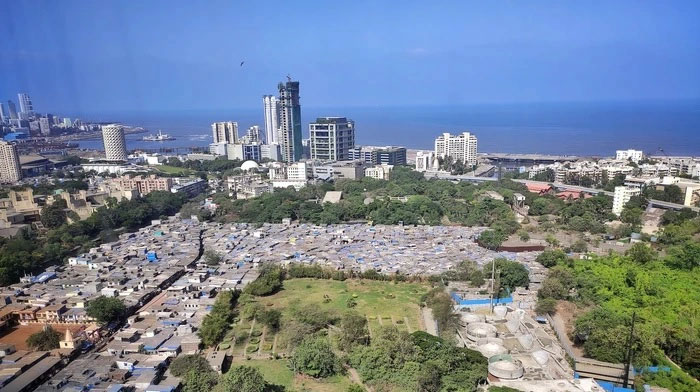
Beneath Mumbai's skyscrapers lie slums.
Two opposite worlds
The Global Hunger Index (GHI) released a few weeks ago rated India as one of the hungriest countries in the world , ranking 107th out of 121 countries in the 2022 assessment.
The poverty crisis has become an alarming problem in India. Because the country is the 5th largest economy in the world and is home to hundreds of super-rich billionaires. More than a month before the GHI was released, Gautam Adani, an Indian businessman, became the 2nd richest person in the world. He is currently ranked 3rd in the list of the world's richest billionaires according to Forbes and is the richest person in Asia. Mukesh Ambani, also the 8th richest businessman in the world, is from India.
According to Oxfam, India's richest 10% own 77% of the country's wealth. In fact, India is estimated to 'mint' 70 millionaires every day between 2018 and 2022.
'There are two Indias today, one of the rich getting richer, and the other of millions of families struggling to get two square meals a day,' said Anjali Bhardwaj, a human rights activist associated with the Right to Food campaign.
While the rich are getting richer in India, the poor are starving to death. Despite the Indian government's denial that deaths from starvation are on the rise in the country. In August, Sanja Sardar, 30, from West Bengal, died of starvation after he and his wife decided to give their food rations to their children. The government said Sardar died of tuberculosis, but a civil rights body found that the man had been starved for days before his death.
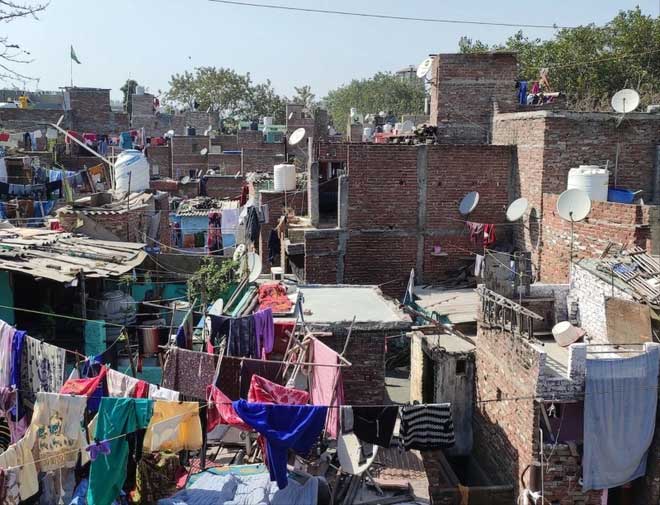
Slum in the middle of New Delhi.
In 2020, India's former finance minister wrote: "We will never know how many people died of hunger because no government will admit it."
Sonia Kumari (5) from Agra district of Uttar Pradesh died after not having eaten for 15 days. On the day of her death, her family had been starving for two weeks and had received only a few sugar biscuits from neighbours. The same year, four-month-old Aaris also died in tears. His mother Nafisa had no milk to feed him as she had not eaten for days. Another child in Jharkhand state, Nimani, five, died the same year after hunger left her unconscious.
It would take a minimum wage worker in rural India 914 years to earn the highest salary earned in a year by a CEO at India's top garment company, according to Oxfam.
Explaining the wealth gap in India, the Oxfam report said : '73% of the wealth created in 2014 went to the richest 1%, while the roughly 670 million Indians who make up the poorest half of the population saw their wealth increase by just 1%. In fact, the combined wealth of India's richest is higher than India's entire federal budget for the 2018-19 financial year, which was over $296 billion.
Causes of the gap between rich and poor
Although the Indian government runs the world's largest public food distribution system , it is riddled with loopholes, errors and chronically underfunded, said Himanshu, professor of economics at Jawaharlal Nehru University in New Delhi. "Despite the government's efforts, the scale of the problem is so huge that it requires more efforts and intervention ," Himanshu said.
'Data shows that budget allocations for food security or health programmes have decreased significantly over the years. That is why the hunger index reflects an alarming situation in India ,' said Pravas Ranjan Mishra, head of research at Oxfam.
In the case of Sonia, Namani and Aaris, all of whom died of starvation, their families were not issued ration cards, which are used to subsidize grain. Although access to food is a basic right in India, only a limited number of people can be issued cards by law.
Mishra added that India's tax policy is partly to blame. " Tax policy is a major cause of inequality in India . It is harsher on the poor than the rich ."
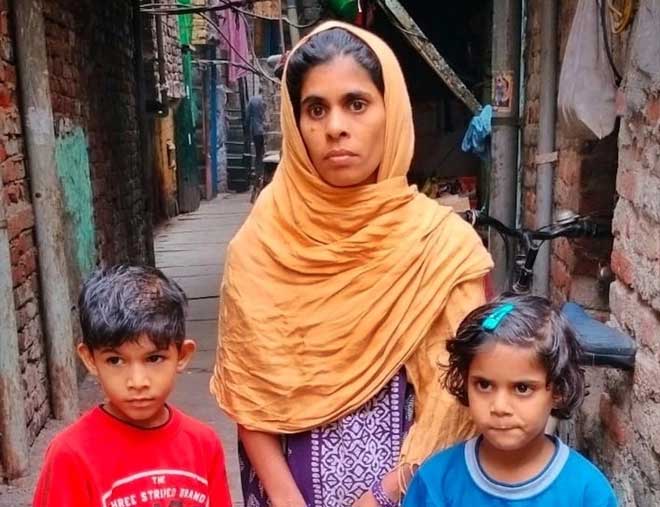
Khatoon and his children outside his house
India used to have a wealth tax, but the government abolished it in 2015. This was despite the country having more than 142 billionaires. The Indian government also cut corporate taxes in 2019, resulting in a financial loss of nearly $22 million over two years.
However, indirect taxes in the country have increased . Currently, an ordinary worker and a millionaire pay the same tax when buying a pack of avocado, nearly 12%.
'Rising fuel prices and indirect taxes have pushed up prices of essential commodities, including food. This has led to severe food insecurity and malnutrition, especially among children and women,' Bhardwaj added.
According to Mr. Himanshu, poverty goes hand in hand with income inequality . However, that does not mean that if inequality is reduced, hunger will be solved.
'Taxing the rich will create more resources for the government, but unless those resources are directed towards social security, it will not lead to any change ,' Mr Himanshu explained.