Biology
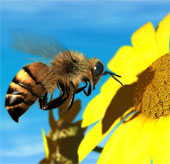
The US government is sued for bees
An alliance of beekeepers, conservationists and food safety advocates has sued the US government for authorities to allow people to use pesticides that could harm bees.
Explore biology, plants, fungi, insects and living systems through research, species profiles, natural adaptations and surprising life-science facts.
3,879 published items in this category and its subcategories.
An alliance of beekeepers, conservationists and food safety advocates has sued the US government for authorities to allow people to use pesticides that could harm bees.
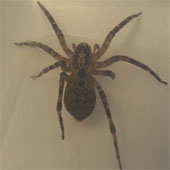
Beverley Cooper, 52, in Glenrothes, Fife, Scotland was terrified to see an Indian wolf spider lying in the middle of the fridge and looking straight at her.
Plants that grow as fast as birch trees and willow trees are bright biofuel candidates. Scientists predict that it can be extracted from these plants of high cellulose e…

Mary Wolfe, an environmental researcher at Temple University in the United States, and Jeremy Mennis, a professor of geography and urbanism, decided to study the impact…

Dozens of poisonous trees are caught in the eye and the sprout has a deep root to the ground. This is not a natural phenomenon but a creative result of Steve and Cindy B…
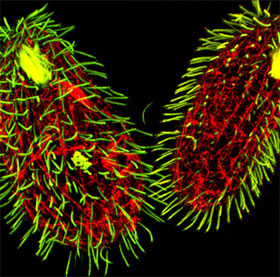
When protozoan Tetrahymena thermophila mate, there are 7 types of paired genes that regulate sex so the gender of the next generation will be different from their parent…
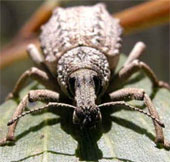
German scientists were crazy at the same time they discovered 101 species of beetles in Papua New Guinea and did not know how to name them.

Flower lovers in the West have just been introduced to the first petunia varieties that are excellent in cold winter, surviving even though the ambient temperature is as…
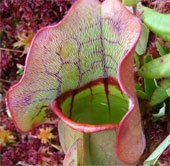
Ben Baiser, the lead author of a study at Oikos, conducted a study of marshy carnivorous plants, showing a complex world you can see inside warm plants. small.
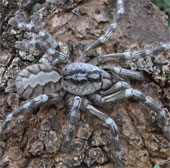
This is the spider plant. It belongs to the family Poecilotheria, a line of tiger spiders, with colorful patterns on the body. They live mainly in India and Sri Lanka. T…
Can synthetic biology save the wild world? From regenerating extinct species to the risk of transgenic species.

US researchers say they have created caffeine-addicting bacteria, which can be used in areas such as water source decontamination or pharmaceutical production.
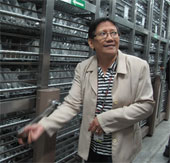
At IRRI, there is a rice bank that holds thousands of different rice genes around the world, including the Hai Hau rice of Hai Hau.

Scientists have studied 94 hospital visits for flu-like symptoms during the 2010 - 2011 flu season.
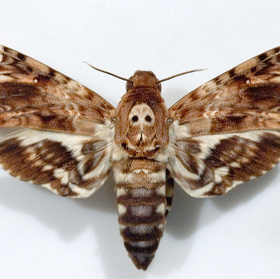
Insects usually do not have a pronounced organ, except for a single butterfly whose strange name is 'skull of the skull' (on the back, there is a skull with two burning…