Human extinction is a fantasy, but the traces humans leave behind are not quite so .
Plastic waste will last long on Earth
Plastic waste is a product of human society's progress, a lightweight, durable, multifunctional material that is widely used in daily life and industrial production. However, the widespread use of these plastic materials has led to an unavoidable problem: plastic waste has existed on Earth for a long time. This waste is one of the strongest evidences of human footprints and is a major challenge we face.
Plastic waste is not biodegradable, it is estimated that a typical plastic bag takes nearly 1,000 years to fully decompose, and that time is more than 500 years for a plastic bottle. This means that every plastic product we use in our lives, every plastic waste bag, will exist on Earth for hundreds, thousands of years from the day they are produced.

Investing in research and development of plastic recycling technology and promoting waste sorting and recycling systems are also important means of solving this problem. (Photo: Nationalgeographic)
These plastic wastes are often left in oceans, rivers and forests, causing serious damage to ecosystems. Fish, birds, marine life and even entire ecosystems are threatened as they ingest plastic waste or become entangled in it and die.
Plastic waste also poses a huge threat to us humans . Chemicals in plastic waste are gradually released and seep into our soil and water sources, eventually entering our food chain. These chemicals can have negative impacts on our health, including hormonal disruption, immune system problems, and cancer risk. In addition, the presence of plastic waste also hinders urban aesthetics and environmental sanitation, bringing huge negative impacts to the environment and our quality of life.
Faced with this long-standing problem, we must take proactive action. Reducing the use of plastic is very important. We can choose to use alternative biodegradable materials such as paper, bamboo, etc. and actively recycle and reuse plastic products.

Plastic waste has existed on Earth for a long time and is a strong evidence of human footprint. Its presence threatens the environment, ecosystems and our health. (Photo: Nationalgeographic).
Buildings and ruins will last for thousands of years or more
Humans have created many beautiful buildings and monuments that not only demonstrate our intelligence and creativity but also serve as witnesses to history.
The Egyptian pyramids are among the most famous structures in the world, serving as tombs for the pharaohs and as symbols of eternity. The architecture of these buildings remains awe-inspiring, withstanding the ravages of sand and war for thousands of years and still standing. The Egyptian pyramids are masterpieces of human ingenuity and engineering, and their existence provides us with valuable clues about ancient civilizations.

The Egyptian pyramids are masterpieces of human creativity and engineering. (Illustration: ZME).
The Parthenon in ancient Greece was built in 440 BC, its grandeur and elegance make one linger. Although it has survived earthquakes, wars and natural erosion, the building still retains some of its original form. The Parthenon not only demonstrates the architectural skills of the ancient Greeks but also symbolizes their worship of the gods. Every stone carries history and legend, making this building an eternal witness.
In Latin America, the Maya left behind some incredible ruins. Maya architecture masterfully blended elements of astronomy, mathematics, and religion to create incredible buildings and cities. For example, the Mayan Cultura is a massive, ancient city ruin whose intricate carvings and complex hydraulic systems demonstrate the prosperity of the Maya civilization. Even hundreds of years after the collapse of the Maya civilization, these ruins continue to amaze and are popular destinations for archaeologists and tourists.
In addition to these famous buildings and monuments, there are many other examples around the world. Their existence is a testament to human ingenuity and creativity, and they serve as a bridge between the past and the present.

The Parthenon demonstrates the architectural techniques of the ancient Greeks. (Illustration: ZME).
These human traces that have existed for thousands of years or even longer are not only amazing, but also provide us with valuable historical information. By studying these buildings and ruins, we can understand the lifestyle, religious beliefs, and technological level of ancient civilizations. At the same time, these human traces also inspire modern people and make us full of hope and creativity for the future.
In the future, humans will build more structures and leave their own traces. These structures will become witnesses for future generations, recording our civilization and progress. Whether they are ancient pyramids or modern skyscrapers, they will continue to exist along the long river of time, leaving precious memories for mankind.
The buildings and monuments of mankind are symbols of our intelligence and creativity, and they endure over time. The pyramids of Egypt, the Parthenon in Greece, and the Cultura of Maya have all become eternal witnesses, providing us with valuable clues to learn about ancient civilizations. These traces of human beings are not only breathtaking, but also inspire us to create a better future. Let us cherish these traces and pass them on to future generations, so that future generations can continue to promote the intelligence and creativity of mankind.

Petra ancient city. (Illustration: ZME)
Nuclear pollution will have long-term effects on the environment.
As a clean and efficient form of energy, nuclear energy has brought endless development opportunities to mankind. However, the scary side of nuclear energy is nuclear pollution, which causes long-term and far-reaching effects on the environment. Nuclear pollution refers to the harmful effects of radioactive substances released by nuclear activities on the environment and living organisms.
Nuclear activities such as nuclear power generation and nuclear testing release large amounts of radioactive material that can spread through the air. Some heavy radioactive elements, such as uranium and plutonium, have long half-lives and remain in the atmosphere for a long time, causing damage to living organisms. As a result, nuclear pollution not only permanently changes air quality but also causes widespread ecological and biodiversity damage.
Radioactive substances released from nuclear activities will enter groundwater and water bodies, affecting the safety of human drinking water. These radioactive substances are toxic to living organisms and can cause serious health problems. Long-term exposure to nuclear contaminated water can lead to cancer, reproductive problems, immune system damage and other diseases. In addition, nuclear pollution will also cause the death of aquatic life, destroy the balance of the entire aquatic ecosystem and seriously affect fisheries.
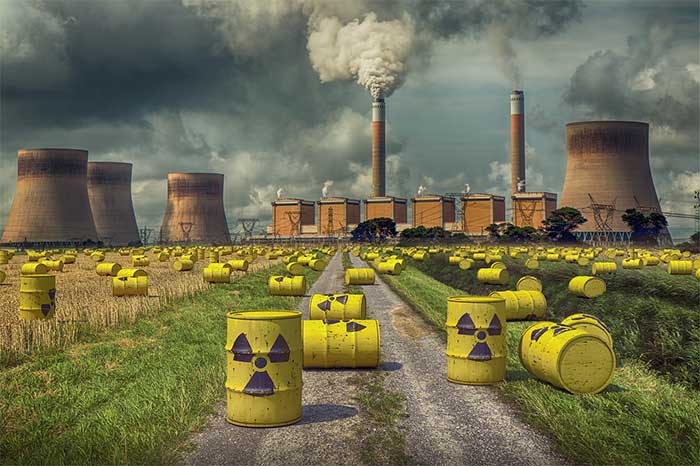
Nuclear pollution is a by-product of nuclear power activities and has long-term effects on the environment and living organisms. (Photo: Zhihu).
Radioactive substances penetrate the soil and accumulate over time, affecting soil quality. Contaminated soil cannot provide the nutrients that plants need, limiting plant growth. The toxicity of some radioactive substances can also cause plants to grow abnormally or even not grow normally. This has significant implications for agricultural production, thereby affecting food supply and food security.
Nuclear pollution also has negative impacts on biodiversity and ecosystem stability. Radioactive substances damage the DNA and cells of organisms, leading to genetic variations and mutations. These mutations can lead to genomic instability, hindering the ability of organisms to reproduce and adapt, ultimately causing species extinction and ecosystem collapse.