Many people when cooking are often quite confused about how to handle the foam that rises: It is a waste to remove it, but it is also toxic to leave it. The article below will explain the truth about this foam, and guide you when to remove it and when to leave it.
When we cook soup or boil food, sometimes a layer of air bubbles will rise. Many people think that this is the impurities and dirt in the food, so they use spoons to remove it. But there are also opinions that this is the most precious part of the dish, has very high nutritional value, and should definitely not be wasted. So what is the truth?
To find out the answer to this, Life Times conducted an interview with Associate Professor He Jiguo (School of Food Science and Nutrition Engineering, China Agricultural University) and Mr. Wang Guoyi (Deputy Director of the Senior Food and Health Committee of the Beijing Food Association).
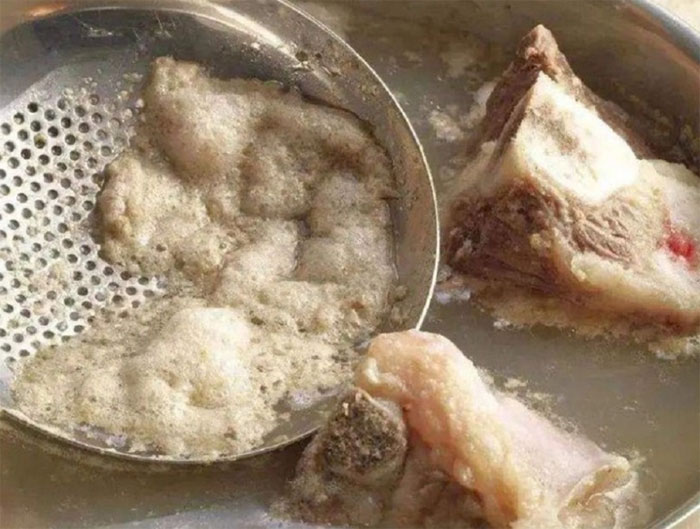
The foam that forms when cooking is a result of the surfactant in the water being affected.
Why does foam appear in cooking?
According to the two experts above, the foam that appears when cooking is a phenomenon where the water's surfactant is affected .
Surfactants are compounds that reduce the surface tension of liquids. When a liquid is agitated, air has the opportunity to enter the liquid, thus forming foam. When cooking food, organic substances such as proteins, carbohydrates, etc. in the food will dissolve or disperse in water, creating a dense layer of foam when cooking continuously.
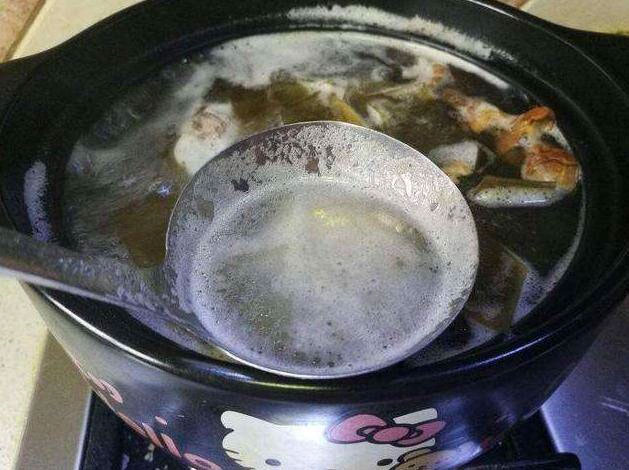
There are some types of foam that should be skimmed off, but there are others that should be actively consumed.
This foam layer often contains a lot of nutrients and organic substances that are good for health. However, it is not completely good, because antibiotics, pesticides, etc. in food can also take this opportunity to penetrate the foam layer. Therefore, there are some types of foam that should be removed, but there are others that should be actively consumed.
3 types of foam to remove
1. Bone broth foam
Foam created when stewing meat or bones is mainly excess blood, residue and protein in the meat after being deformed at high temperatures. This foam has a fishy smell, if not skimmed off, it will affect the appearance and taste of the dish.
So, use a spoon to skim off the first layer of foam, and you can keep the following layers of foam.
2. Foam when boiling shrimp
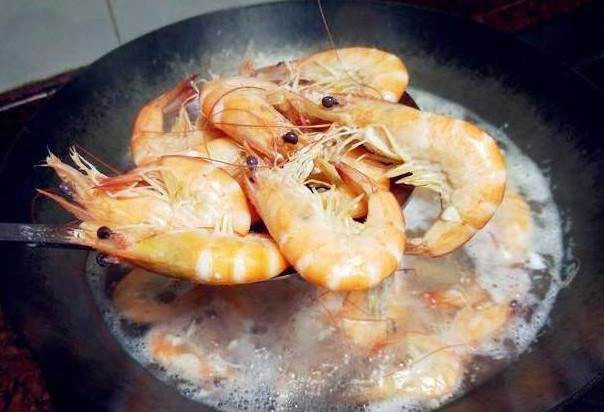
The foam that dissolves in water is mainly internal blood and some impurities, so it should be discarded.
Astaxanthin in shrimp has strong stability, it will be separated from protein when exposed to high temperature, showing the initial red color, so shrimp will turn red when cooked at high temperature.
The foam that dissolves in the water is mainly blood, internal organs and some impurities in the shrimp shell and head, so it should be removed.
3. The foam in carbonated water
The foam that appears when you open a carbonated drink is carbon dioxide . Excess carbon dioxide will stimulate the stomach lining, thereby reducing gastric acid secretion and affecting digestive function. It is best not to consume this foam but to let it dissipate, or remove it before drinking.
3 types of foam to use
1. Soy milk foam
When processing soy milk, this layer of foam will be created a lot due to the abundant saponin content in soybeans.
Saponins have biological functions such as regulating lipid metabolism, reducing cholesterol, anti-microbial, anti-tumor, anti-thrombosis, immuno-regulating and anti-oxidation. Therefore, you should absolutely not scoop them out because this foam layer is very good for your health.
2. Foam when cooking fruits and vegetables
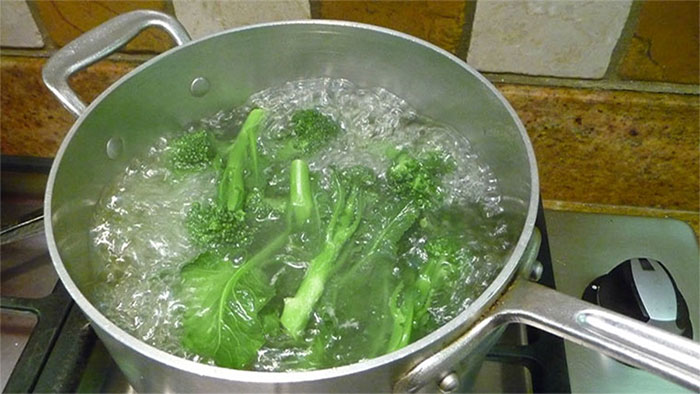
The foam that appears when boiling vegetables can be used.
Cooking some vegetables and fruits also has a similar bubbling phenomenon as soy milk. For example, jujubes are very prone to bubbling during cooking because they contain saponin.
In addition, when boiling some vegetables, bubbles sometimes appear, but these are harmless bubbles that you can use.
3. Foam when brewing tea
Tea also contains saponin, so it can also foam when brewed. According to scientific research, saponin in tea can have antibacterial properties and inhibit fat absorption, so there is no need to worry about the amount of foam that rises when brewing tea.