Angkor Wat is known as the most famous complex when traveling to Cambodia. UNESCO has recognized Angkor Wat as one of the seven wonders of the world.
Have you ever marveled at the intelligence and creativity of ancient human civilizations, and imagined how they built such spectacular buildings and works of art? Among these ancient ruins, Angkor Wat is a particularly fascinating temple complex.
It is majestic and beautiful, each of its stones is exquisitely carved, covered with bas-relief paintings with exquisite workmanship and its rich imagination has reached an unbelievable level. Therefore, many people believe that the Angkor monuments were created not by human hands, but by the creation of gods.
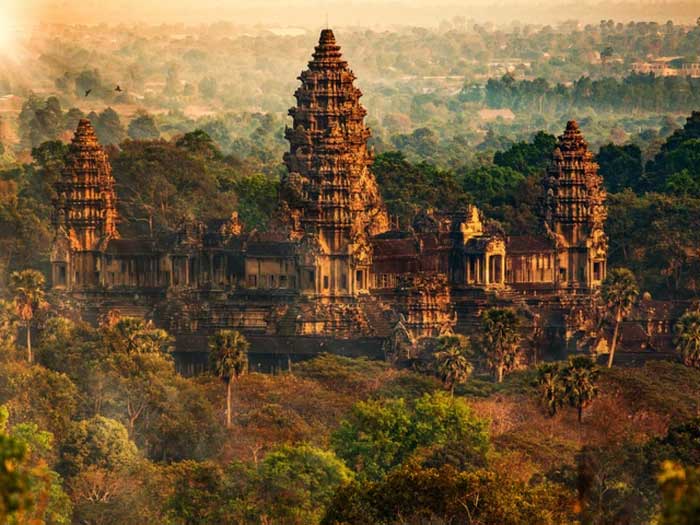
Angkor Wat monument complex.
However, this magnificent temple was abandoned in the late 14th century and was not rediscovered by Europeans until the 19th century. This place was once the religious center of the Khmer empire but still leaves many mysteries in history.
One of the most mysterious things is that the Angkor Wat complex actually hints at the star map of the Draco constellation . Is it by chance or on purpose that each temple corresponds to a major planet in the Draco constellation? What is the connection between Angkor Wat and Draco? These questions have puzzled many explorers and researchers.
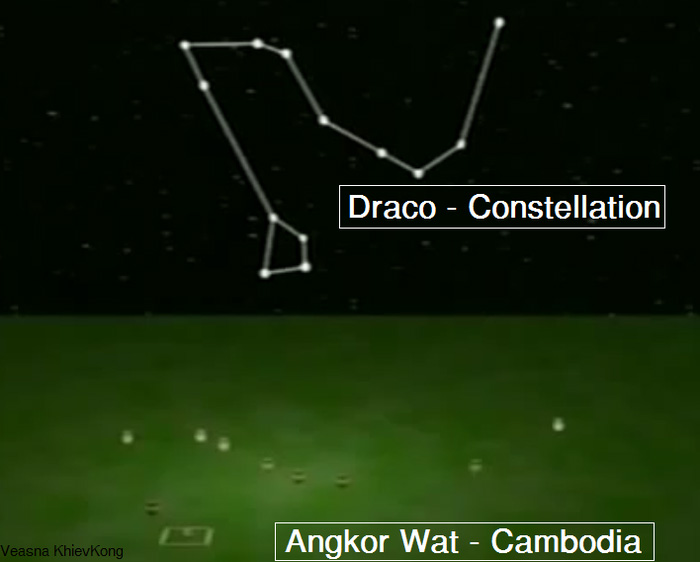
Historian Graham Hancock believes that Angkor Wat references the constellation Draco, which was seen by ancient people some 12,000 years ago.
In 1860, French biologist Henri Mouault , with his love and curiosity for tropical flora and fauna, came to the Kingdom of Cambodia. He heard that there was a pristine tropical forest here, in which many rare and beautiful creatures lived.
So Henri Mouault decided to explore this unknown land in depth, in search of the rare flowers and plants he had always dreamed of. During his journey, he accidentally discovered that some stones and bricks began to appear among the trees, and some had carvings and patterns.
These traces led him to an ancient and mysterious temple complex. There were countless exquisite statues with mysterious smiles on their faces, many temples and giant trees coexisted, and all kinds of sculptures were lifelike.
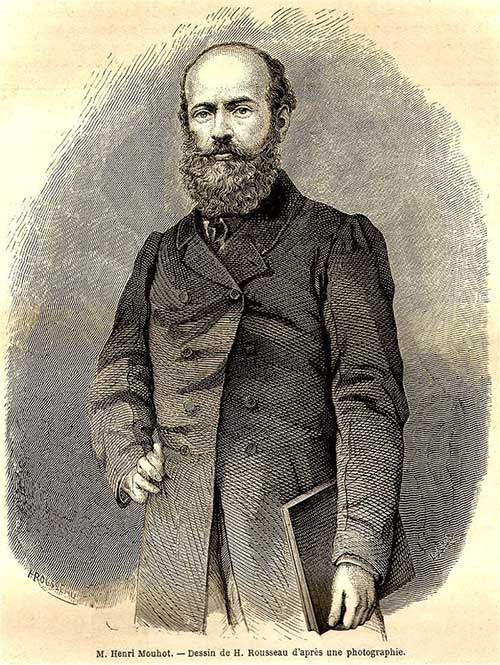
Henri Mouault is often mistakenly credited with "discovering" Angkor Wat, although Angkor Wat was never lost - the location and existence of the entire Angkor complex was always known to the Khmer and had been visited by a number of Westerners since the 16th century.
Henri Mouault felt as if he had entered a dreamlike world, and decided to stop here, carefully explore and record everything. He took the brush and paper he had brought with him and began to draw pictures and maps of Angkor Wat.
Henri Mouault also wrote down his feelings and experiences, hoping to tell the world about this wonderful discovery. However, before he could announce this discovery, he mysteriously disappeared in the vast primeval forest.
The disappearance of Henri Mouault was a mystery to the local population and the French government, and a large-scale investigation and search campaign was launched. However, his whereabouts remained unknown until a year later, when his body was found in the woods, the cause of death being a poisonous insect bite .
Fortunately, his notes on Angkor Wat miraculously survived alongside his body and were brought back to Europe. The incident shocked the entire West and people flocked to Angkor Wat in an attempt to uncover its mysteries.
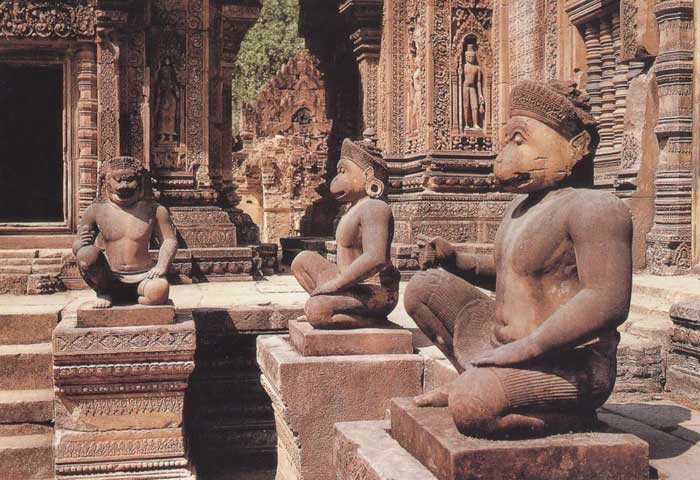
Built in the early 12th century, Angkor Wat is one of the largest religious monuments in the world, attracting more than 2 million tourists each year.
To study the ruins of Angkor Wat, scientists used drones and ground-penetrating radar technology to scan the entire Angkor Wat temple into a map. However, what surprised them was that the map of these temples closely resembled the map of the Draco constellation. Each large planet corresponded to a temple below, suggesting a mysterious connection between Angkor Wat and Draco.
Archaeologists have conducted astronomical calculations and discovered that about 12,000 years ago, the lowest point of the Draco constellation in the sky was directly above Angkor Wat and the constellation on the horizon was Leo. If the Sphinx in Egypt existed 12,000 years ago, the two brightest stars of the Leo constellation would correspond to the eyes of the Sphinx. In addition, if the Triad also existed 12,000 years ago, it would also correspond to the Alpha star in Draco. These things have sparked people's speculation and research.
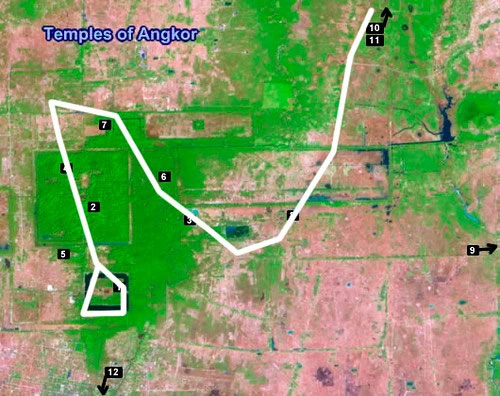
Researchers believe that the Angkor civilization was established in 802 AD. The capital city of Angkor, the center of this civilization, was located on the shores of Tonle Sap Lake in northwestern Cambodia.
Accordingly, many people have hypothesized that this is not a coincidence but evidence of a mysterious connection between Angkor Wat and other ancient civilizations .
However, this hypothesis has caused a lot of controversy. Some people believe that the architectural techniques and artistic creations of Angkor Wat were beyond the capabilities and understanding of people at that time, and that a more advanced civilization or technology could have made it possible.
They pointed out that the stone materials in the temple were perfectly crafted in terms of specifications and dimensions, all the statues of gods, Buddhas, people, and statues were polished smooth, lifelike. People at that time could hardly do this with just chisels and hammers.
It takes two hours to polish a stone weighing less than 100 pounds, and the weight of the largest single stone at Angkor Wat exceeds ten tons. For such a stone, the time it took to shape it with just hammer and chisel is practically incalculable. The weight of the stones used in the entire Angkor Wat project is enormous, and these stones came from far away places and had to be transported a long way to the construction site of Angkor Wat.
But what is more surprising is that the entire Angkor Wat was built on a swamp without any foundation structure . Over the course of time, Angkor Wat has not subsided at all, making people wonder: How did ancient people build such a structure?
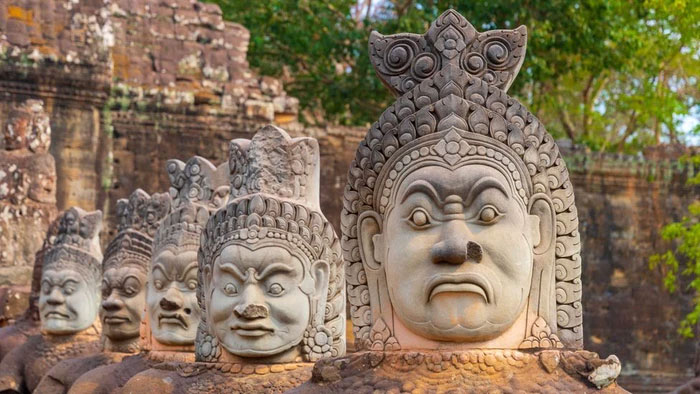
The entire Angkor Wat was built on a swamp without any foundation structure.
In the past, historians believed that the Angkor civilization collapsed in 1431, when the army of the Thai kingdom of Ayutthaya sacked the capital, and that it was abandoned. In the 19th century, another explanation emerged: Angkor was a civilization that was forgotten by the Cambodians themselves and left to decay in the jungle.
Although the theories put forward may be intriguing to most people, most scholars and experts disagree with these claims, finding them disrespectful and misunderstanding the Khmer civilization and Angkor Wat.
Regardless of whether Angkor Wat is related to Draco or aliens, it is still a marvelous and amazing piece of architecture, a precious and unique piece of cultural heritage.