
New technology
Drive a submarine like ... pedal
A Russian company plans to introduce two-seater and human-powered submarines for the tourism industry.
Track emerging technologies, autonomous vehicles, advanced materials, clean energy, robotics and engineering breakthroughs changing the future.
7,777 published items in this category and its subcategories.
A Russian company plans to introduce two-seater and human-powered submarines for the tourism industry.

US scientists say they have successfully built a bio-battery battery that is no different from the existing rechargeable batteries on the market.

Prox Dynamics, Norway, has built the world's smallest unmanned helicopter, which is about the size of a cigarette pack and weighs 15 grams.

Belgian scientists at the University of Brussels have developed a robot that caters to pediatric patients.

Andre Konstantin Geim was born in 1958 in Sochi (Russia), studied Moscow's physics and successfully defended his doctoral thesis at the Chernogolovka Institute of Solid…

Spider silk is already stiffer and lighter than steel, but now scientists have figured out how to increase its hardness by three times by adding a small amount of metal.

US researchers have designed a on-chip lab that can be programmed to perform a variety of tasks.
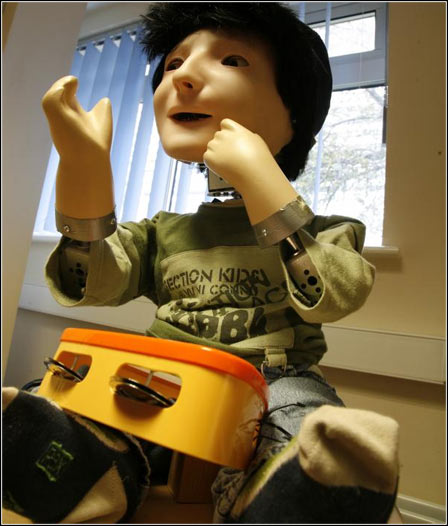
A new project was officially launched on May 1 in a robot with artificial skin.

University of California scientists say they have succeeded in making a camera capable of taking 6 million images per second.

British scientists have launched a unique race car made from potatoes, carrots, soybeans and fueled with chocolate extracts.

The world population is aging and military conflicts continue. These are two goals that the scientists pay attention to designing the right robot.

Penguins swim swiftly with extraordinary power, and even the viewer feels it is gliding in the water.

US scientists have successfully built the world's smallest bulb. When there is electricity, it looks like a bright spot.

Robot taught by Japanese scientists conducted the first lecture at a school in Tokyo.

The $ 105 million Eurofighter fighter must undergo a rigorous and rigorous testing process. In particular, including the use of birds and chickens to test.