More than 20cm of snow covered many areas in Seoul (South Korea) on November 27, causing traffic disruption.
The country's weather agency has issued a heavy snowfall warning for the Seoul metropolitan area, Gyeonggi Province and many other areas across the country. This situation is expected to last until November 28.
The Korea Disaster and Safety Countermeasures Center has issued a level one heavy snowfall warning in a three-tier system and is forecast to raise it to level two later in the day due to the possibility of more heavy snowfall.
According to the Korea Meteorological Administration (KMA), Seongbuk and Gangbuk counties in northern Seoul received more than 20 centimeters of snowfall on the morning of November 27. Many other counties in the capital also received more than 10 centimeters of snowfall.
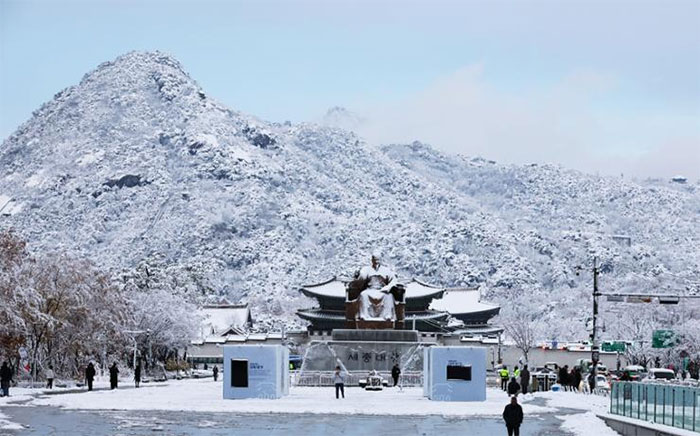
This is the heaviest November snowfall in Seoul in 117 years. (Photo: Yonhap).
This is the heaviest November snowfall in Seoul since modern weather observation systems began recording in October 1907. The previous record was only 12.4 cm - recorded on November 28, 1972.
Heavy snowfall has caused numerous accidents, road closures, and traffic disruptions across the country. Rescue agencies have received more than 150 reports of traffic accidents and injuries due to slippery conditions. In Seongbuk County, a tree fell on a power line, cutting the line and causing a power outage that affected nearly 200 households.
According to Korea Airport Corporation and Incheon International Airport Corporation, more than 40 domestic and international flights were canceled and nearly 200 flights were delayed.
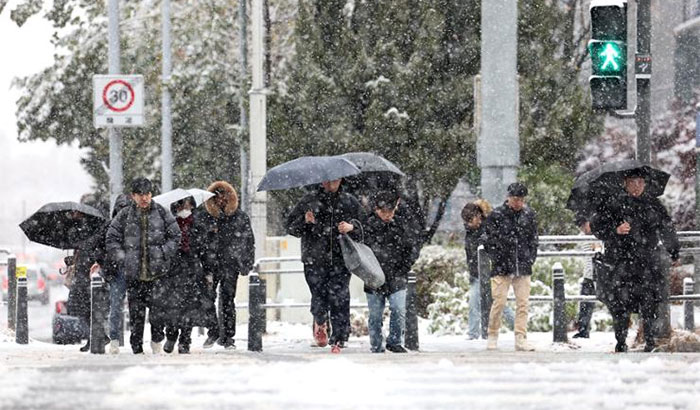
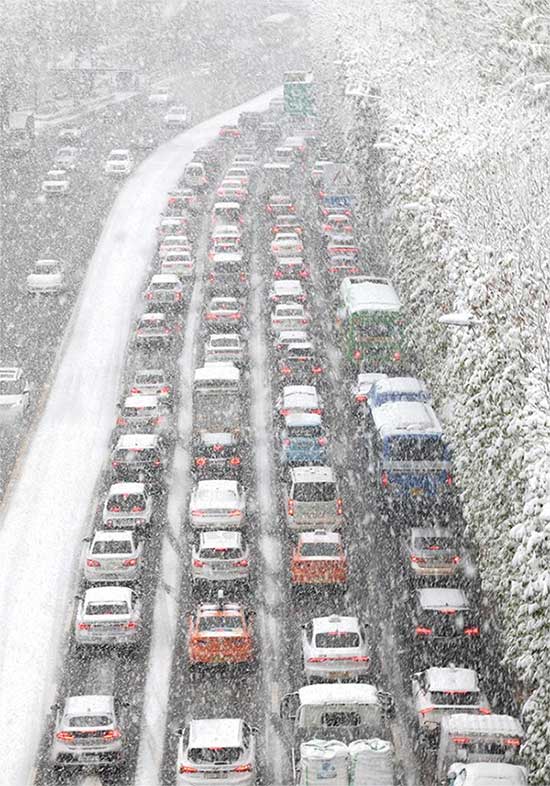
Traffic was disrupted due to heavy snow (Photo: Yonhap).
Seoul's subway line 9 also suffered delays of up to nine minutes during morning rush hour, causing platform congestion.
In response, the Seoul Metropolitan Government has decided to increase the operation of more subway and bus lines during rush hour until the morning of November 28 to ease traffic congestion.
Major Joseon-era palaces in central Seoul and royal tombs were closed late on November 27 to ensure the safety of visitors, along with suspending night tours, according to the Korea Heritage Administration.
Morning temperatures are expected to drop below zero in central parts of the country through November 30, according to forecasts.