Space science
NASA discovered the smallest planet in the universe
The newly discovered planet, named Kepler-37b, is only slightly larger than the Moon and takes 13 days to complete an orbit around its star.
Explore astronomy, NASA missions, planets, galaxies, the Moon, the Solar System and discoveries that expand our understanding of the universe.
8,681 published items in this category and its subcategories.
The newly discovered planet, named Kepler-37b, is only slightly larger than the Moon and takes 13 days to complete an orbit around its star.
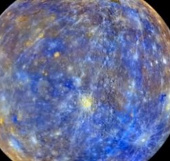
By using thousands of photographs taken by Messenger satellites after a year of being launched into orbit to carry out its mission, NASA was able to fully build Mercury'…
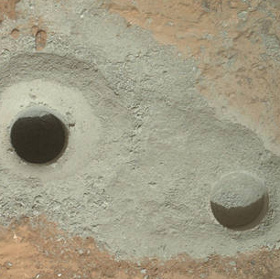
NASA announced on February 20 that its Curiosity probe had obtained a sample of Martian rock and discovered that powdered soil just below the planet's red surface was ac…
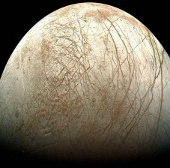
At NASA's request, a promising project for Europa research has been revised to minimize costs. This is the latest move related to Europa's exploration plan at the Americ…
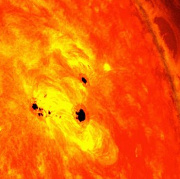
The Solar Dynamics Observatory satellite of the US Aerospace Agency discovered giant black spots on February 20.
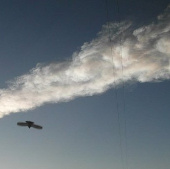
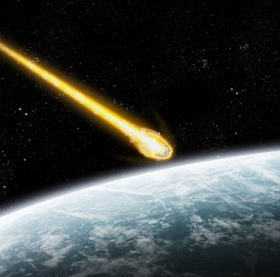
Whether an asteroid explodes or falls to the ground depends on the ability of the atmosphere to withstand the compressive pressure. They often take up to 99% of the mate…
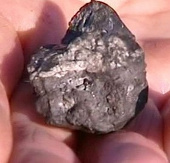
The Russian space agency (Roskosmos) acknowledged that their telescopes could not find the meteorite falling on the country's Chelyabinsk region, because it had a very s…
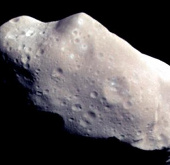
The asteroid 274,301, discovered by Ukrainian astronomers on August 25, 2008, has just been named Wikipedia in honor of this open encyclopedia.
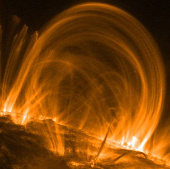
Associate Professor, Dr. Ha Duyen Chau, former Director of the Institute of Geophysics, said that according to the 11-year cycle, at the end of 2012 and the beginning of…

Iranian President Mahmoud Ahmadinejad said he was willing to

After 55 days of flying over Antarctica, the giant Super-TIGER science balloon from NASA has broken the record for the longest flight and brought back countless valuable…
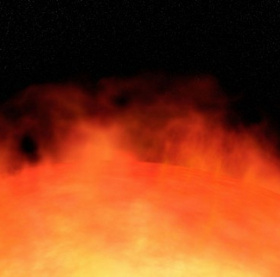
Scientists at Northumbria University, NewCastle, England have used solar imaging technology to study the chromosphere between the sun's surface and aura.
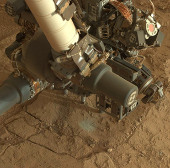
Curiosity is the first robot capable of drilling deep into Mars's rock. This time, Curiosity used its drilling and beating system to drill, smash rocks, take samples and…
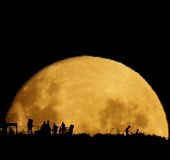
Using professional camera lenses, photographer Mark Gee chose for himself a position 2km away from Victoria Mountain to return to the scene of the moon rising on the top…