Space science
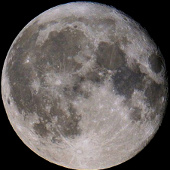
The moon is the 13th full of the year
The full moon on December 28 is quite a rare phenomenon, because this is the 13th full moon that humanity saw in 2012.
Explore astronomy, NASA missions, planets, galaxies, the Moon, the Solar System and discoveries that expand our understanding of the universe.
8,681 published items in this category and its subcategories.
The full moon on December 28 is quite a rare phenomenon, because this is the 13th full moon that humanity saw in 2012.
The scientific article has been published in the Proceedings of the National Academy of Sciences and Spiegel Online cites summaries of the content.

The food of the astronaut is carefully selected to supplement the missing micronutrients when they work in space.

If 2012 closes with a 'sadness' regret of the 'believers' who love astronomy because there are up to 18 interesting natural supremacy, but the weather is not really supp…
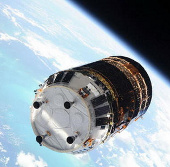
2013 is predicted to be a year full of events in the aerospace industry. The launch of the satellite, bringing passengers into space, bringing cargo ships to orbit attra…
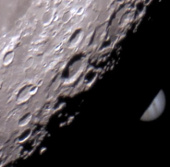
An astronomer recorded a detailed image of a rare astronomical phenomenon, in which the moon appears to be 'devouring' Jupiter, the solar system's largest planet.
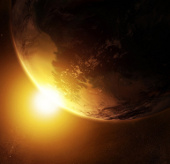
If you look at the sun on January 2, you will probably find it bigger than normal, because that is the day when the earth reaches a near-daily point in orbit in 2013.
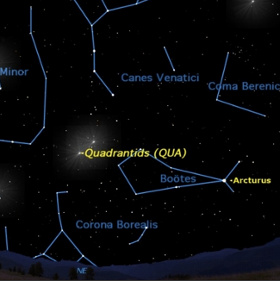
Quadrantids, one of the three most beautiful meteor showers of the year, will reach its peak on Friday morning with about 40 meteor streaks every hour.
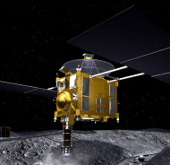
The Japan Space Exploration Agency (JAXA) will launch a spacecraft to a meteorite next year to sample soil and rock.
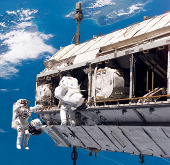
NASA said it will use ultrasound technology to explain the rise of space astronauts during their time at the International Space Station.
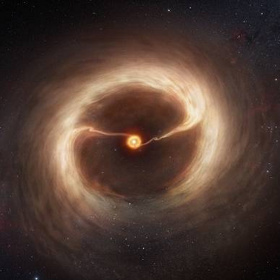
The January 2 issue of Nature published the findings of Chilean astronomers, who discovered the origin of the giant planets in the universe, similar to Jupiter and Satur…
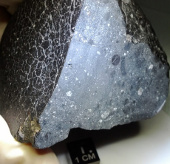
Meteorite 'Black Beauty' from Mars is the oldest and most abundant specimen ever.
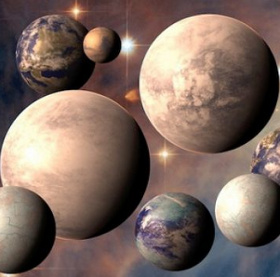
American astronomers predict the Milky Way is home to at least 100 billion stars and 100 billion planets.
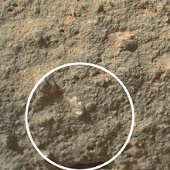
The latest image sent back to Earth by NASA's Curisosity scouts shows that it seems like the barren red planet also blooms.
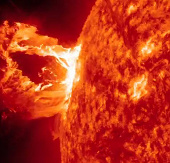
The US Aerospace Agency (NASA) predicts this year the sun will be the weakest in a century.