
Science Events
First proton collision in large particle accelerator
The European Nuclear Research Center (CERN) on November 23 reported the first collisions of proton beams in a large particle accelerator (LHC).
Browse ScienceInfo articles and explainers related to Accelerator.
129 published items.
The European Nuclear Research Center (CERN) on November 23 reported the first collisions of proton beams in a large particle accelerator (LHC).

According to the November 30 announcement by the European Nuclear Research Organization, the organization's large particle accelerator has achieved 1.18 trillion electro…

The LHC large particle accelerator has restarted since November 20 and has been active to make up for the lost time of more than a year of suspension for repairs.

Last week, the Big Bang experiment at CERN (European Atomic Research Agency) set a new record when it launched beams of protons with higher energy levels.

Scientists working at the European Nuclear Research Organization (CERN) have restarted the giant LHC particle accelerator.

China is about to build a 100km long particle accelerator, expected to generate more than one million

The Sirius particle accelerator can accelerate the electron beam as thin as 1/35 times the length of the hair to the speed of approaching the speed of light.

International scientists are building a powerful new particle accelerator located in a circular tunnel with a circumference of 80-100km.

Why is an organization equipped with modern technology, technology and the world's most powerful particle accelerator doing an odd job of keeping computer mice? Let's fi…

The Large Hadron Collider (LHC) at the European Nuclear Research Organization (CERN) is one of the largest particle accelerators ever built, with a mission to find evide…

The world's most expensive object is not the lavish skyscrapers but a new nuclear power plant in the UK with construction costs of up to 35.8 billion USD.

Learn the analyzers, computer systems ... spread out within a 27 km circumference of the LHC giant particle accelerator project, the viewer will learn more about the ope…
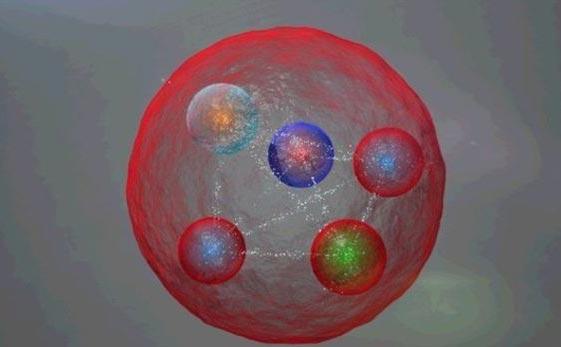
Scientists working with large particle accelerators (LHC) have announced the discovery of a new type of particle, called pentaquark.
Chinese scientists are rushing to complete the plan to build giant particle accelerators, larger in size than any other accelerator in the world.

In order to better understand the vast and complex universe, scientists have created enough great scientific machines. The bigger the projects, the more time, cost, and…