Space science
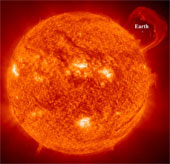
Found the 'twin brother' of the sun
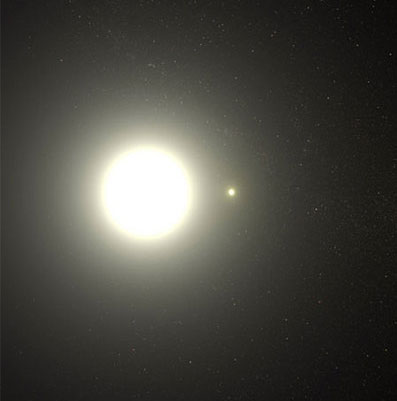
According to Discovery News, this star is called HIP 102152 and is
Browse ScienceInfo articles and explainers related to Constellation.
287 published items.
According to Discovery News, this star is called HIP 102152 and is
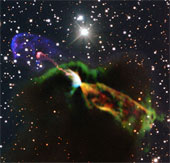
A huge telescope system in Chile has captured wonderful images of an amazing astronomical phenomenon: a star is born.
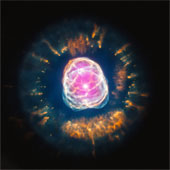
Although it can be brilliance for billions of years, our sun-like stars do not exist forever, and by the time of their death, their deaths have never been quiet, but mor…
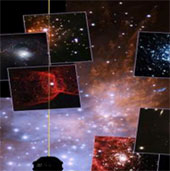
Experts in Chile have published seven super-sharp, wide-spectrum images of the device that are expected to revolutionize astronomical observations.
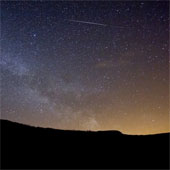
On the night of 21, dawn on April 22 is the maximum time of the Lyrids meteor shower, but Vietnamese astronomers will be hard to observe this phenomenon.
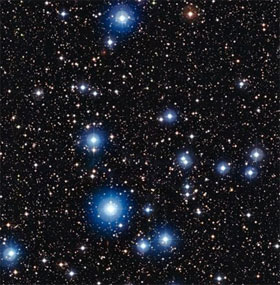
Some of the Milky Way stars must be 13 billion years old, but the production machine is constantly working to produce new generation of stars.
Astronomers have suddenly located the largest galaxy ever, five times larger than our Milky Way galaxy.
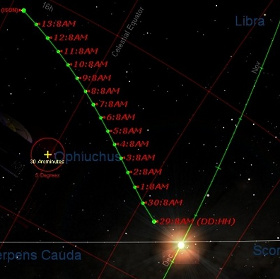
Astronomers believe that ISON, comet will appear on November 28, 2013, the brightest ever.

If 2012 closes with a 'sadness' regret of the 'believers' who love astronomy because there are up to 18 interesting natural supremacy, but the weather is not really supp…
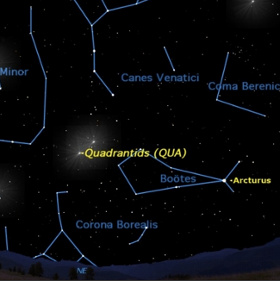
Quadrantids, one of the three most beautiful meteor showers of the year, will reach its peak on Friday morning with about 40 meteor streaks every hour.
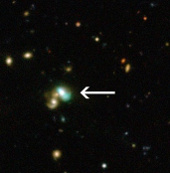
Observatories in Chile and Hawaii (USA) have identified a new type of galaxy called mung bean galaxy, due to their unusual appearance and strange light.
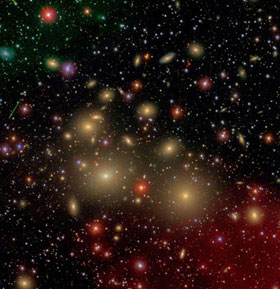
Experts at the University of Texas (USA) have found the largest black hole in the universe, up to this point, opening up new research directions on how galaxies and blac…
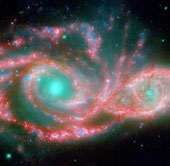
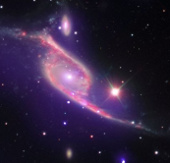
NGC 2207 and IC 2163, names of two galaxies twisted in the Canis Major constellation, are in the process of merging into a galaxy.
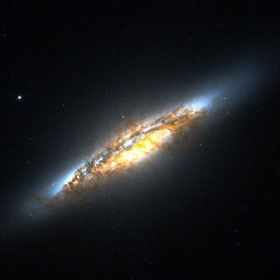
This galaxy named NGC 5010 is in transition, from a spiral galaxy to an elliptical galaxy.
Due to the rotation of the Earth around the axis, stars change their position in the sky, grow and dive. However, the Earth's rotation is directed towards the North Star…