
Space science
The small planet has an Earth-like crust
Two newly discovered meteors can give new insights into the formation and evolution of these small planets.
Browse ScienceInfo articles and explainers related to Earth.
6,634 published items.
Two newly discovered meteors can give new insights into the formation and evolution of these small planets.

Observed from Earth, Cassiopeia A object, the remains of a star block exploded 330 million years ago, looking like a colorful ball.

According to a researcher at Tel Aviv University, blowing away a meteorite is in fact more complicated than what's in the movie.

The Hubble Space Telescope has just discovered CO2 and CO in the atmosphere of a distant planet.

The image of the moon last night in many parts of the world has the largest size in the last 15 years, because the position between the moon and the earth is nearly 30,0…

It was the meteor bomb that the Earth had suffered before that was the cause of life on our planet.

Images sent by Cassini's probe show evidence of ocean and ice volcanic existence on Saturn's Enceladus and Titan satellites.

Themis satellite of NASA has discovered two major holes in the Earth's magnetic field.
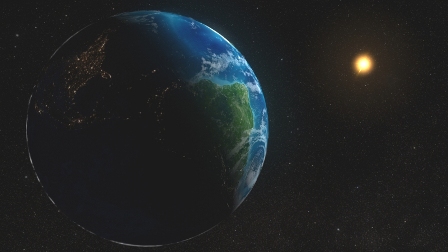
The Earth's position is only a negligible part of the universe, despite recent theories that shed the foundations of modern cosmology.

Earlier (December 1), the Endeavor spacecraft landed on an American air base, after completing its mission to repair and upgrade the ISS International Space Station, whi…
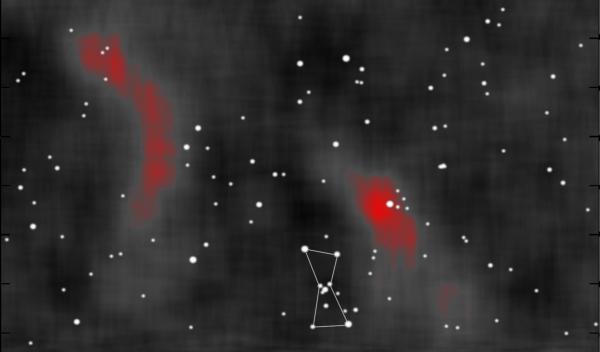
The Los Alamos National Laboratory observatory observes for the first time that two distinct hotspots seem to be bombarding the Earth with an enormous amount of cosmic r…

Scientists say the great risk of meteorites may occur in less than 20 years and the mission to block meteorites needs to be globally adopted.
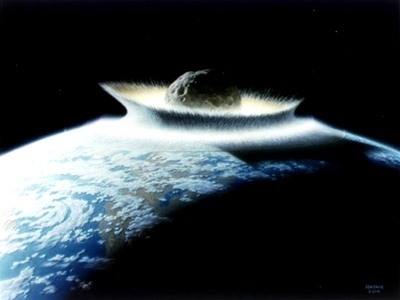
About 20 meteorites with sizes less than 100m have been formed in the last 10,000 years, but only 5 of them are known.

Xinhua News Agency reported that the European Space Agency (ESA) has just announced that it will continue to move the time for bringing the ExoMars off-road vehicle (pic…

On October 19, the US Space Agency (NASA) successfully launched an unmanned probe into orbit to study the interstellar boundary area on the solar system.