Medicine - Health
Initial success in connecting human brains together
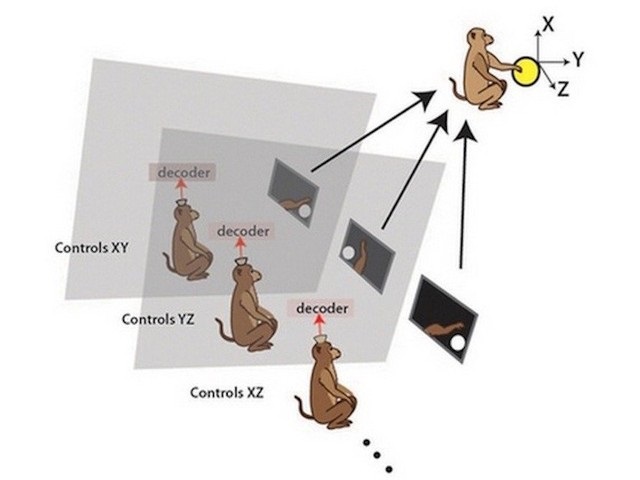
Scientists are working on developing a computer that can connect human brains to one another. If successful, this will be one of the effective support solutions for trea…
Browse ScienceInfo articles and explainers related to Human Brain.
184 published items.
Scientists are working on developing a computer that can connect human brains to one another. If successful, this will be one of the effective support solutions for trea…

Tapeworms can occur in the human body through direct or indirect routes, but all cause dangerous effects.


Parkinson's disease spreads from one cell to another in the brain like an infectious disease.

The researchers found that the fastest-growing human brain just after birth and about half the size of an adult's brain within the first 3 months of life.
Researchers have found a way to store data in liquids, opening up the prospect of the introduction of a new type of implant into the brain.
The implantable chips into the brain developed by the US Department of Defense DARPA Senior Project can help US veterans recover the memory function of traumatic brain.

Nourished with a nutritious diet such as ants, snails and bugs can stimulate growth towards a larger brain.
Stanford University scientists have created a hardware system called Neurogrid based on the human brain.

All your thoughts and actions can be controlled by someone. In other words, your brain can be hacked and you can be ... hijacked.

Insomnia is actually more serious than what we thought earlier, causing frequent loss of brain cells - according to a recent study.

These brain slices will provide more information for researchers to decipher the mystery of the brain.

In the arms race with the US Cold War, the Soviet Union spent $ 1 billion on developing a weapon capable of controlling the human brain, according to a recent report by…
The nerve cells of the human brain are genetically heterogeneous, a group of US-Russian scientists proved.
A person's brain can 'see' things even when he or she does not see them, and this finding is completely contrary to long-accepted hypotheses about how the brain processe…