Biology
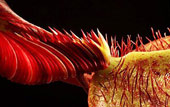
Human carnivorous plants are shaped like aliens
To commemorate the father of alien creation in cinema Hans Ruedi Giger, a new carnivorous plant has been named after him.
Browse ScienceInfo articles and explainers related to Human.
6,757 published items.
To commemorate the father of alien creation in cinema Hans Ruedi Giger, a new carnivorous plant has been named after him.
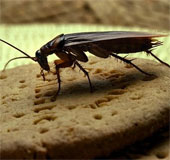
The new study shows that cockroaches are smelly with spiny legs, crawling around the house

In the process of exploring the world of parasites, scientists have discovered four types of particularly dangerous parts such as eyes, tongue, meat and human brain.

According to the latest scientific news in Live Science, in today's modern life, humans have used bacteria to create artistic masterpieces.

In fact, a quarter of office workers didn't wash their hands enough and properly after going to the toilet, everything in the workplace, from the door to the keyboard an…
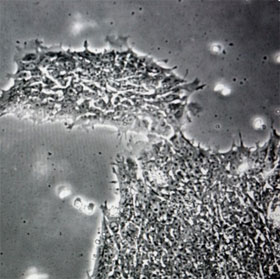
American scientists at the John Hopkins and Nebraska University School of Medicine accidentally discovered a virus in algae that could infect the human brain.

There are two species of Demodex common on human skin, Demodex folliculorum, often parasitic in hair follicles, hair and Demodex brevis usually parasitic in the sebaceou…

This delicious, economically valuable fruit has been domesticated by humans from wild plants to plants for at least 7,500 years ago.
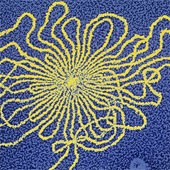
Scientists have found a virus that has never been recorded in human gut, according to a new report on the Nature Communications journal.
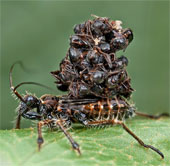
Among the most bizarre creatures in the world, the killer bugs cannot be missed, ie fierce insects clean up prey bodies and carry them on their backs.
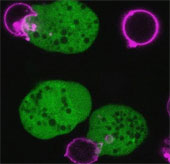
According to a recent study, parasitic amoeba, a group of certain unspecified unicellular organisms that live in the human body, can destroy cells by biting pieces of in…
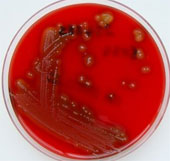
Scientists have found that a meat-eating bacterium can cause fatal infections that evolve rapidly, within 35 years.

A new study has found that plants are creating a calcium wave to be able to survive in increasingly salty soil.
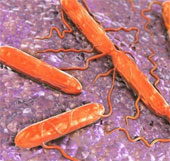
The overuse of antibiotics on humans and animals is thought to be the main cause of the increase in antibiotic-resistant or superbug bacteria.
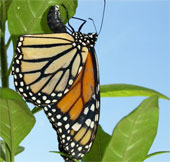
For many butterflies, finding a place to stay and rest is not easy. Deforestation, drought, and global temperature changes are greatly affecting their habitats.