Space science
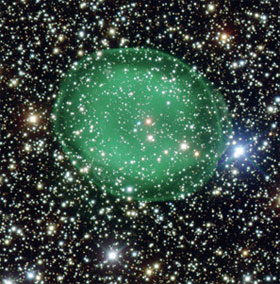
Close up of dead star
European astronomers have announced the image of a star about 3,300 light-years from Earth, emitting the last bright light before disappearing forever.
Browse ScienceInfo articles and explainers related to Light.
3,286 published items.
European astronomers have announced the image of a star about 3,300 light-years from Earth, emitting the last bright light before disappearing forever.
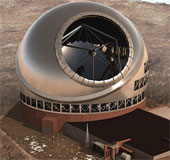
Thirty Meter telescope telescope can collect images of objects that are 13 billion light-years away, near the beginning of the universe.
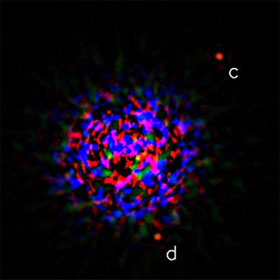
US and Canadian scientists have found steam and carbon oxides in the atmosphere of a planet 129 light-years from Earth.
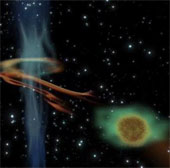
For the first time, astrophysicists at the University of Geneva in Switzerland discovered a black hole swallowing a planet with an estimated mass of 15 times that of Jup…
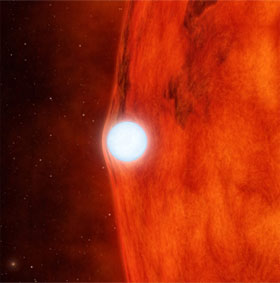
Space telescope Kepler and experts of the American Palomar Observatory found the super-solid white dwarf died in a binary star system.
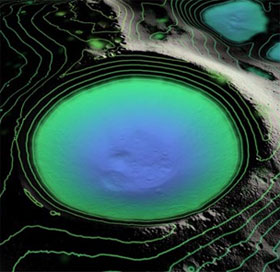
There are places on the Moon that have been billions of years of sunshine and only illuminated by an unmanned NASA spacecraft.
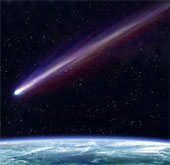
The US Space Agency said on March 23 that it had received a lot of information about the appearance of a giant light-like
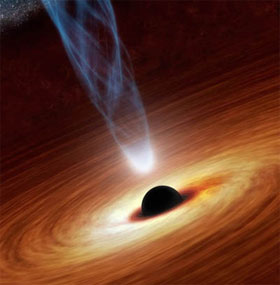
The supermassive black hole has a speed close to the speed of light. This is the discovery of scientists from the US Aeronautics Agency (NASA) thanks to the integration…
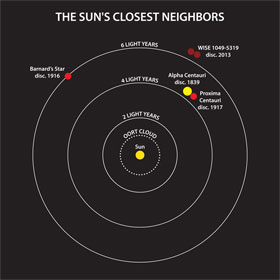
An American astronomer said he had found a pair of new stars lying close to the solar system, and also the nearest neighbor to be discovered since 1917.
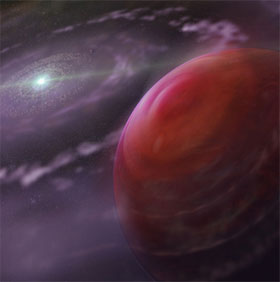
HR 8799c, the name of the planet, about 130 light-years from Earth. It is quite far from its own star so astronomers can observe it easily.
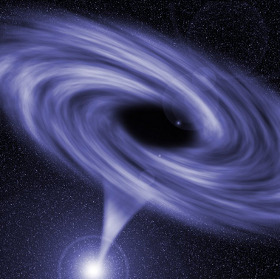
According to the US Aerospace Agency (NASA), a black hole is formed on the surface of the Sun within 48 hours (February 19 and February 20). NASA scientists discovered t…
For the first time astronomers have measured the rotation speed of a supermassive black hole, and it rotates at nearly the speed of light.
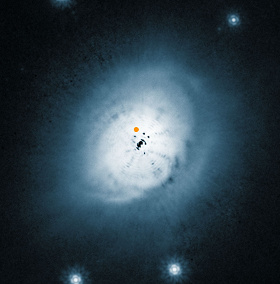
Chilean astronomers said that for the first time they observed directly a planet picturing inside a disk of gas and thick dust at the star system 335 light years away.
Experts of the University of St. Andrews (Scotland) has successfully invented a miniaturized version of the
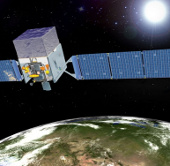
The Fermi glass vision has detected traces of so-called dark matter that account for 85% of the universe's mass.