Space science
Revealing the largest galaxy in the universe
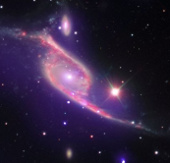
Astronomers have suddenly located the largest galaxy ever, five times larger than our Milky Way galaxy.
Browse ScienceInfo articles and explainers related to Light.
3,286 published items.
Astronomers have suddenly located the largest galaxy ever, five times larger than our Milky Way galaxy.
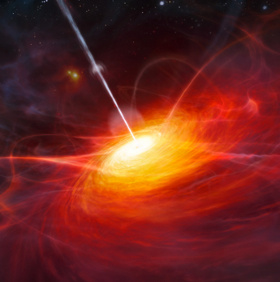
A quasar group forms the largest structure in the universe with a length of up to 4 billion light-years.
Comet giant is discovered by two Russian astronomers
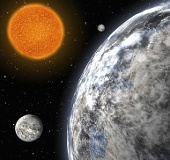
Tau Ceti, one of our closest stars, is a potential candidate that can contain Earth-like planets.
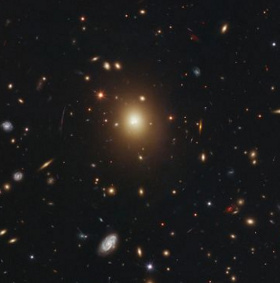
The astronomical industry welcomed the impressive discoveries in 2012, which changed the way people knew about the universe, and pushed some devices to the critical leve…
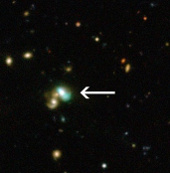
Observatories in Chile and Hawaii (USA) have identified a new type of galaxy called mung bean galaxy, due to their unusual appearance and strange light.
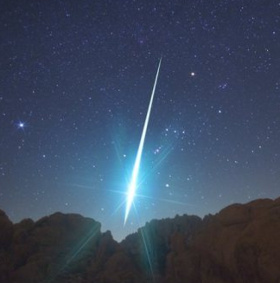
The most beautiful meteor shower in the year Geminids (Gemini) will have a maximum time on December 13 and 14 and this will be the most ideal time for Vietnamese astrono…
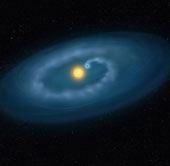
A distant planet is becoming the prey of the central star itself, and the whole scene of the horrible incident unfolds underneath the curtain absorbing all the illuminat…
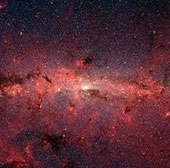
The sky space is vast with countless interesting phenomena and beautiful views, which observers can see with the naked eye or the telescope.

Japan is planning to launch Epsilon light boosters in the summer of 2013, RIA Novosti reports from Japan Space Exploration Agency (JAXA) today October 30.

For the first time, American astronomers estimated the average distance between stars in the universe.
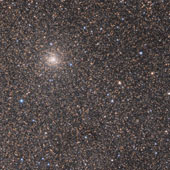
Astronomers have captured light from the first stars of the universe. Shortly after the Big Bang event about 13.7 billion years ago, the universe cooled down to allow at…
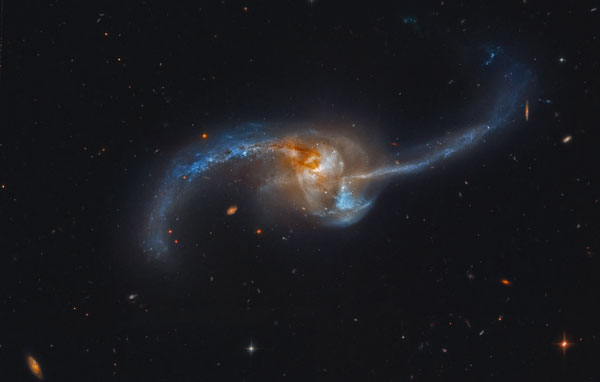
Astronomers saw a pair of galaxies rushing into each other in the distant universe, a future image of the Milky Way itself for several billion years.
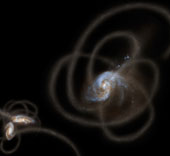
American astronomers believe that mysterious infrared halo across the night sky may be related to isolated stars outside the galaxy's borders.
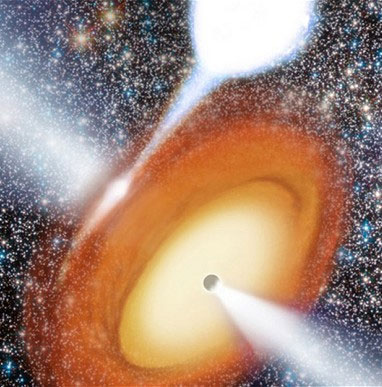
Stefan Umbreit, an astronomer at Northwestern University in the United States, and colleagues found black holes after analyzing data of Messier 22, the constellation abo…