Space science
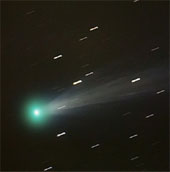
The ISON comet can be observed with the naked eye
Comet ISON, the object that received the most attention from observers this year has come quite close to the Sun.
Browse ScienceInfo articles and explainers related to Light.
3,286 published items.
Comet ISON, the object that received the most attention from observers this year has come quite close to the Sun.

Inventing telescopes, spectroscopic applications or for the first time predicting solar eclipses are memorable milestones of astronomical research history.
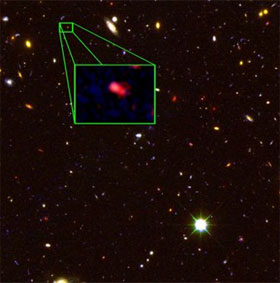
Texas astronomers have discovered the most distant galaxy ever, pictured when the new universe is 700 million years old.
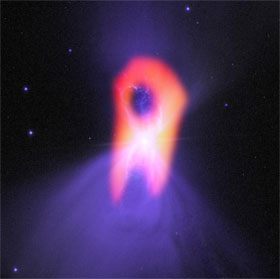
International astronomers have just confirmed the Boomerang nebula, 5,000 light-years from Earth, the coldest region in the universe with a temperature of about -272.2 d…
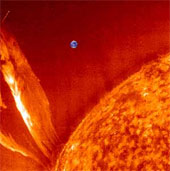
The Sun lies very far from Earth, making light need about 8 minutes 19 seconds to reach Earth.
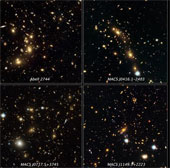
NASA's three most advanced space telescopes prepare to join forces to explore the deepest parts of the universe, opening new frontiers before humanity.

To celebrate the 2013 Halloween festival (also known as the ghost festival), NASA released three unique, haunting space images taken by the Spitzer space telescope.
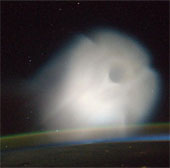
Astronauts on the International Space Station (ISS) have recently captured an image of an eerily shaped cloud, formed high above the Earth atmosphere
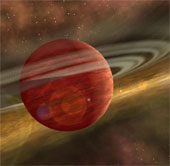
A giant planet recently discovered 25,000 light-years from Earth, can provide clues about the formation of planets.
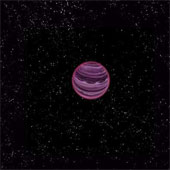
Called PSO J318.5-22, the sun-free planet is 80 light-years from Earth and has 6 times the mass of Jupiter.
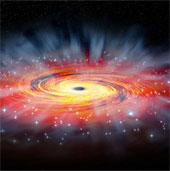
These new findings are the result of one of Chandra's longest observation campaigns ever made.
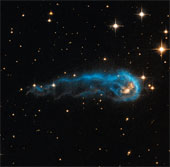
With a length of nearly 10 trillion km, a giant cloud of gas in the universe has the same shape as the flying blue worm.
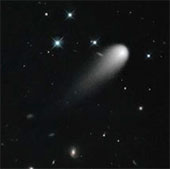
Astronomers are planning to observe the ISON comet, dubbed the century comet, when approaching the Sun. However, astronomers say the comet of the century will not shine…
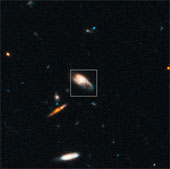
Astronomers say the Hubble Space Telescope telescope has detected a gamma-ray burst from the event named kilonova, temporarily translated.
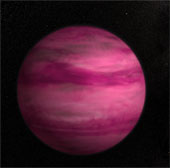
GJ 504b, the name of the pink planet, revolves around a star named GJ 504 and 57 light-years from Earth. GJ 504 star, belongs to the constellation Virgo, a little hotter…