
Space science
40 billion planets can sustain life
NASA scientists estimate that among planetary systems orbiting stars similar to the Sun, about 22% contain a life-sustaining planet.
Browse ScienceInfo articles and explainers related to NaSa.
3,231 published items.
NASA scientists estimate that among planetary systems orbiting stars similar to the Sun, about 22% contain a life-sustaining planet.
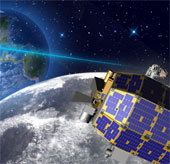
NASA recently reported that it has successfully carried out data transmission from the laser to the Moon at a speed of 622Mbps at a distance of 384,630km.
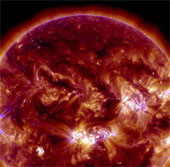
At the weekend, the sun released the first two X-level flares in five months, losing temporary radio waves on Earth.
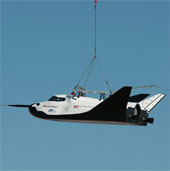
The new generation shuttle Dream Chaser has a free flight test for the first time on October 26 but was damaged because the landing unit had a problem.
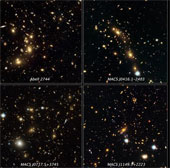
NASA's three most advanced space telescopes prepare to join forces to explore the deepest parts of the universe, opening new frontiers before humanity.

To celebrate the 2013 Halloween festival (also known as the ghost festival), NASA released three unique, haunting space images taken by the Spitzer space telescope.
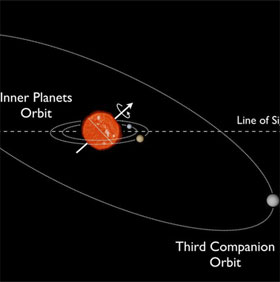
The Kepler telescope of the US Space and Aeronautics Agency (NASA) has transmitted an unusual planetary system, with
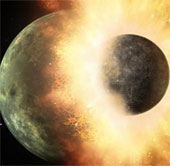
Mercury can unravel the long-standing mysteries of the moon's formation, after scientists found unexpected similarities between these two bodies.
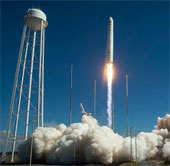
All images of Cygnus's activities were broadcast live on NASA television.

Facing a difficult economic situation, the US Aeronautics Agency (NASA) decided to promote the use of 3D technology in space research with the aim of minimizing costs.
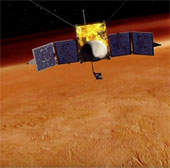
According to NASA, the Maven probe, the last mission mission on Mars, will be launched on November 18 this year.
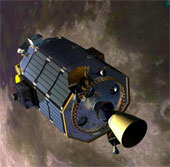
Spacecraft Exploring the unmanned Lunar Dust and Moon (LADEE) flight into the Moon's orbit, initially carrying out the task of exploring the atmosphere and dust around t…
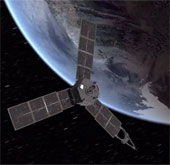
The Juno probe of the US Aeronautics and Space Agency (NASA) on October 9 flew 559km from Earth.
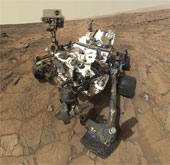
NASA's Mars discovery self-propelled ship, Curiosity, did not find methane on Mars after more than a year of research and conducted tests in the red planet's atmosphere.
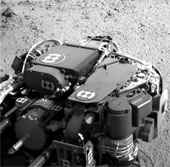
The Curiosity probe of the US Space Agency (NASA) has found a significant amount of water in the soil on the surface of Mars.