Space science
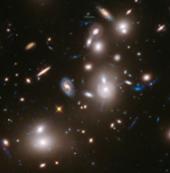
Telescope 'travel' back in time 13.2 billion years
The European Space Agency and NASA have introduced the first images of galaxies 13.2 billion years ago, captured by Hubble Space Telescope and Spitzer.
Browse ScienceInfo articles and explainers related to NaSa.
3,231 published items.
The European Space Agency and NASA have introduced the first images of galaxies 13.2 billion years ago, captured by Hubble Space Telescope and Spitzer.
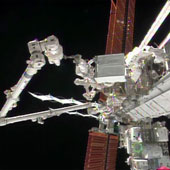
Two astronauts are about to step out into space on Christmas Eve to repair the broken cooling system on the International Space Station (ISS).
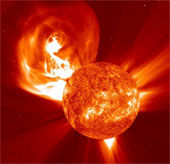
Every 11 years, this event is repeated once: the Sun's magnetic field will change dramatically for each other.
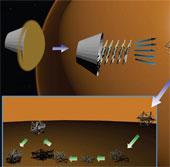
NASA scientists are testing robots capable of being dropped from a height of almost 100km and still landing gently on any surface of the celestial body.
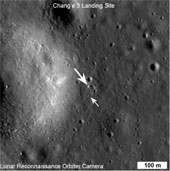
China's Jade Rabbit self-propelled device on Ms. Hang's surface was displayed on the image transmitted by the NASA satellite to the ground.

The US space agency (NASA) has deployed space walks to repair the broken cooling pipe of the International Space Station (ISS).

Russian cosmic enthusiasts have reunited efforts in the Internet space and proved that even non-professionals can reveal the mysteries of the universe.
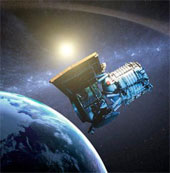
The asteroid hunting spacecraft has been awakened after 2 years of hibernation in space, and has just returned to the first images of potential targets.
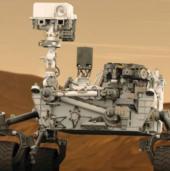
NASA said the Curiosity self-propelled on Mars has just been upgraded, including software updates and enhanced device performance.
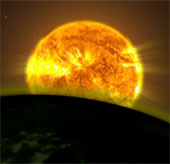
Astronomers have found signals that there is water in the air of five distant planets.
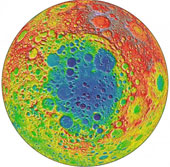
In addition, NASA plans to bring the spacecraft into orbit around the Lagrange L2 point, which is at an altitude of 60,000km above the dark part of the moon.
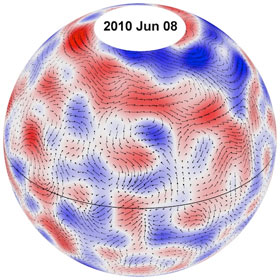
Scientists have predicted that the sun has a particle-like structure (matter particle). Each particle of this matter can be 16 times larger than the Earth.
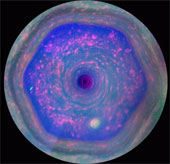
The Cassini spacecraft has sent from Saturn the image of a strange hexagonal object with surface wind stronger than a Category 5 storm on Earth.
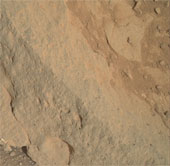
The Curiosity probe of the US Space Agency (NASA) for the first time detected direct evidence that a freshwater lake once existed on Mars.