New technology
New cell research tools can contribute to revealing the secrets of disease
Advances in understanding the rotation of living cells can help researchers 'illuminate' the causes of deadly diseases.
Browse ScienceInfo articles and explainers related to Nano.
335 published items.
Advances in understanding the rotation of living cells can help researchers 'illuminate' the causes of deadly diseases.

Researchers in Japan have created an alloy with properties similar to palladium, a precious metal used in many high-tech products.
At the Israeli Nano Seminar 2010, scientists have come up with the daring idea of bringing chemicals deep into the tumor by mini-submarines.
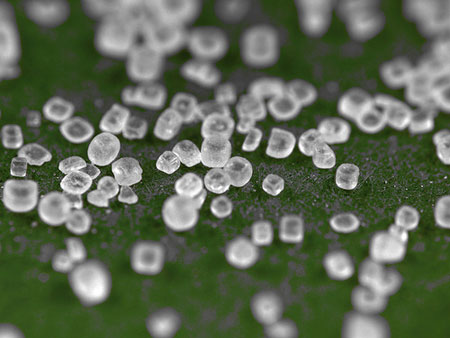
The lithium batteries that we see in cell phones and laptops can be shrunk with salt in the future.

Chinese scientists have created a super-strong, superconducting carbon fiber fabric that can be used to make astronauts' clothing, bulletproof and anti-radiation.
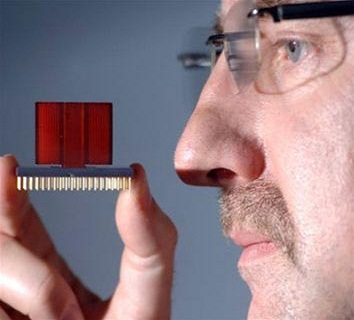
Bionic electrons can diagnose fast, accurate and localized cancers such as lung cancer, breast cancer, prostate cancer.

Scientists at the Massachusetts Institute of Technology (USA) have used the virus to remove hydrogen from water.

Scientists at the California Institute of Technology in the United States have used nanoscale technology to make robots that can move in the blood.

Recently, American scientists have discovered the opposite, light can bend matter.

On March 29, scientists at the University of Ohio found the world's smallest superconducting material - a chain of four pairs of molecules of 3.5 nanometers.

Scientists at the Massachusetts Institute of Technology have discovered a new way to generate electricity: using carbon nanotubes to generate electricity.

RTI has developed an intelligent light bulb with nanofibres, saving energy five times that of conventional lamps.

Under certain conditions, carbon nanotubes can convert heat into energy and vice versa.

GS Research Team. Yi Cui, of Stanford University, has successfully put carbon nanotubes (one billionths of a meter) into a dye.

French scientists have successfully researched the new modular transistor Nomfet can simulate the operation of the nervous system.