
Oceanography
Find the deepest volcano on the planet
Scientists at the British National Oceanic Center have discovered craters at a depth of 5 km in the Caribbean Sea.
Browse ScienceInfo articles and explainers related to Sea.
3,672 published items.
Scientists at the British National Oceanic Center have discovered craters at a depth of 5 km in the Caribbean Sea.

Billions of poisonous jellyfish are moving in the waters near the coast of the misty island nation.

Longer than a bus with tentacles covered with razor-sharp spikes, giant ink was once considered a sea monster, but in fact they were not as fierce predators as in legend…

A Caribbean sea turtle has turned itself. Images are posted on YouTube and quickly attract the attention of the online community.
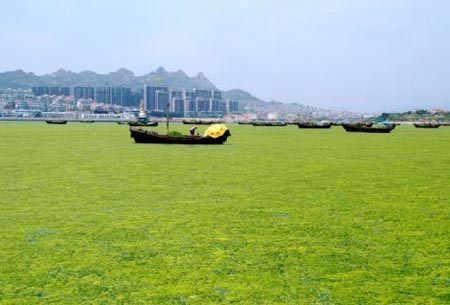
A cluster of algae that covers up to 200 square kilometers is heading toward China's east coast, threatening the region's ecology and tourism.

A new study shows that climate change has caused a population of poisonous crab Henslow to leave their homeland and invade the North Sea of Europe.
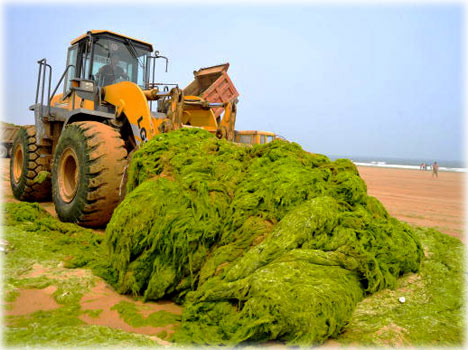
Local authorities and residents of Qingdao City, Shandong Province (China) said they are taking every measure to eliminate the blooming green algae that rage on the east…
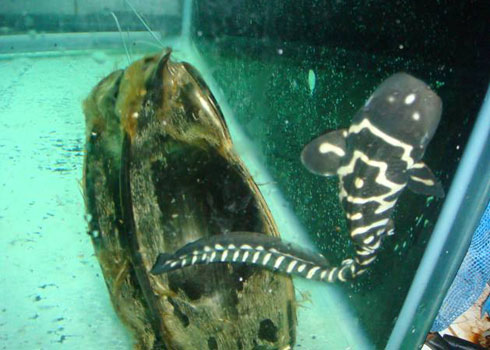
Two shark sharks that live in the aquarium VinPearlland (Nha Trang) have spawned themselves without males.

Scientists from the international deep-sea survey project InterRidge said in March 2010 they will officially launch the world's deepest seabed exploration device.

For the first time, scientists have discovered something that has never been seen in nature: a sea slug is both an animal like a fellow but has the ability to synthesize…

For the first time divers and Arctic photographer Franco Banfi, 58, had an interesting meeting with white dolphins (Delphinapterus leucas) under the icy White Sea.

The latest research on the three-layer shell structure of a sea snail species can lead to the introduction of new generation helmets and helmets.

The fact that giant killer whales do not have the habit of killing at sea.

The KM3 Observatory is 600m high and has just been completed on the seabed at a depth of 2000m in the area near the island of Sicily in Italy.

A new study confirms that the sea urchin's bristling body acts as a large eye covered with thorns.