Space science
America tries not to
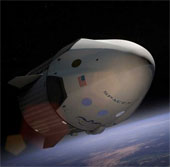
Yesterday, the US aerospace agency (NASA) signed contracts up to 6.8 billion USD with 2 domestic companies to not
Browse ScienceInfo articles and explainers related to Soyuz.
209 published items.
Yesterday, the US aerospace agency (NASA) signed contracts up to 6.8 billion USD with 2 domestic companies to not
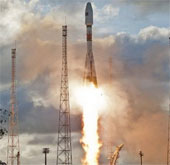
The European Space Agency (ESA) said it is still investigating the cause of the two satellites of the Galileo navigation system to go wrong after its launch.
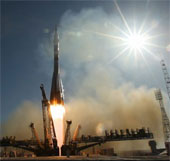
On August 22, the European Union (EU) successfully launched a Soyuz missile from the French Guiana Space Center, carrying two satellites of the Galileo navigation system.
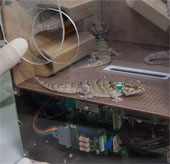
Geckos, tree seeds and some samples of materials are brought to space in a Russian biological and biological research project.
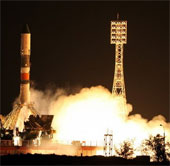
Russian Flight Control Center on 24/7 announces that the M-24M Transport vessel has successfully assembled with the International Space Station (ISS) in automatic mode.
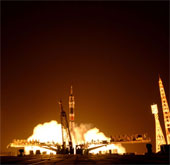
After six hours of departure from the launch pad in Kazakhstan, Russia's Soyuz spacecraft carrying three astronauts flew to connect with the International Space Station…
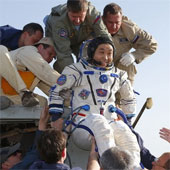
On the morning of May 14, the MKS-38 flight crew working on the International Space Station (ISS) was safely taken back to Earth by the TMA-11M Combined Ship.
On the morning of March 26, the Russian Soyuz rocket carried a manned spacecraft with three new astronauts to the International Space Station (ISS).
According to Russian and American space agencies, the Soyuz spacecraft did not successfully assemble with the International Space Station (ISS) on the morning of March 2…
On Friday night, the Soyuz spacecraft with the new crew successfully connected to the International Space Station (ISS).
In the morning of April 4 (Vietnam time), Europe's Sentinel-1A satellite has been put on orbit by Soyuz-ST Russian rocket. The launch was made from the Kourou dance airp…
On the morning of March 11, the 38th international flight team worked on the International Space Station (ISS) safely brought back to Earth by the TMA-10M Spacecraft.
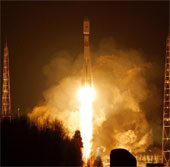
The Russian Ministry of Defense press on March 24 announced the launch of the Soyuz-2.1b rocket into space carrying the Glonass-M positioning satellite No. 54 from the P…
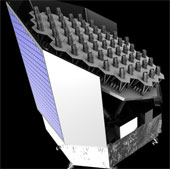
The European Space Agency has chosen a telescope to launch into space and detect unknown planets.
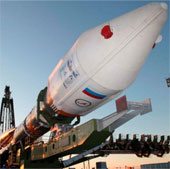
The 2.1v Soyuz rocket leaves the launch pad in the same afternoon from the Plesetsk launch site in the Arkhangelsk region, northwestern Russia.