Space science
The Philae robot sends signals from comets to Earth
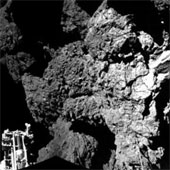
The exploration robot Philae has reestablished contact with Rosetta and sent data to the earth after two days landing on a comet surface.
Browse ScienceInfo articles and explainers related to Surface.
1,629 published items.
The exploration robot Philae has reestablished contact with Rosetta and sent data to the earth after two days landing on a comet surface.
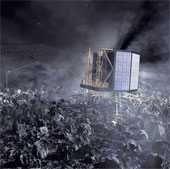
After two days of landing on the surface of a comet, the robot Philae fell into a state
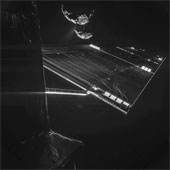
On November 12, the first probe in the history of aerospace industry successfully landed on a comet.
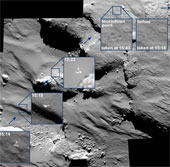
The initial data analysis showed that Philae had discovered traces of organic molecules containing carbon atoms, which are the basic element of life on Earth.
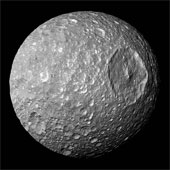
A group of astronomers discovered that the Mimas satellite's orbit around Saturn struck vibrations and this suggests that underneath the Mimas rock layer may contain an…
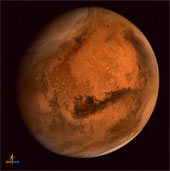
The European Space Agency (ESA) announced on October 1 that it has identified four potential locations on Mars to carry out self-propelled landings in 2019.
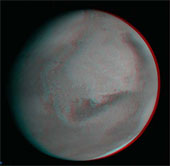
India's spacecraft has just sent back to Earth the first 3D image of Mars.
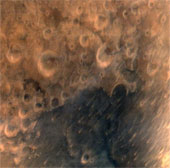
India's spacecraft sent to Earth the first photos of Mars with the surface formed by craters.
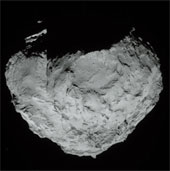
The Rosetta spacecraft published some unexpected features about comet 67P / Churyumov-Gerasimenko as it turned around in its cold journey.
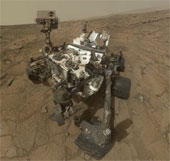
NASA's Curious Robot has moved to the foot of Sharp Mountain, continuing its quest to trace the life of the microbes on Mars.
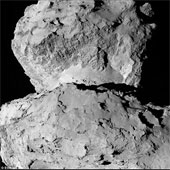
The European Aeronautics Agency (ESA) has made a list of 5 possible answers for the first landing plan on the surface of a comet.
An Italian laboratory located at a depth of 1.4 km in the heart of the Apennine has discovered molecules from the Sun that can help measure activity at the planet's core.
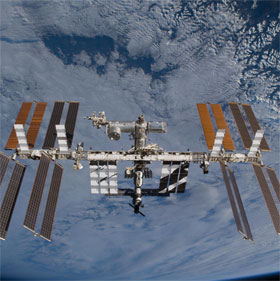
Scientists have discovered traces of living organisms that live on the surface of the International Space Station (ISS).
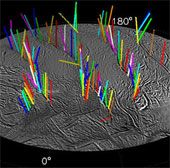
Scientists at the US Aeronautics and Space Agency (NASA) have identified more than 100 geysers on Saturn's moon Enceladus.

In fact, the big planets all have spheres while meteorites have different shapes, however our Earth is not completely spherical.