Discover science
Does hot water freeze faster than cold water?
In general, the water is frozen into ice at 0 degrees Celsius. Although there are logical arguments, in fact hot water can freeze faster than cold water under certain co…
Browse ScienceInfo articles and explainers related to Temperature.
2,022 published items.
In general, the water is frozen into ice at 0 degrees Celsius. Although there are logical arguments, in fact hot water can freeze faster than cold water under certain co…

Lager beer lovers always believe that their number one beer is the most special. But perhaps they will have to prepare this drink at Oktoberfest beer festival in October.

One strange thing is that among more than 6 billion people on earth, each person has its own characteristics different in height, weight, age, gender ... and different e…

Physicists at the University of Maryland have recently demonstrated that the limit of mobility in graphene material (the criterion for determining how good a conductive…

Winter comes with gloomy days that often make people sad. But just taking a cold shower can cure and even prevent moodiness.

A strange property of ferromagnetism near absolute zero (0 K) provides direct evidence that some quantum phase transitions occur very differently from the traditional tr…

Your body needs to maintain a constant temperature at 36.9 degrees Celsius. To avoid hypothermia and other consequences of coldness, your brain will keep a close eye on…
An American scientist discovered the mechanism of the Mpemba effect - known after a Tanzanian student named Erasto Mpemba found that the sugar milk he used to make ice c…
Human heat resistance is much better than we thought. In central Australia, summer temperatures in shady areas are usually 46 degrees Celsius, peaks up to 56 degrees. An…
When it comes to ice, perhaps you always think it must be very cold, so how can you burn your hands? However, in fact, at high pressure conditions, water can freeze at t…

That is Hypothermia Undressing phenomenon, and so far science cannot explain.
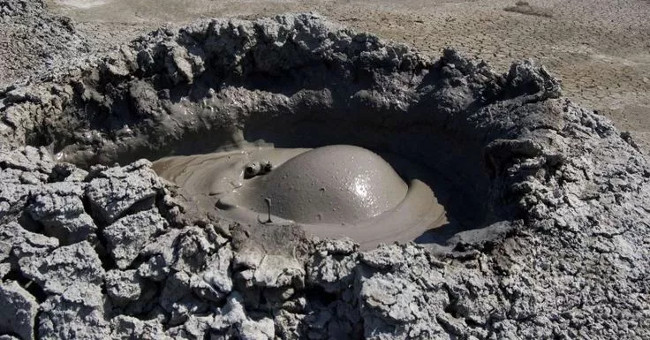
The pillars of water exploded mysteriously in the middle of the Tyrrhenian Sea, surprising the scientists, but they said that a solution was now found.

The body of a patient heated to 40 degrees C after death is a mysterious phenomenon that confuses the scientific world.
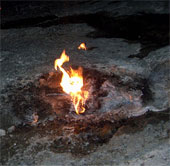
The flames in Turkey's valley have been burning continuously for at least 2,500 years, with the effect of a rare metal.

In Chongqing (China), there is an ancient tree capable of forecasting