
Oceanography
Unique stealth fish species
Studying the fish's ability to reflect polarized light will help people invent 'invisible' objects in the future.
Browse ScienceInfo articles and explainers related to Tuna.
45 published items.
Studying the fish's ability to reflect polarized light will help people invent 'invisible' objects in the future.
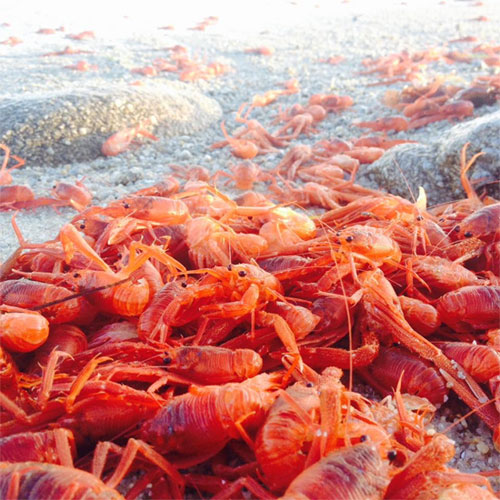
The southern coast of Monterey Bay, California, USA, turns bright red as millions of crabs come ashore and stranded due to the El Nino phenomenon in the equatorial Pacif…
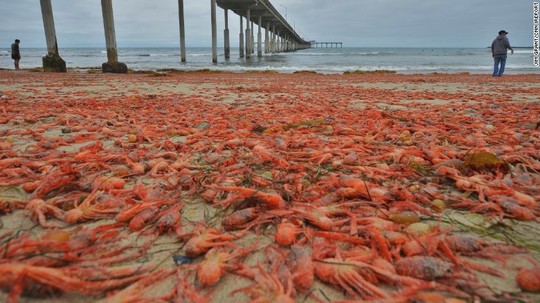
Thousands of small red crabs appear on Orange Beach, Southern California from June 14 to present, causing locals to be anxious and excited, the Washington Post reported…
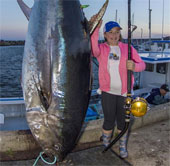
12-year-old Canadian girl Jenna Gavin set a new world record. She relied on her small strength for 2 hours to catch a giant tuna weighing 280kg
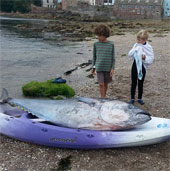
A large bluefin tuna, a rare and abundant fish of many years, has been discovered in the UK.
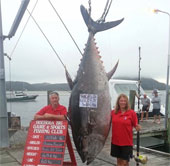
Donna Pascoe (56 years old, New Zealand) was extremely lucky to catch a Pacific bluefin tuna weighing 411.6kg.
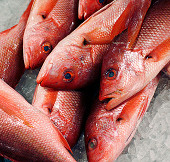
The Maine State Institute for Biodiversity Research (USA) has reported that up to 84% of fish worldwide contain a significant amount of mercury to human health, accordin…
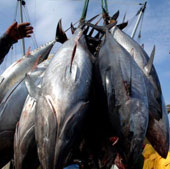
Speaking at the conference, experts emphasized that some tuna species are being exhausted, and urging governments to take action to preserve not only tuna sources but al…
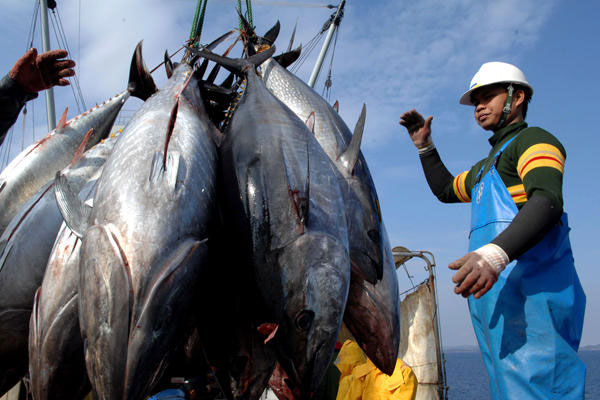
Nicholas Fisher, a researcher at Stony Brook University in the US, and colleagues measured the concentration of cesium (Cs) radioactivity in the body of Pacific tuna alo…

A giant 445 kg bluefin tuna, the heaviest of the fish caught in Japan 24 years, was sold at the fish market in Tokyo today.
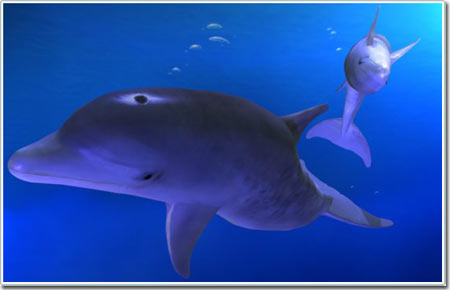
The fastest speed a dolphin can swim near the water is 54 km / hour. He can't swim faster, if he doesn't want to hurt.
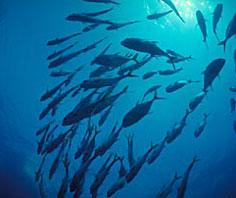
Japanese researchers warn that if the global climate continues to warm up at the current rate, by the end of the century, tuna resources in the Pacific will be seriously…

The year 2017 was a bumper year for Egyptian archeology, when countless ancient tombs were found.
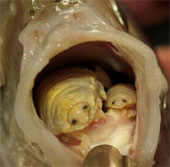
The parasite, usually clinging to the tongue of the tongue and sucking blood from the host, was discovered by a British woman in a tuna box.

Tuna throws its tail in pots after thawing under warm running water thanks to the method of preserving fresh fish commonly used in Japan.