
Space science
Departing virtual flight to Mars
The ship 'virtual' to Mars with a 520 day and night journey, the third stage in the 'Mars - 500' project of the Y-Sinh Academy (Russian Academy of Sciences) 'departed' y…
Browse ScienceInfo articles and explainers related to Universe.
2,417 published items.
The ship 'virtual' to Mars with a 520 day and night journey, the third stage in the 'Mars - 500' project of the Y-Sinh Academy (Russian Academy of Sciences) 'departed' y…

The Soviet Lunar exploration vehicle, Lunokhod 1 was found by NASA and most surprising, the agency could

About 3.5 billion years ago, the plateaus north of Mars were covered by a giant ocean that was about one-third the size of the red planet.

A recent study shows the amount of water below the surface

Artificial satellites such as the International Space Station and Hubble telescope can be damaged by a meteor shower next year.

Scientists claim that, at the time of today 3.5 billion years, 36% of the surface of Mars had been covered by seawater.
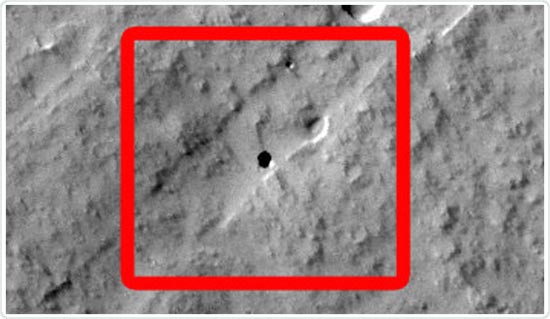
A group of 7-year-old students in California, the United States discovered a mysterious cave on Mars when participating in the research project of images operated by a N…
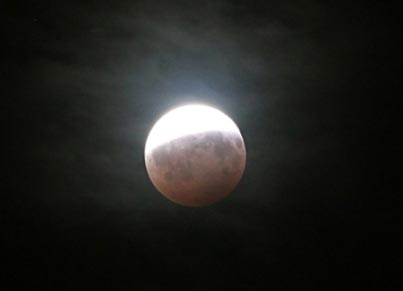
We will admire the real Moon phenomenon on Saturday night. The people of Vietnam and residents of Southeast Asia, Australia and America will witness an unusual Moon ...

Russian scientists have studied and developed a device that can help us observe dark matter.

The discovery of nine extrasolar planets has challenged current theories about the formation of planets, according to new observations by astronomers.

For the first time, astronomers have discovered that the magnetic field of the atmosphere outside the sun produces mysterious sound tunes.

On April 24, the Hubble Space Telescope, one of the most man-made space research tools, has been active for 20 years.

The European Space Research Organization in the Southern Hemisphere (ESO) has decided to choose this South American country as the place for the world's largest telescop…

US scientists have discovered a lot of freezing water and organic compounds in an unexpected place: meteorites between Mars and Jupiter.

After conducting an image analysis of 20 star clusters outside the galaxy, the international team of scientists identified the distribution of dark matter in the univers…