Space science
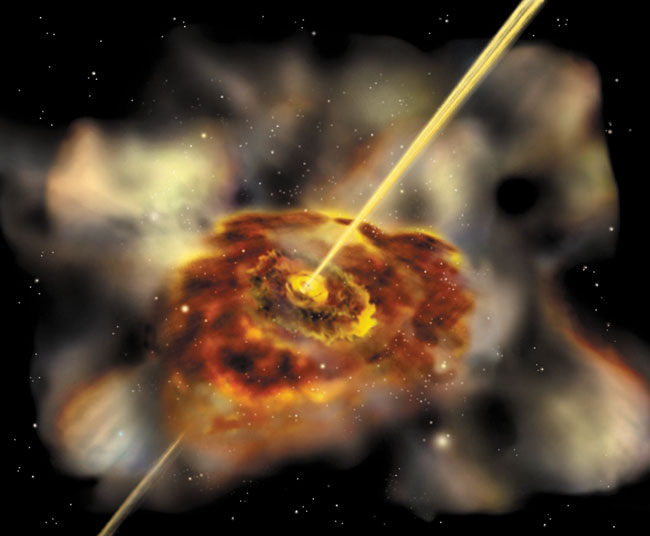
New history page about black holes (part II)
According to Martin Haehnelt of Cambridge University, simulations of the evolutionary process began to emerge in the mid-1990s when researchers found but the clue shows…
Browse ScienceInfo articles and explainers related to Universe.
2,417 published items.
According to Martin Haehnelt of Cambridge University, simulations of the evolutionary process began to emerge in the mid-1990s when researchers found but the clue shows…
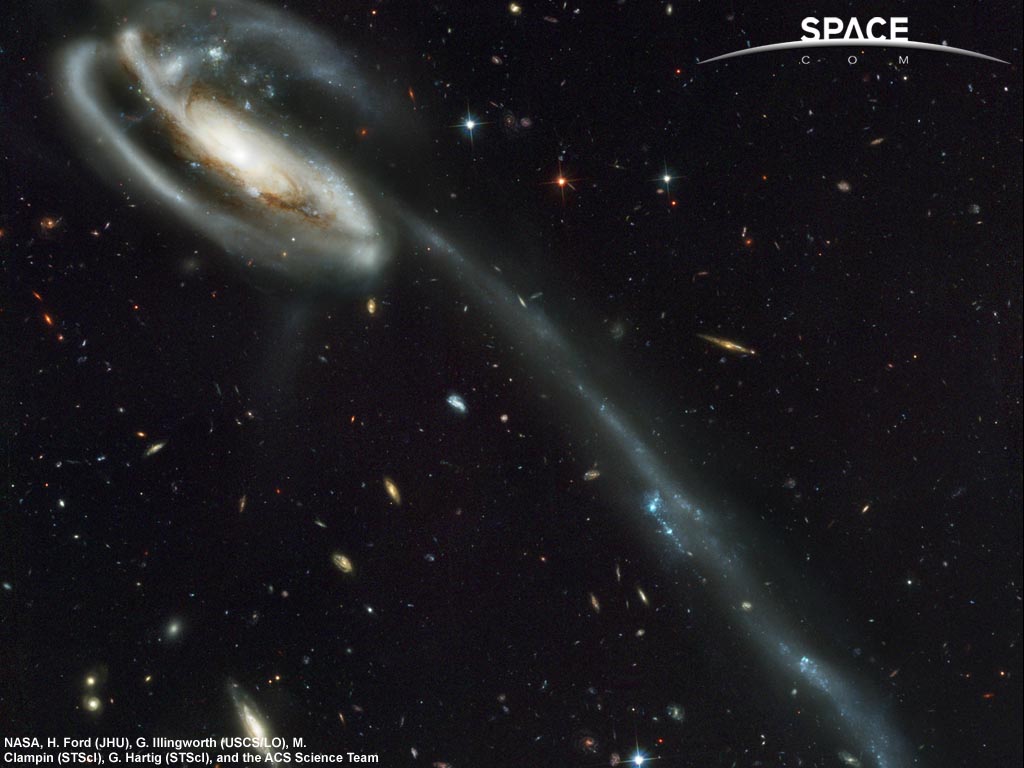
Scientists have envisioned galaxies forming along a monolithic collapse path, in which a giant gas cloud bursts from within.
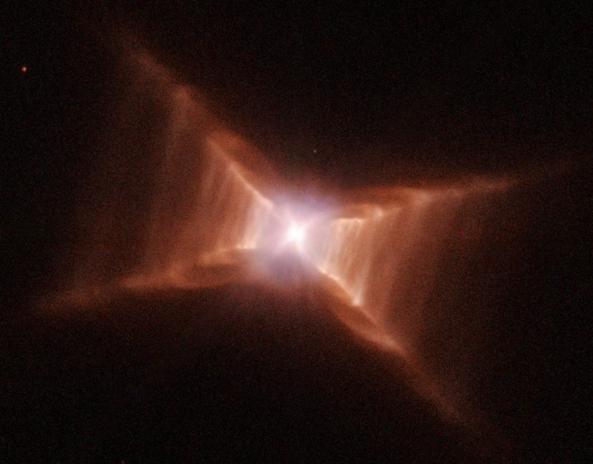
Cosmic dust annoyed astronomers because they prevented them from observing their distant stars.

The world's largest particle accelerator (LHC) of the European Nuclear Research Center (CERN) will resume operations next September.

The earth may be hit by a massive meteorite in 160 years. That is the warning of Italian scientists, posted on the latest New Scientist digital issue.

Tens of thousands of debris from a collision between two Russian and American satellites is flying in space at breakneck speed, threatening the safety of satellites in n…

Engineers and astrophysicists from Calgary University of Canada will participate in the world's largest radio telescope project.
The images developed by scientists at Durham University's Cosmology Institute represent the

Some British scientists still believe that nearly 38,000 planets in the universe can nourish life.

The first stars in the universe used to contain millions of microscopic black holes.

When the first alarm bell rang on February 1, 2003, the crew of seven on the US Columbia spacecraft only had an extra minute to live.
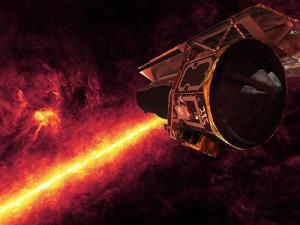
British astronomers are trying to expand our knowledge of the history of the Universe with a new project to understand the beginning and formation of galaxies.
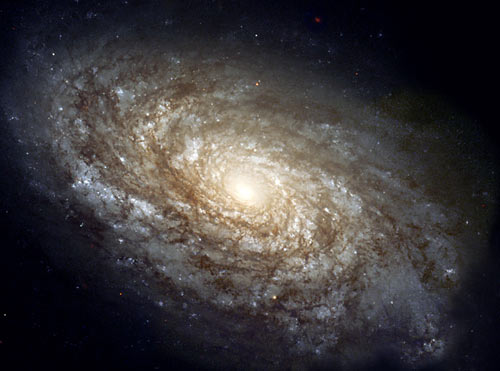
For decades, scientists believe that the galaxy - the home of the Earth - is just a child next to the neighbor Andromeda giant.
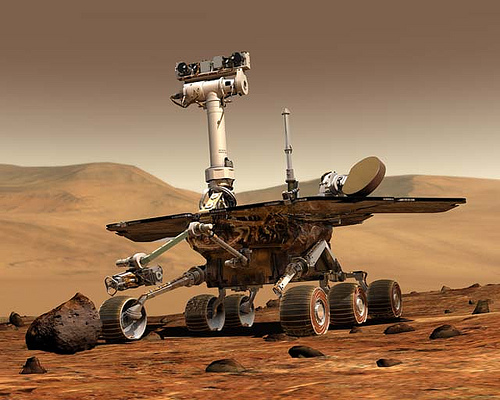
NASA's 6-planet Mars self-propelled self-propelled survey device still works well after 5 years of landing on the red planet.

US astronomers have claimed that galaxies are not the first entity in the universe, because supermassive black holes have appeared before them.