
Space science
The giant missiles roam the universe
Huble telescope has just taken a picture of 14 stars rushing in space with tremendous speed like giant missiles.
Browse ScienceInfo articles and explainers related to Universe.
2,417 published items.
Huble telescope has just taken a picture of 14 stars rushing in space with tremendous speed like giant missiles.

Observed from Earth, Cassiopeia A object, the remains of a star block exploded 330 million years ago, looking like a colorful ball.

The Radio Frequency Department has successfully registered 3 orbits of 107, 126 and 131 for Vietnam to deploy VINASAT-2 satellite projects.

According to a researcher at Tel Aviv University, blowing away a meteorite is in fact more complicated than what's in the movie.

Tehran is planning to launch space exploration spacecraft with a number of animals living inside, to make way for their manned space flights in the future.

The Hubble Space Telescope has just discovered CO2 and CO in the atmosphere of a distant planet.
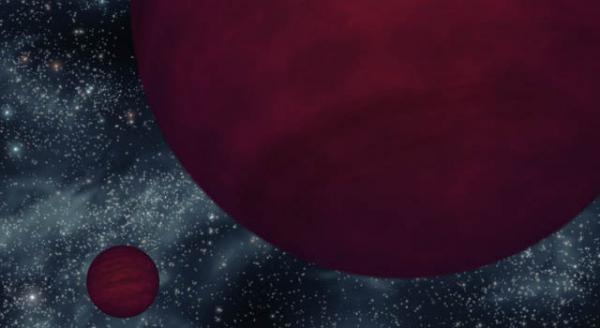
The object that holds the record for the darkest star-like object in the universe is a twin star

Like ballet dancers dancing around an invisible leader, dozens of stars in the Milky Way are revolving around a supermassive black hole.

The image of the moon last night in many parts of the world has the largest size in the last 15 years, because the position between the moon and the earth is nearly 30,0…

It was the meteor bomb that the Earth had suffered before that was the cause of life on our planet.

Images sent by Cassini's probe show evidence of ocean and ice volcanic existence on Saturn's Enceladus and Titan satellites.

Themis satellite of NASA has discovered two major holes in the Earth's magnetic field.

US scientists have discovered many large carbonate mineral salts in the rock seams on Mars. This proves that the red planet once had a lot of water.
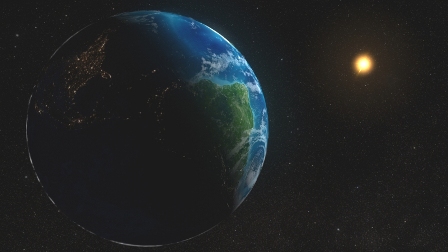
The Earth's position is only a negligible part of the universe, despite recent theories that shed the foundations of modern cosmology.

The accumulation of a number of chemical elements in the northern hemisphere of Mars makes American astronomers believe that the ocean once existed on the red planet.