Archeology
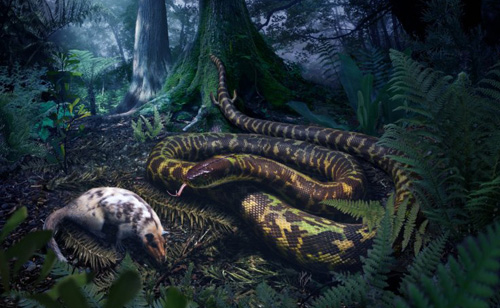
The first snakes in the world can ever have legs
American scientists believe that the world's first snakes have small hind legs, ankles and even toes.
Browse ScienceInfo articles and explainers related to University.
4,907 published items.
American scientists believe that the world's first snakes have small hind legs, ankles and even toes.

Scientists at the University of Bonn in Germany examined the 66-million-year-old egg of the dinosaur feather called Heyuannia huangi and discovered the pigment in the gr…
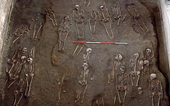
Archaeologists unearth the burial site of a hospital below the University of Cambridge, England, which has more than 400 complete skeletons.
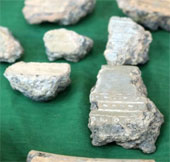
In 2014, experts from East Asia University (Japan) together with officials of the National Museum of History cooperated to study the ancient city of Luy Lau (Thanh Khuon…
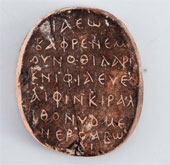
The ancient and mysterious guardian talisman was discovered in Cyprus, with the exact same inscription, whether read or reverse.
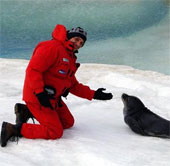
In early 2015, during a survey of the Allan Hills area in Antarctica, scientists from the University of Sienna, Italy discovered a previously unknown fossil forest.

Researchers at the University of Illinois conducted research on fossils of ancient dogs in search of their origin and ancient American civilization.
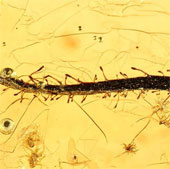
Fossils of a carnivorous plant are found in Baltic amber pieces dating to about 40 million years old.
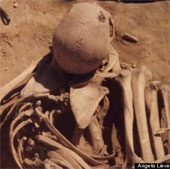
Scientists unearthed a 4,500-year-old skeleton in Siberia, Russia, and determined that this could be the oldest evidence of metastatic cancer in humans.
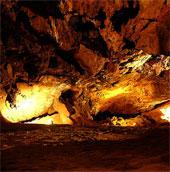
New research in an ancient cave in Israel shows evidence of people beginning to master how to use fire about 350,000 years ago.

Researchers deciphered a handbook from ancient Egypt, revealing many spells, magic about love, methods of exorcism and healing.
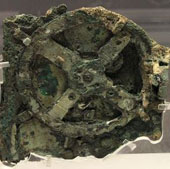
The Antikythera Mechanism, the world's oldest computer, was used by the Greeks to calculate astronomy more than 2,000 years ago.
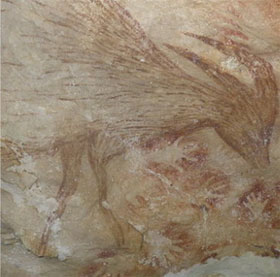
Scientists have identified paintings in a cave in Sulawesi Island (Indonesia) that is up to 40,000 years old.
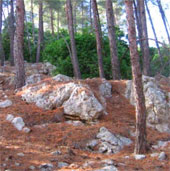
Archaeologist Ido Wachtel at the Hebrew University (Israel) discovered a crescent shaped structure dating back 5,000 years.
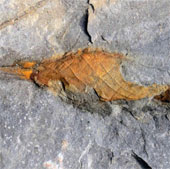
Paleontologist Dean Lomax and colleagues at the University of Manchester in the UK have discovered a shark egg fossil dating back to 310 million years.