New technology
Unmanned aerial vehicles will serve the US Navy
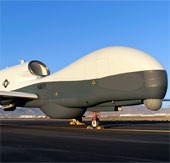
The 14-ton drone called Triton, manufactured by Northrop Grumman, completed a test flight across the United States.
Browse ScienceInfo articles and explainers related to Unmanned Aircraft.
111 published items.
The 14-ton drone called Triton, manufactured by Northrop Grumman, completed a test flight across the United States.

Quarkson (Portugal) is testing a project using unmanned aerial vehicles (UAV) to transmit the internet to every corner of the world.
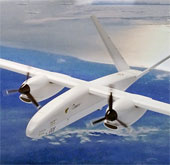
After Amazon, Google is the next company pursuing a project to provide unmanned aerial vehicles.
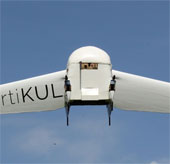
A group of three trainees from Katholieke Leuven Technical University (Belgium) invented a unmanned aerial vehicle called the VertiKUL.

During the Cold War, SR-71 and U-2 spy planes were the main aerial exploration weapons of American superpower. What about the 21st century?
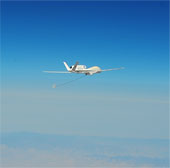
The era of unmanned aerial vehicles (UAVs) to return to the starting point for charging may pass very quickly and never return.

Black Knight Transformer is designed based on the features of unmanned aircraft and cargo vehicles, which can serve for military and civilian missions in the future.
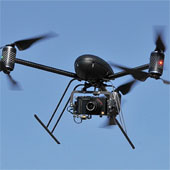
With a compact design and equipped with high-definition camera, unmanned aircraft can take photos, record videos from the air and underwater, support scientific research…
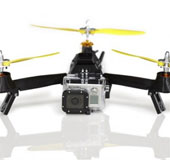
Small, self propelled aircraft manufacturer AirDroids (headquartered in San Diego, USA) named Pocket Drone.
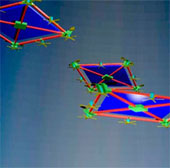
For a British company, stealth aircraft are not simply Amazon's delivery vehicles, but can also become mobile power plants in the sky.
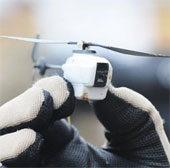
Outperforming detective hummingbird robots, the Black Hornet device is easy to use and has many advantages.
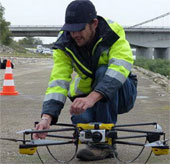
French National Railways (SNCF) has announced the launch of its first unmanned aerial vehicle system to inspect the country's rail network.
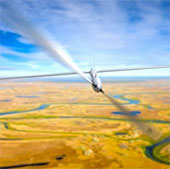
Operated by solar energy, Titan Solara version 50 weighs only 159 kg and can fly continuously for 5 years without refueling.
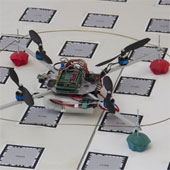
A group of Austrian students has successfully designed a model of aircraft capable of automatically flying based on smartphones.
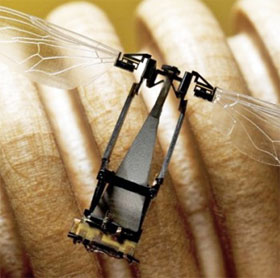
Researchers at Harvard University in the United States have developed tiny bean-sized drones to pollination the flowers, as the number of bees decreases.