Medicine - Health
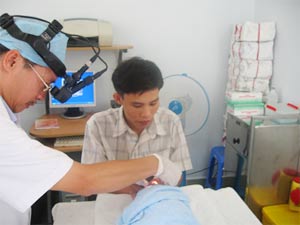
Children are prone to blindness due to premature birth
Premature babies at 32 weeks and weighing less than 1.8 kg, often blind in both eyes, due to small blood vessel damage in the eye. If treated early, 80% of children also…
Browse ScienceInfo articles and explainers related to Blindness.
109 published items.
Premature babies at 32 weeks and weighing less than 1.8 kg, often blind in both eyes, due to small blood vessel damage in the eye. If treated early, 80% of children also…
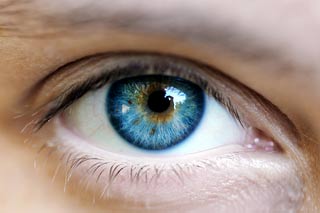
British scientists are planning to use germ cells (in the spinal cord) to cure blindness. This is good news for those patients who still think it cannot be cured. The fi…
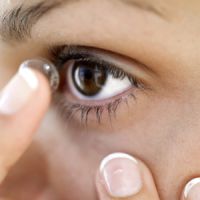
A worldwide recall order for a US-made contact lens fluid has just been raised after concerns that it may cause serious eye damage, even blindness.
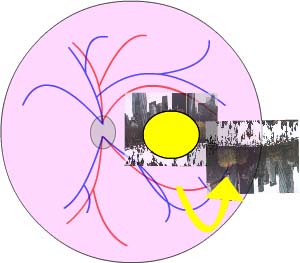
Research shows that zinc may play a role in the development of a common cause of blindness. Age-related macular degeneration (AMD) is the leading cause of blindness in o…

Those who drink will easily ignore objects that appear unexpectedly in sight, even if their blood alcohol content is only half the driving limit. Dr. Seema Clifasefi at…
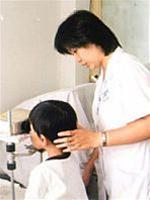
Injuries in ophthalmology may be caused by accidents, sports, surgery, environmental pollution, chemicals or ultraviolet rays and ions radiation ... Severe injuries can…
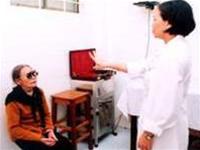
A better chicken-eye glare than night vision is not really a disease but a symptom of many different diseases. Many people with poor vision also complain that they have
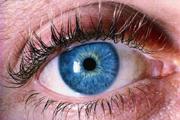
Scientists have reported that stem cells retain the light source for mice that are about to be blind. This study opens up prospects for some forms of blindness in older…
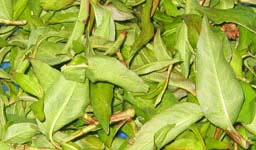
Fascioliasis has recently appeared and spread in people, masters Dao Hanh Nguyen, head of the examination department specialized in the Institute of Malaria - parasites…
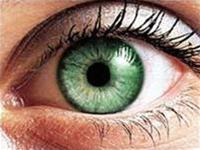
Scientists at New York University, Columbia, USA reported three-quarters of vision impairment in the elderly - a major cause of blindness caused by two genes.
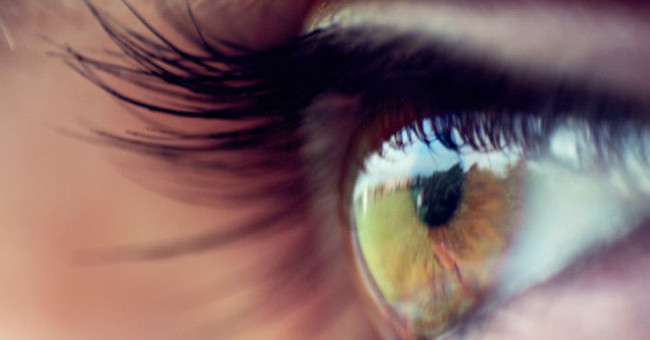
By using two cameras attached to a pair of eyeglasses to record images in real time and transfer information directly to the brain, scientists have created a
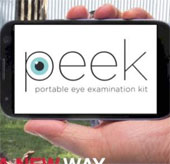
A new application on the smartphone scans the patient's retina and sends images to doctors for remote diagnosis.
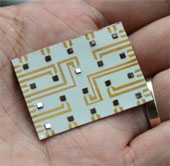
Scientists have developed artificial systems, inspired by the dwarf cave dwellers, to better assist AUV navigation.
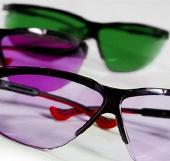
Neurobiologist Mark Changizi and Tim Barber of the 2AI lab in Boston, USA have created special glasses that can help people with red-and-blue blindness recognize these t…
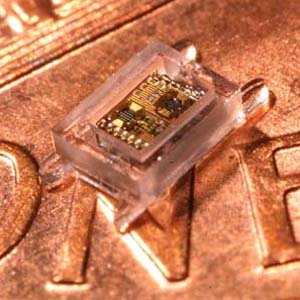
US scientists have successfully built the world's smallest computer system, with a size of only 1 square millimeter, to help treat glaucoma patients.