Space science
Curiosity robot moves by itself
Nearly a year after successfully landing on Mars, Curiosity robotics of the US Aeronautics and Space Administration (NASA) will switch to self-driving mode.
Browse ScienceInfo articles and explainers related to Curiosity.
220 published items.
Nearly a year after successfully landing on Mars, Curiosity robotics of the US Aeronautics and Space Administration (NASA) will switch to self-driving mode.
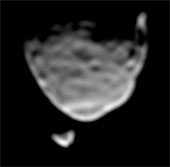
Recently, the Curiosity self-propelled robot has captured pictures showing the two Mars moons are Phobos and Deimos and sent to Earth.
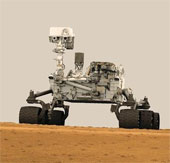
August 6 marks exactly one year of the Curiosity Mars expedition device that performs the mission of finding life on the red planet.
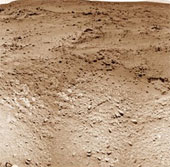
The US Aeronautics Agency (NASA) said Moot robot began to enter a phase of rolling to Mount Sharp, performing its most important mission in the quest to find signs of li…
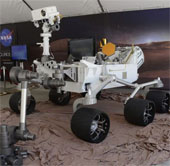
The next Mars probe of the US Space Agency (NASA) will be launched in 2020 with the mission to look for signs of life and take stone samples on the red planet to send it…
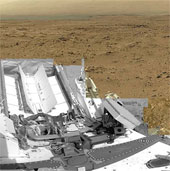
NASA has published the first official images captured by the Curiosity autonomous vehicle, images that show the Martian surface in a clear detail to each crystal.
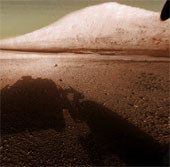
In an attempt to decipher the Red Planet's secret, the US space agency (NASA) on June 5 said that the Curiosity self-propelled probe currently on Mars will move toward d…
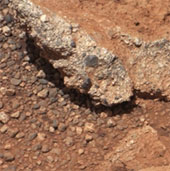
The Curiosity probe of the US Space Agency (NASA) found circular stones on Mars. Scientists say stones are only formed when they are swept away over long distances by wa…
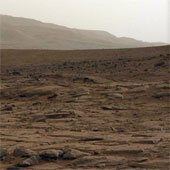
The measurement results made by Mars self-propelled Curiosity show that astronauts face more dense radiation than previously thought, complicating the potential mission…
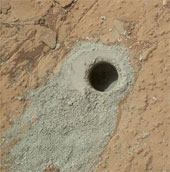
NASA's Curiosity Mars probe has made a second drill into the surface of the red planet to collect specimens for the analysis of life's traces, UPI said. know on 20/5.
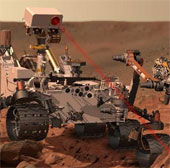
The Curiosity probe of the US Aerospace Agency (NASA) has found evidence that up to 90% of Mars's original atmosphere has disappeared into space throughout the history o…
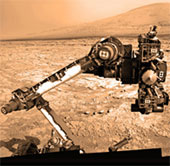
Earth, sun and Mars will line up in April, with the sun in the middle. So, if we look at the Earth in April, we won't see Mars due to the red planet
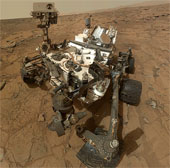
John Grotzinger, a California Institute of Technology scientist, said the incident happened when Curiosity sent radio data to Earth on March 17, US time, Space reported.

After more than eight months of Mars exploration, NASA's Curiosity probe captured a panoramic view of the 5,486-meter-tall Aeolis Mons in the center of the Gale Crater b…
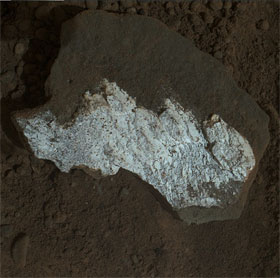
The presence of a white stone on Mars made the scientists of the US Space Agency (NASA) stunned.