New technology
Creating two-dimensional materials cannot be found in nature
A team of RMIT University researchers in Melbourne, Australia has successfully developed an ultra-thin 2D material with a thickness just equal to atoms.
Browse ScienceInfo articles and explainers related to Dimension.
100 published items.
A team of RMIT University researchers in Melbourne, Australia has successfully developed an ultra-thin 2D material with a thickness just equal to atoms.

For the first time, the DNA chromosome is modeled as a three-dimensional structure.

This device is called Digital Holographic Microscope and it is designed to find bacteria in space.
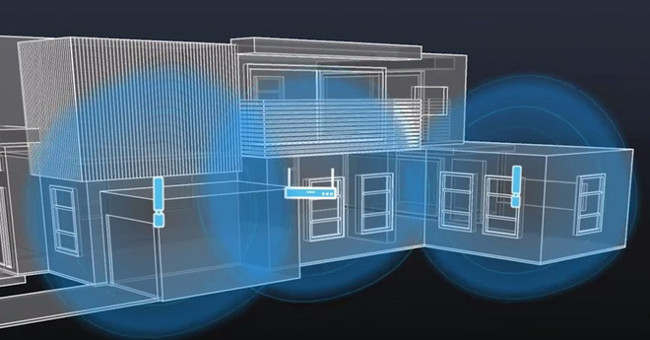
German scientists have found a way to exploit the special feature of Wi-Fi waves to capture three-dimensional images, or 3D images of objects through walls.

This is the world's thinnest 3D image, meaning that we will have a closer look at the world in video.

Gatebox device plays the role as
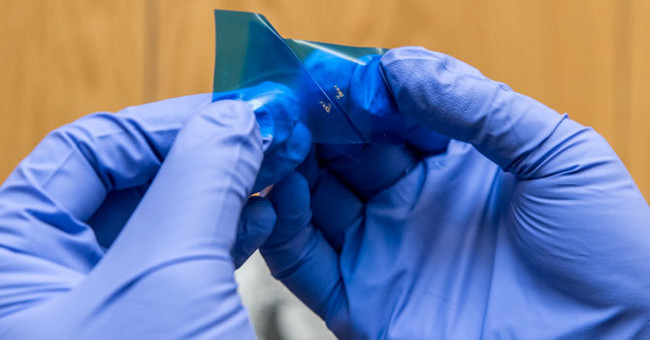
Physicists are still testing possible 2-dimensional quantum materials
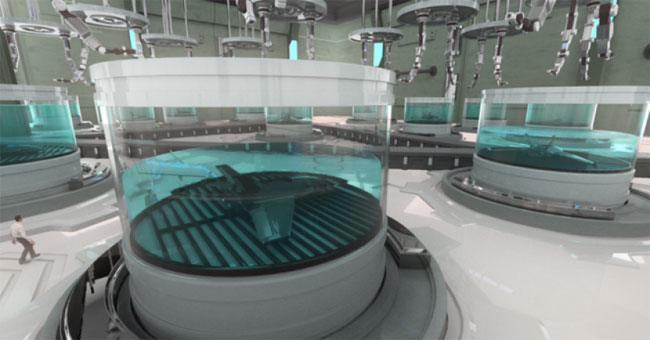
By combining 3D printing technology and using specific chemicals, scientists can turn small-sized aircraft with their palms much larger.

Scientists at the University of Vienna in Austria have made the world's most rigid material, called carbyne, with the most advanced technology.
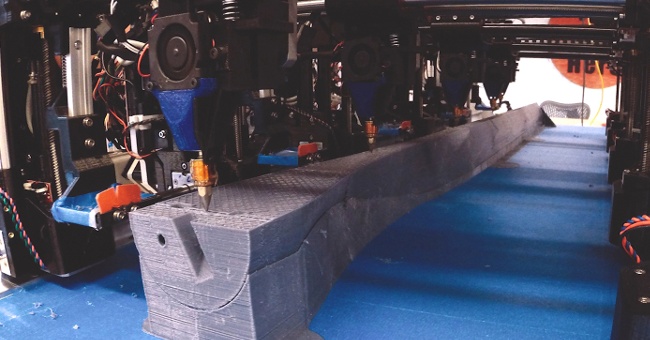
Autodesk creates a multi-head printing system, which makes manufacturing of large parts quick and easy.
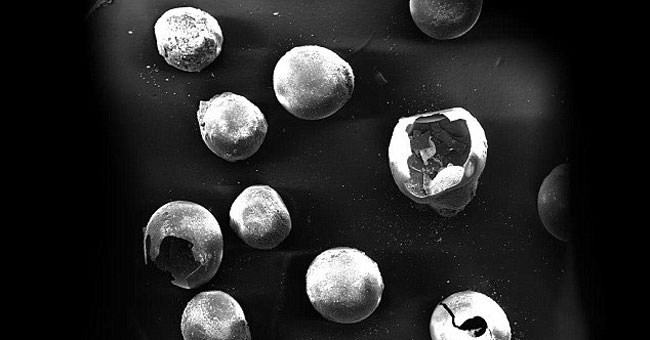
Scientists have sought to develop a structural coating of millions of tiny, hollow carbon globes, tightly packed into a single hexagon, made of carbonized sugar, which c…
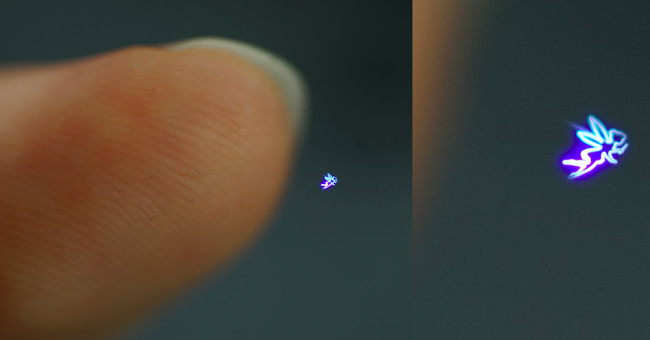
Japanese researchers have created three-dimensional imagery that can be touched. Prior to this, the technology that made these images burns when exposed.
The US Patent and Trademark Office (USPTO) has unveiled a license that Apple has registered, indicating that in the near future users will be able to control Apple devic…

Is the liquid, of course, softer than the solid, and whether putting liquid droplets into a solid will make it softer?
One day, you could stick a temporary tattoo on your skin in the form of layers of tiny light-emitting diodes.