
Space science
What Are Meteor Showers and What Causes Them?
Meteor showers happen when Earth passes through streams of small particles left along the orbits of comets or, in some cases, asteroid-like bodies. The particles enter t…
Browse ScienceInfo articles and explainers related to Earth'.
6,634 published items.
Meteor showers happen when Earth passes through streams of small particles left along the orbits of comets or, in some cases, asteroid-like bodies. The particles enter t…
Seismic waves are vibrations that carry energy away from an earthquake, explosion or other sudden source. Their speed and path depend on the elastic properties and densi…
Plate tectonics is the framework that explains the large-scale motion of Earth's rigid outer shell. The lithosphere is broken into plates that move over the weaker asthe…
Volcanoes erupt when magma and gases move from depth toward Earth's surface and pressure overcomes the strength of surrounding rock. The style of eruption depends on mag…
Space weather describes changing conditions in the Sun, solar wind, magnetosphere, ionosphere and thermosphere that can affect technology and operations near Earth. It i…
A geomagnetic storm is a prolonged disturbance of Earth's magnetosphere caused by enhanced energy transfer from the solar wind. The most significant storms are often ass…
A solar flare is a rapid release of magnetic energy in the Sun's atmosphere. Flares can brighten dramatically in X-rays and extreme ultraviolet radiation and can acceler…
Aurora forecasts combine measurements of the Sun and solar wind with models of Earth's magnetosphere. Scientists are not predicting a fixed light show at a precise stree…
Auroras occur when energetic charged particles are guided by Earth's magnetic field into the upper atmosphere, where collisions with oxygen and nitrogen produce light. T…
Proxima Centauri b is the nearest confirmed exoplanet to Earth known today, orbiting Proxima Centauri a little more than four light-years from our solar system.
A potentially habitable exoplanet is a world where known conditions could allow environments suitable for life as we understand it; being in a star’s habitable zone is o…
Exoplanets are planets beyond our solar system. They range from small rocky worlds to giant planets and can orbit stars very different from the Sun.
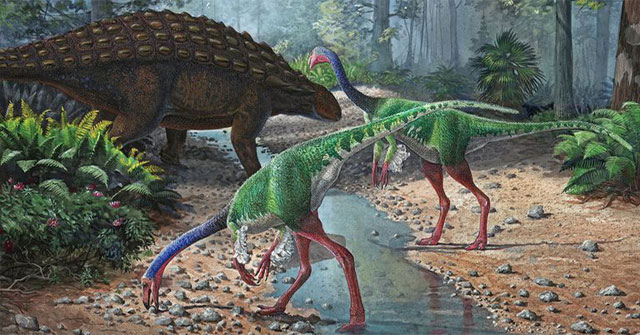
Dinosaurs are among the most famous ancient creatures on Earth, with countless fascinating mysteries that are still being uncovered today.
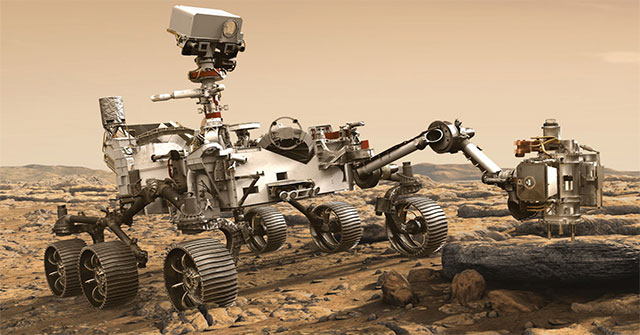
The NASA robot completed its mission as originally planned, lasting 687 Earth days or a Martian year, and began its extended mission.
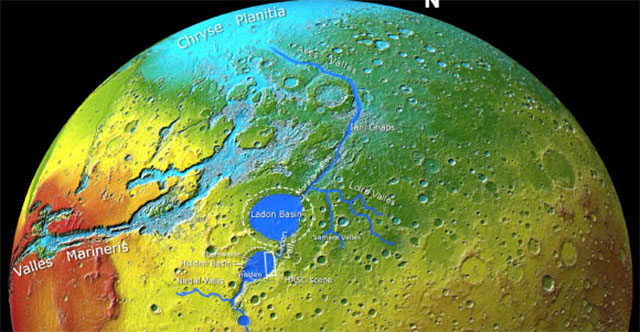
A vast river delta, once indistinguishable from existing river deltas on Earth and possibly teeming with fossils of extraterrestrial life, has been identified by the Mar…