
Discover science
Strange effects of tears
Does that mean that when she sobbed at the Grammy Awards last year, did Adele know that her tears were a good cleanser for the eyes? Here are some summaries of Cara Lee…
Browse ScienceInfo articles and explainers related to Eye.
865 published items.
Does that mean that when she sobbed at the Grammy Awards last year, did Adele know that her tears were a good cleanser for the eyes? Here are some summaries of Cara Lee…

Have you ever wondered just how deep the scallop eye or the ocean really is? The results of recent scientific discoveries will help us understand some of the wonders of…
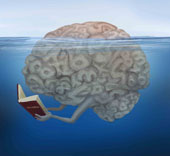
According to Live Science, in a series of experiments at the Jewish University of Jerusalem, more than 300 volunteer students were unconsciously exposed to words and mat…

Lies won't make your nose grow like a Pinocchio, but will actually warm up your olfactory organ, according to a new study by Spanish scientists.
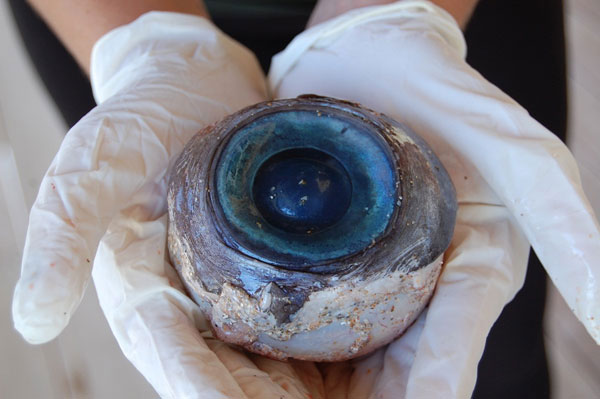
Researchers have identified the source of the giant blue eyeballs that drifted to the Florida coast to sparkle last week from a swordfish thrown into the sea.

The relationship has been confirmed between eye movement and truth or lie is a key element in thinking language programming (NLP) - a method to improve people's lives wi…
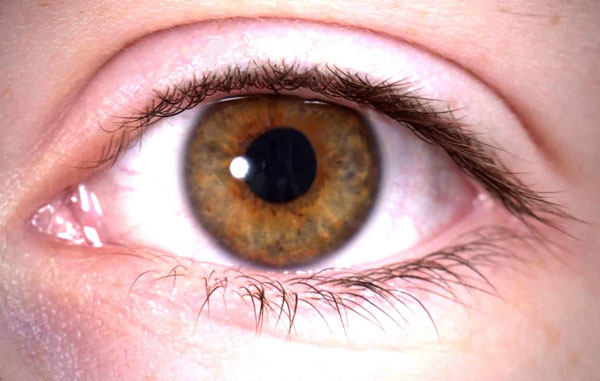
The vision of the human eye can extend as far as the horizon. If the Earth is flat (not the present sphere), you can even feel the light hundreds of miles away and at ni…

New research shows that people living in high latitudes have eyeballs and bigger brains than others.
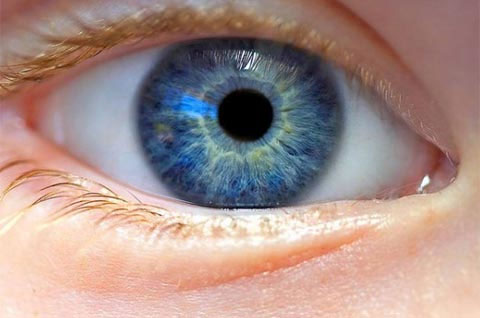

According to US scientists, silicone oil helps reduce eye damage when patients use radiation therapy to treat tumors.

East Asians are often more difficult than Europeans to distinguish a frightened face with a surprised face, or a disgusted face with an angry face.

Researchers have figured out how the first evolutionary eyes work and how they guide the marine life to light.
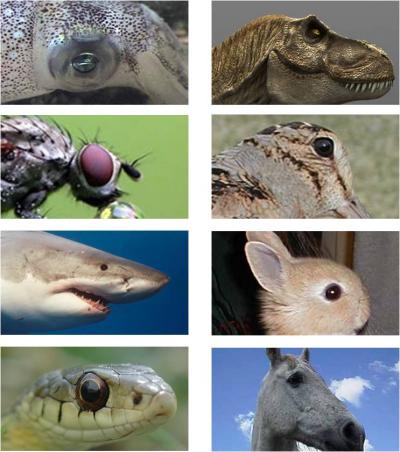
A new study by a scientist at Rensselaer Polytechnic Institute has discovered the advantage of binocular vision: the ability to see through objects.
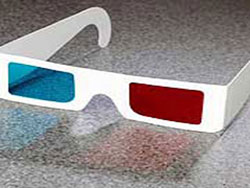
3-D glasses are based on a technique called stereoscopic imaging, in which 2-D images are combined to create an illusion of depth.

A study of hundreds of volunteers at the University of Stirling and Aberdeen, England, found that if your eyes were slipping away, only a few made you less attractive.