
Science story
The inventor invented the two most dangerous things in the world
Thomas J. Midgley is now considered one of the most dangerous inventors in history, because he invented leaded gasoline and CFC gas.
Browse ScienceInfo articles and explainers related to Gas.
1,386 published items.
Thomas J. Midgley is now considered one of the most dangerous inventors in history, because he invented leaded gasoline and CFC gas.
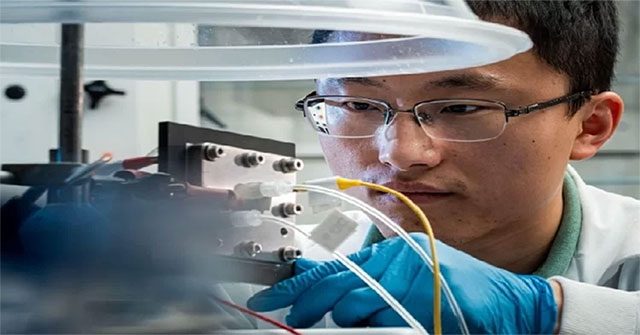
The electrolytic reactor built at Rice University can recycle CO2 to create pure liquid fuel that uses electricity.

Astronomers have just discovered a planet with an 'unlike anyone' orbit, moving around the central star like a comet instead of like other planets.

Astronomers found evidence of the existence of an unknown moon full of active volcanoes.

Many mysterious lands in the world are thought to be the gateway to the afterlife, from a permanent fire pit in Turkmenistan to the sinking holes in Mexico.

The skull fossils of a prehistoric primates living in the Andes mountains 20 million years ago help scientists 'uncover the mystery of' the evolution of the human brain

Constellation IC 2177 is where new stars are born. This area includes dust, hydrogen, helium and traces of some heavy elements.
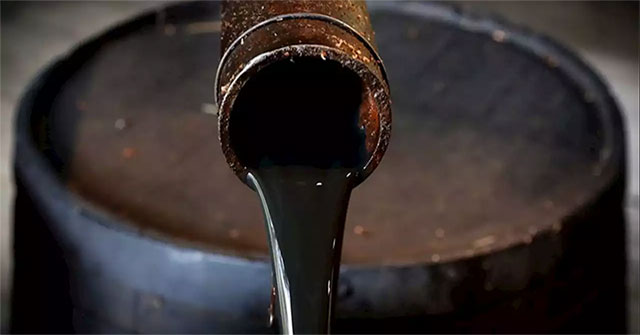
This is considered a breakthrough achievement in clean energy production process as well as the fight against climate change.

Discovering a new planet revolves around Beta Pictoiris, a young star in our Milky Way galaxy

Underneath the Arctic there is a deep layer of earth containing many ancient, undecided organisms, confined to permafrost. It will be disastrous if the grave is accident…

Recent research shows that marine species (scientific name: Minuca Pugnax) is one of the 'culprits' that releases a lot of greenhouse gases into the environment due to t…
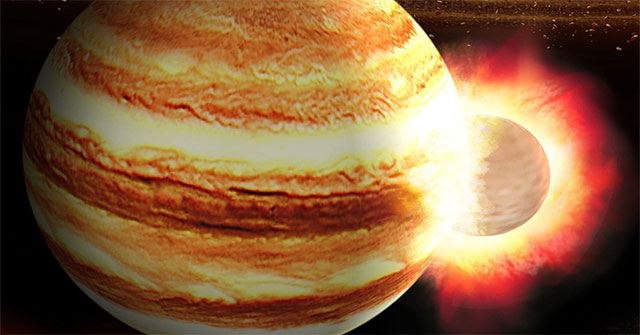
Jupiter is a giant sphere of gas that is always in a boiling state, and it is difficult to see through thick clouds to see its core.

Yanar Bulag spring water near Astara city in southern Azerbaijan can easily catch fire due to high methane content.

On a cool summer day, the temperature inside a sealed car can quickly exceed 52 ° C.
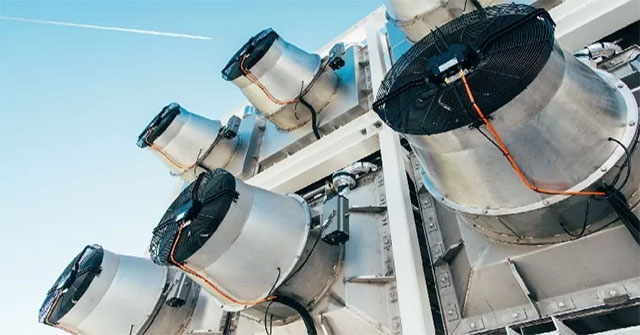
Although it works to collect CO2 and cut greenhouse gases, technology can consume 1/4 of global energy by 2100.