
Medicine - Health
Artificial heart self-regulating Carmat for the first time implanted
On Wednesday in Paris, a 75-year-old man successfully implanted an artificial heart.
Browse ScienceInfo articles and explainers related to Human.
6,757 published items.
On Wednesday in Paris, a 75-year-old man successfully implanted an artificial heart.

According to French press on December 21, for the first time in the world, an artificial heart completely beat in the human chest.
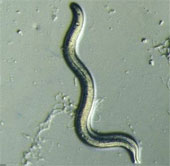
Recently, scientists at the University of California have discovered a factor that prolongs life expectancy for people up to 500 years from the gene of a small worm call…

Dutch and Qatar scientists announced on December 17 that they had proved camels infected with the Middle East Respiratory Syndrome (MERS-CoV) virus.

In the arms race with the US Cold War, the Soviet Union spent $ 1 billion on developing a weapon capable of controlling the human brain, according to a recent report by…

2013 has witnessed many important and important advances in the field of medicine. The most significant is finding a way to help a child infected with HIV immediately af…
The nerve cells of the human brain are genetically heterogeneous, a group of US-Russian scientists proved.
Research on sperm, eggs, sex ... has set the stage for scientists to better understand
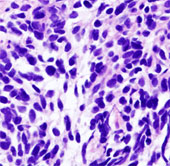
Researchers at Columbia University Medical Center (CUMC) have successfully converted human stem cells into fully functional lung cells.
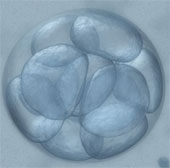
Australian scientists have reported the discovery of a change in the shape of cells during embryogenesis, paving the way for improving in vitro fertilization (IVF) in hu…

Scientists have found a way to process cheese from the bacteria that inhabit the legs, navel and even in the armpit of a person.
The research team at the University of Louisville, USA has just announced that within 10 years, a human heart capable of transplantation will become a reality.
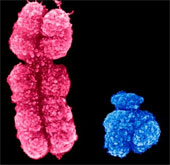
Through mouse experiments, US scientists found that males can still reproduce even though most genes are removed on the Y chromosome.

Here are five of the most terrifying diseases that have claimed many lives worldwide in the history of human development.
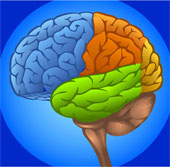
A person's brain can 'see' things even when he or she does not see them, and this finding is completely contrary to long-accepted hypotheses about how the brain processe…