New technology
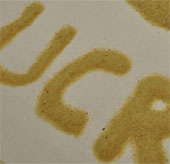
Using sand as an anode, triple the performance for Li-ion batteries
The anode of Lithium-ion (Li-ion) batteries is usually made of graphite (graphite) but many believe that the performance of this material has reached its limit.
Browse ScienceInfo articles and explainers related to Ion.
168 published items.
The anode of Lithium-ion (Li-ion) batteries is usually made of graphite (graphite) but many believe that the performance of this material has reached its limit.
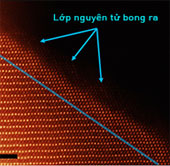
Every time you charge lithium-ion batteries, its energy storage capacity decreases little by little.
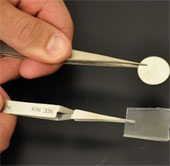
Silly Putty was invented quite casually in a study to produce artificial rubber to compensate for the lack of this material during World War II.

Airbus has announced plans to build a smaller aircraft powered by hybrid electric motors, similar to the current approach by automakers.
Researchers have discovered a component called fluoride polymer (also known as PFPE), which can be used to produce non-flammable, flammable batteries such as lithium bat…

Scientists and law experts expressed concern that an ambitious experiment using a super accelerator could accidentally destroy Earth.

Lithium-Air (Li-Air) is one of the most advanced battery technology in the world.
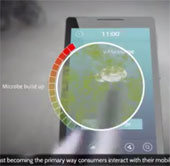
According to Pocket-link, the new glass is built on silver ion technology with a special antimicrobial agent, which can automatically inhibit the growth of algae, bacter…

Russian chemists together with their Singapore and Israeli colleagues have created new materials to produce anode for sodium-ion batteries.
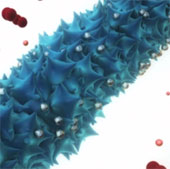
In recent years, Lithium-air - battery technology promises to improve the energy density of lithium-ion batteries.

A team of researchers from Harvard University's School of Engineering and Applied Sciences (SEAS) has created a flexible speaker from gel ion material.
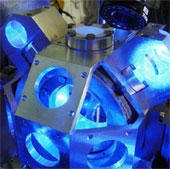
This so-called optical lattice is only 1 second wrong for 300 million years, meaning it is three times more accurate than the current atomic clock.
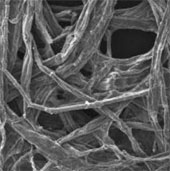
Today, there are many new battery technologies that scientists are turning to, such as small, lightweight Li-S batteries, or fast rechargeable batteries.

In the future, don't be surprised when walls can 'chat' with you, if you stand in an 'iPad home', when all surfaces are touch screens.
Researchers at Oak Ridge National Laboratory - ORNL (Tennessee, USA) developed a solid electrolyte to replace flammable substances used in lithium-ion batteries.