New technology
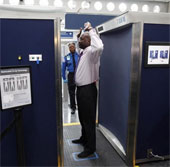
Application of laser to detect drug, explosive remotely
A team of specialists from the Siberian National Geographic Institute (SSGA) in Novosibirsk, Russia, has developed a method of using laser radiation (infrared) to detect…
Browse ScienceInfo articles and explainers related to Laser.
501 published items.
A team of specialists from the Siberian National Geographic Institute (SSGA) in Novosibirsk, Russia, has developed a method of using laser radiation (infrared) to detect…
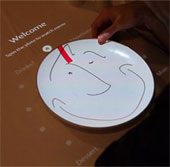
Two students at the University of New York have devised a way to make the menu selection of the restaurant more attractive.
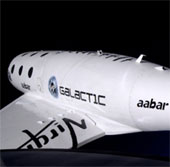
With the Virgin Galactic Company, 2014 is the year in which they will make the first space tour. It is just one of many events, ideas, trends in the field of science and…
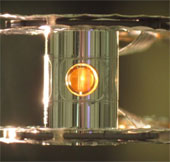
After years of research, a giant laser complex has been developed by scientists and the first successful step is to be able to achieve a fusion reaction similar to the S…
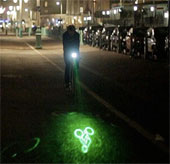
Eco-friendly air filter bicycles or laser bicycles contribute to limiting traffic accidents are smart bike technologies that may be put into future applications.
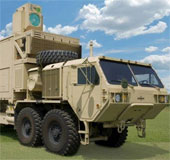
The US military has developed a new weapon that can shoot down unmanned aerial vehicles, more importantly it is more efficient and less expensive, as well as never used…
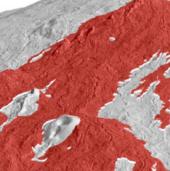
Scientists have developed a technology that uses 3D imagery to study the flow of volcanic lava, to reduce human damage.
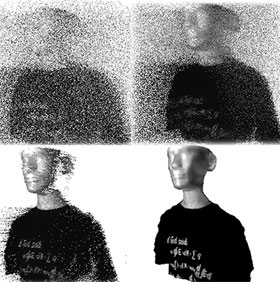
MIT has recently developed a camera capable of taking pictures in nearly dark environments.
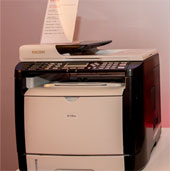
Printer manufacturer Ricoh (Japan) has announced the SP200 series high speed laser printer and the ability to replace the super speed.
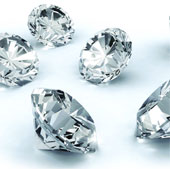
Russian scientists have come up with a method that can help distinguish real or fake diamonds.

Researchers at the South African Research Council for Science and Industry (CSIR) have developed the world's first digital laser.
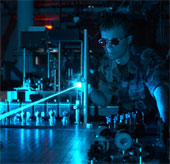
For nearly two decades, the US Army Research Laboratory strives to develop materials to protect ground-based vehicles and soldiers from lasers.
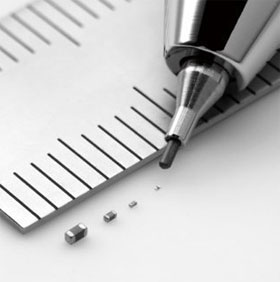
From the world's smallest semiconductor laser to a bee-sized robot, many of them are so small that they cannot be seen with the naked eye, but they are actually changing…

UK scientists have just announced the clock can calculate life expectancy, assess human health status by laser scanning technology.
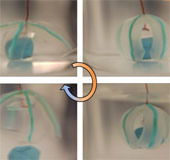
In May, researchers at the University of California created a hydrogel that could bend in near infrared laser light and today the University of North Carolina continues…