
Space science
How Are Exoplanets Detected?
Astronomers detect exoplanets through transits, stellar wobble, direct imaging, microlensing, astrometry and timing signals, then use follow-up observations to rule out…
Browse ScienceInfo articles and explainers related to Light.
3,286 published items.
Astronomers detect exoplanets through transits, stellar wobble, direct imaging, microlensing, astrometry and timing signals, then use follow-up observations to rule out…
Meteor showers happen when Earth passes through streams of small particles left along the orbits of comets or, in some cases, asteroid-like bodies. The particles enter t…
Auroras occur when energetic charged particles are guided by Earth's magnetic field into the upper atmosphere, where collisions with oxygen and nitrogen produce light. T…
A black hole is a region where matter has been compressed so strongly that, inside a boundary called the event horizon, escape would require moving faster than light. Bl…
A fusion reactor aims to create a hot plasma in which light nuclei fuse, confine or compress that plasma long enough to release useful energy, then capture the energy in…
Exoplanet atmospheres can reveal molecules, temperatures, clouds, circulation and clues to a planet’s formation, climate and possible habitability by imprinting chemical…
Proxima Centauri b is the nearest confirmed exoplanet to Earth known today, orbiting Proxima Centauri a little more than four light-years from our solar system.
Astronomers usually detect exoplanets indirectly, by measuring how a planet changes the light, motion, or gravitational behavior of its host star.
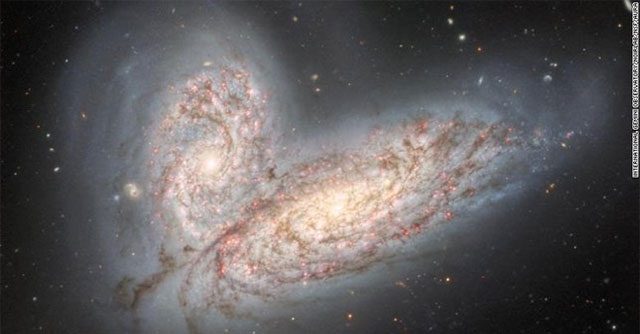
The Gemini North telescope, located atop Maunakea in Hawaii, USA, has discovered interacting spiral galaxies approximately 60 million light-years away in the constellati…
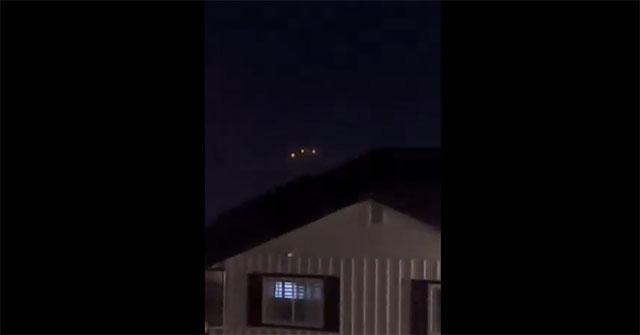
A strange phenomenon was observed by many residents in the sky near San Diego on the evening of June 27th.

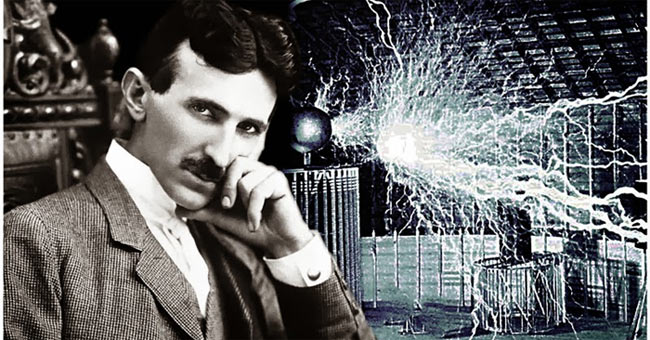
The speed of light, equivalent to 299,792,458 m/s, is considered the maximum speed limit revealed by Einstein's theory of relativity.
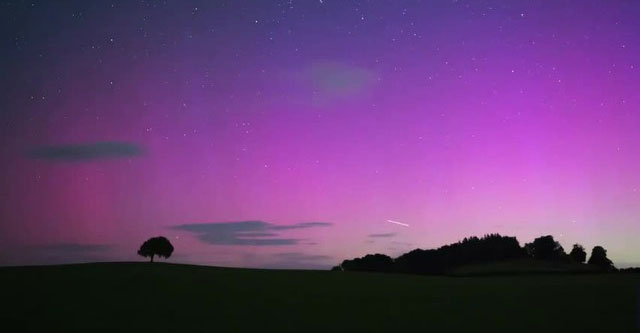
The combination of the aurora borealis and the Perseid meteor shower is a rare and spectacular event that leaves many sky enthusiasts in awe.
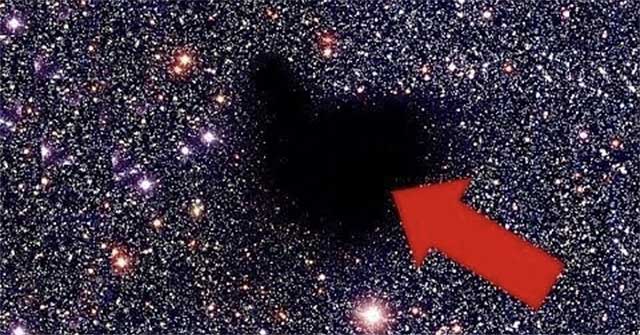
The Boötes void or giant void is a very large, nearly spherical region containing very few galaxies. It is located in the vicinity of the constellation Boötes.
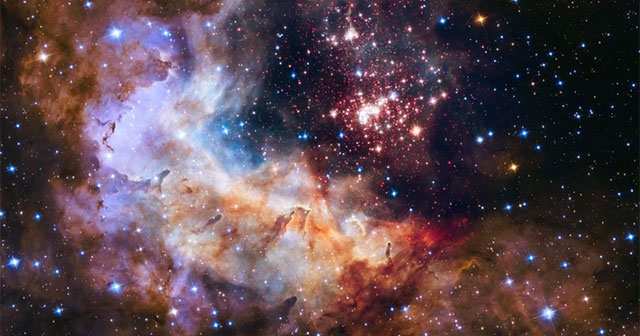
The universe is about 13.8 billion years old, but how do we know that?