Space science
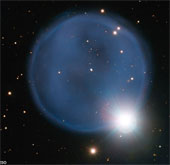
Discovered nebula like engagement ring
If you look at a circular nebula about 2,500 light-years from Earth, you might think it's a giant engagement ring in the universe.
Browse ScienceInfo articles and explainers related to Like.
5,993 published items.
If you look at a circular nebula about 2,500 light-years from Earth, you might think it's a giant engagement ring in the universe.
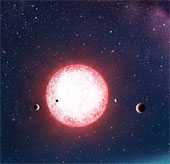
For the first time, scientists discovered planets that exist in liquid form similar in size to the earth.

The telescope of the US Aeronautics and Space Administration (NASA) recently discovered 715 planets outside the solar system, which could help study Earth-like planets.
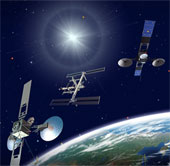
The United States is focusing on creating micro satellites that act as cosmic police, like traffic police on the universe.
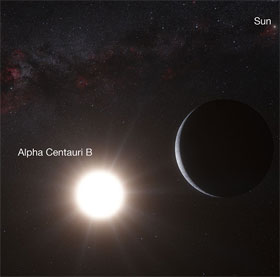
The closest neighbor of the sun may contain a more evolved life-like planet than Earth, with islands on the surface, shallow waters and a sloping sea floor.
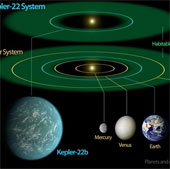
Astronomers call them such super-Earths and planets so much outside our solar system.
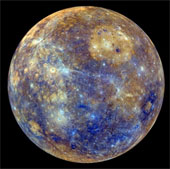
The smallest planet and the closest to the sun are shrinking in size faster than previously calculated by experts.
It's like a nightmare scenario in science fiction movies, but an expert said China is planning to turn the Moon into a missile base.
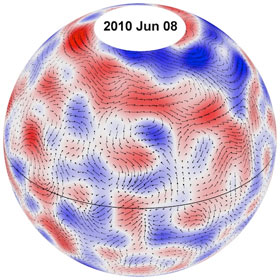
Scientists have predicted that the sun has a particle-like structure (matter particle). Each particle of this matter can be 16 times larger than the Earth.
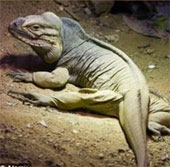
According to some UFO sites, new strange objects discovered on Mars are actually a fossil fossil.
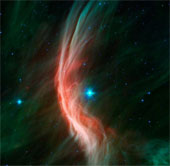
For the first time, scientists have obtained the sound of the deep universe, and it sounds like a chirping called the dawn of birds in the spring.
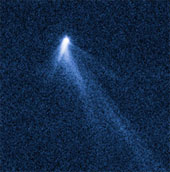
The Hubble telescope's image study, scientists said they saw an
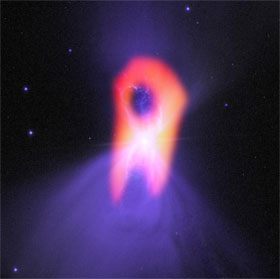
International astronomers have just confirmed the Boomerang nebula, 5,000 light-years from Earth, the coldest region in the universe with a temperature of about -272.2 d…
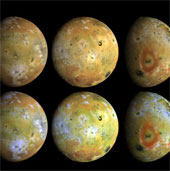
Our planet 4 billion years ago is very likely to be like the moon Io is always busy with Jupiter's volcanic activity.
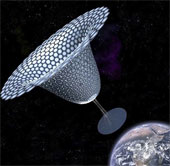
The US space agency (NASA) is developing a glass-like satellite, which can provide one-third of the world's energy needs by 2025.