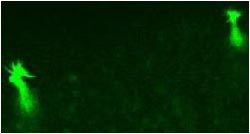
Animal world
Mice use specialized neurons to detect carbon dioxide in the air
For rats, carbon dioxide means danger. New research from Rockefeller University proves that mice have a way to identify carbon dioxide related to a particular olfactory…
Browse ScienceInfo articles and explainers related to Mice.
834 published items.
For rats, carbon dioxide means danger. New research from Rockefeller University proves that mice have a way to identify carbon dioxide related to a particular olfactory…
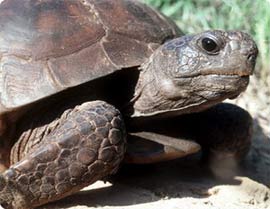
In nature there is a close relationship between age and the likelihood of cancer. For mice with an average life expectancy of 2 years, the age of the most likely to deve…

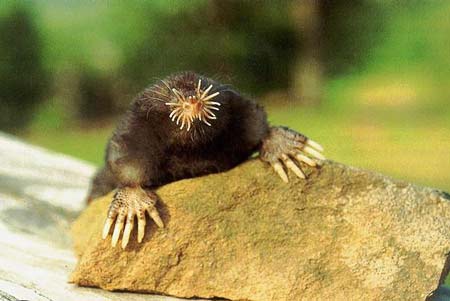
It is believed that amphibian mammals cannot smell when they dive into the water. But an American scientist has discovered that star-nosed mice in North America have the…

Food will be more damaged if stored in a low temperature environment, such as in a refrigerator. The same principle can also be applied to increase the lifespan of anima…

Contrary to the funny images in the animated film Tom and Jerry, the mice do not like cheese.

Someday, the 'descendant' of mammoth mammoth mammoth mammoths will probably reappear on Earth. Japanese scientists

A US team has discovered new receptors that mice use to detect pheromones - the sex hormones released by potential partners. A & a
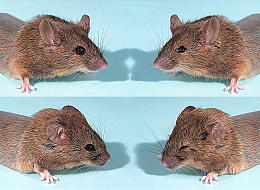
American scientists brought a mouse back to about 500 million years ago by reversing the evolutionary process. By changing the mouse's genetic pattern, scientists create…
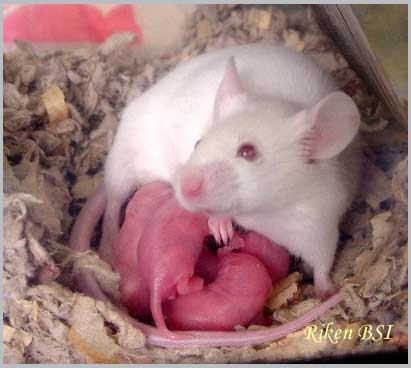
Mice eat parts of plants including seeds, green branches and leaves as well as almost all food of humans and pets. They cause terrible damage, destroying or contaminatin…

Lola and Espejo, two long-eyed beards, are being trained by Colombian police to sniff out bombs and mines. They belong to the force of 6 experimental mice prepared to la…

Chinchilla mice are rodents with the scientific name Abrrocoma cinerea. This animal has the shape of a mouse, has the same fur as the fur of Chinchilla squirrel. It is b…
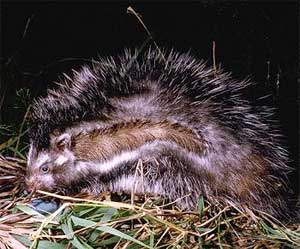
Porcupines have the scientific name Lophiomys imhausi, they are also known as crested rats or mice with manes. Although it is a mouse, this rodent animal does not look l…
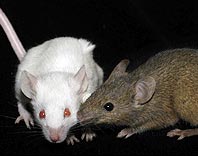
The mouse may not sing to beg for food, but the mouse sings to please his partner. Researchers at the University of Washington, USA, discovered this when they eavesdropp…
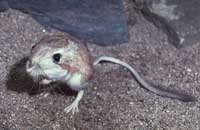
Mouse kDipodomys deserti has bags on the cheek (in the mouth). Strangely, these bags can be used as food storage for weeks. Thanks to the body accumulates water from foo…