
Biology
Plants know how to swim to avoid enemies
Susanne Menden-Deuer, a marine expert at the University of Rhode Island in the US, and her colleagues observed Heterosigma akashiwo, a microalgae, in the lab. Livescienc…
Browse ScienceInfo articles and explainers related to Microscopic.
105 published items.
Susanne Menden-Deuer, a marine expert at the University of Rhode Island in the US, and her colleagues observed Heterosigma akashiwo, a microalgae, in the lab. Livescienc…

The research group from Wageningen University (Netherlands) was the first to implement high-speed camera footage of parasitic insects with wingspan of about 1mm.

The 3-millimeter, 'tiny' caterpillar, lives at Hembury Woods, Devon, England, officially recognized as an 'unprecedented animal'.

In the microscopic world, even small creatures like bacteria know how to adopt a cooperative and sacrifice strategy to ensure the survival of the community.

Nanotechnology is welcomed as the science of the future, with microscopic particles that create innovations that remove facial folds, make beer bottles stronger and wash…
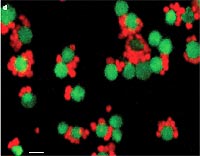
US scientists have found that in calcified arteries, there are spheres of less than one fifth of the smallest creature. They think it is also a form of life. Exist or no…
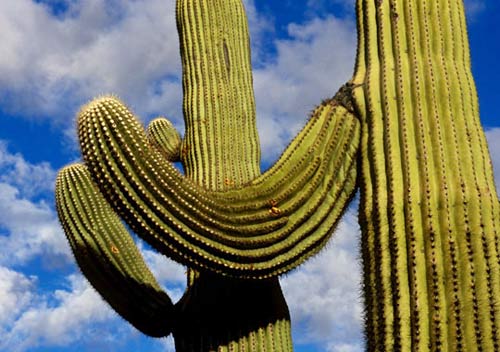
Although most of the cacti appear to have no leaves on the surface, a new study confirms that all these thorny plants actually have microscopic leaves.
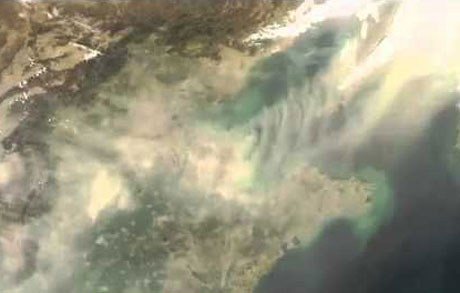
A study by the US Aerospace Agency (NASA), published in Science, proves that about half of microscopic dust particles in the North American atmosphere come from outside.

The atmosphere in some schools may contain contaminants in the form of dispersed microscopic particles.

Nikon organizes an annual contest to look for the best photos to capture the world of microorganisms, viruses and microscopic objects under the microscope's magnificatio…

Photographs of the world of microorganisms, viruses and microscopic objects under the magnification of the microscope - a mystical world with deadly beauty but also full…
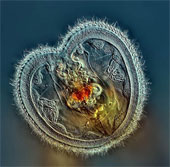
The beauty and nature of life of the micro-world is shown through photos of the award of the international competition.
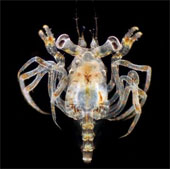
The microorganisms that live in the sea are clearly visible through images magnifying from tens to hundreds of times under a microscope.
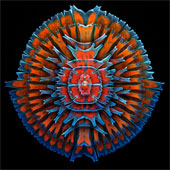
Scientists can study the colorful life of animals and plants in the natural environment by observing and recording microscopic images.
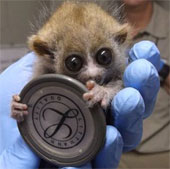
Two newly born twin loris were born in El Paso, Texas (USA) zoo, which is button-sized and weighs only about 25 grams.