Scientific works
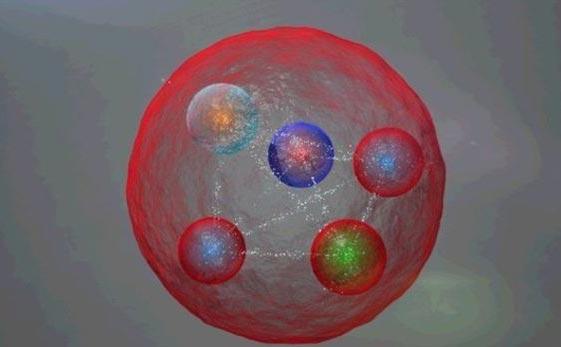
Pentaquark - newly discovered atomic particles
Scientists working with large particle accelerators (LHC) have announced the discovery of a new type of particle, called pentaquark.
Browse ScienceInfo articles and explainers related to Particle.
803 published items.
Scientists working with large particle accelerators (LHC) have announced the discovery of a new type of particle, called pentaquark.
Chinese scientists are rushing to complete the plan to build giant particle accelerators, larger in size than any other accelerator in the world.
To cater to studies of the composition of the universe such as particle physics or dark matter, experts have built many special underground laboratories.
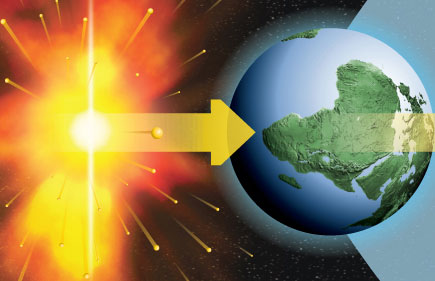
A telescope more than 800m will be installed at a depth of 3.6km under the Mediterranean Sea. This telescope is used to detect elusive particles such as neutrinos, when…

Scientists from the European Center for Nuclear Research (CERN) have planned to stop by the end of 2012 the LHC large particle accelerator ...
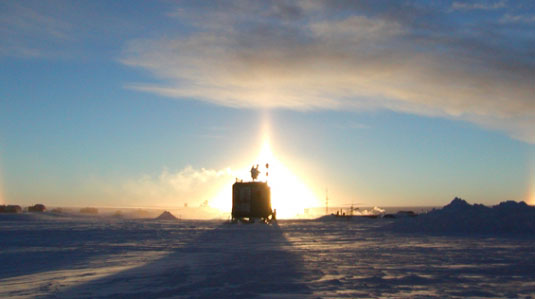
This observatory, IceCube, was built from a giant block of ice in the southern tip of Antarctica, to detect neutrinos - a type of particle that is thought to be mystical…

The biggest pride of GSI Scientific Research Center (Germany) is the nuclear scientists here, on their UNILAC heavy ion accelerator ...

The giant particle accelerator (LHC) for the first time accelerated the speed of firing proton beams, sparking human hope in an effort to discover the origin of the univ…

Only 10 days after the beginning of the operation, the most expensive experiment in human history was broken.

A 22-member committee of the US National Science Foundation (NSF) agreed to choose the Homestake gold mine in South Dakota to build a large underground laboratory.
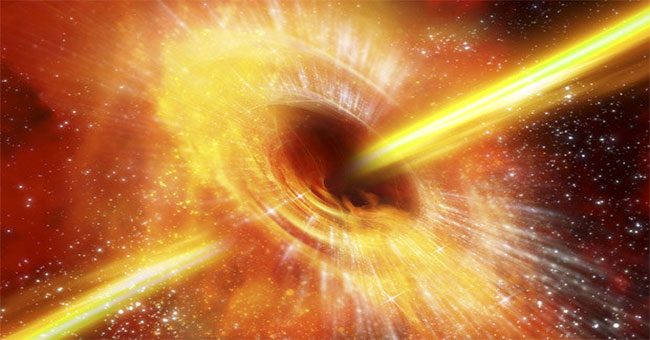
China is planning to build a particle accelerator with a length of about 54km - twice as long and 7 times as powerful as the Large Hadron Collider (LHC) located in Switz…
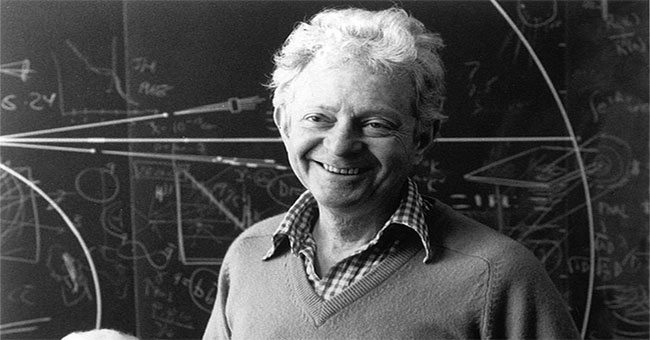
Over the past 7 years, he has struggled with illness and his health has been waning. Even in 2015, he had to auction his Nobel Prize to get $ 750,000 to pay the hospital…

Indian philosopher and philosopher Acharya Kanad is considered to be the first foundation for atomic theory more than two thousand years ago.

Ernest Rutherford is a physicist operating in the field of radiation and atomic construction.
Professor Peter Higgs, who first published the hypothesis of the existence of the Higgs, wanted people to stop calling it