Space science
NASA uses lasers to transmit data to a moon satellite
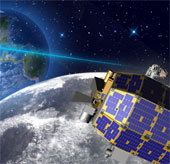
NASA recently reported that it has successfully carried out data transmission from the laser to the Moon at a speed of 622Mbps at a distance of 384,630km.
Browse ScienceInfo articles and explainers related to Speed.
1,518 published items.
NASA recently reported that it has successfully carried out data transmission from the laser to the Moon at a speed of 622Mbps at a distance of 384,630km.
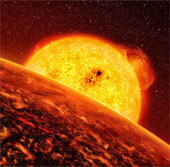
Scientists have discovered 6 planetary candidates with orbiting speed, only 4 hours to complete the rotation around their star.
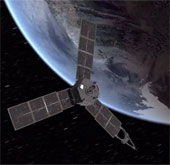
The Juno probe of the US Aeronautics and Space Agency (NASA) on October 9 flew 559km from Earth.
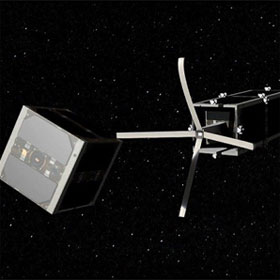

Thanks to the support of modern satellites, scientists can monitor the level
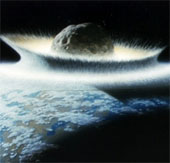
Currently, the Earth is still peaceful, but there are still hundreds of potentially dangerous meteorites (NEOs) for our planet.
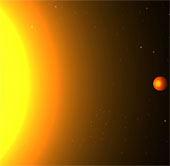
With the newly discovered planet, its year is just one day of working on Earth, about 8:30.
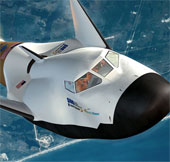
The US Aeronautics and Space Agency (NASA) is speeding up the development of a space taxi in the agency's commercial spacecraft program, according to Reuters on July 31.
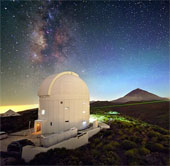
A state-of-the-art laser system that accelerates the speed of spatial data transmission has passed an important test, according to European experts.
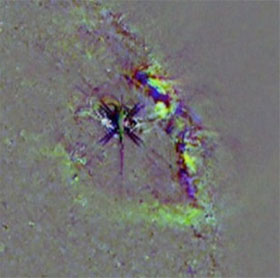
Japanese and American artificial satellites capture the phenomenon of a series of 'tsunamis' spreading on the surface of the Sun at tremendous speeds.
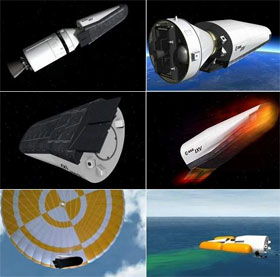
The European aviation agency is developing a spacecraft that can return to a safe atmosphere, a key technology for missions to conquer space in the future.
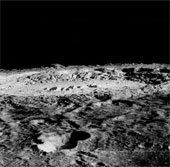
This statement was made in an article published in Nature Geoscience. Scientists have used computers to show that these rare minerals may not have originated from the Mo…
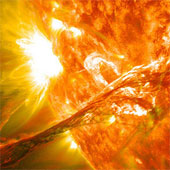
Chinese scientists say they have found a new way to detect the direction of the eruption of coronal material on the sun's surface, the culprit behind the solar storms.
This is the result published by American researcher Matthew Huber, Purdue University, USA.
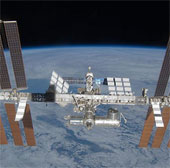
The US Aeronautics Agency (NASA) said the astronauts on the International Space Station (ISS) have detected an ammonia leak in the cooling system outside the facility.