
Medicine - Health
Find out how to detect cancer early
Scientists at Stanford Medical University (USA) have discovered a new method that can detect cancer in the early stages with a micro-DNA sequence.
Browse ScienceInfo articles and explainers related to University.
4,907 published items.
Scientists at Stanford Medical University (USA) have discovered a new method that can detect cancer in the early stages with a micro-DNA sequence.
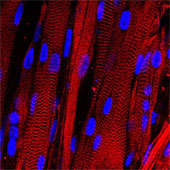
A group of scientists from Duke University have studied the development of human skeletal muscle from a laboratory capable of responding to effects like true skeletal mu…

Nightmares are becoming the subject of scientific research to understand the mechanism and find ways to eliminate bad dreams.

Swiss University hospital researchers (HUG) based in Switzerland on January 5 announced that they will continue testing an Ebola virus vaccine after a pause.
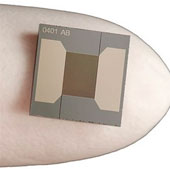
Recently, scientists from Cambridge University, England have successfully developed ultra-small electronic nose can detect early diseases such as cancer, tuberculosis ...

Christmas has come, on this occasion parents tend to buy gifts for children and even make them

A recent study by Columbia University of Business has shown that people with high status are literally changing their voices. Specifically, the loudness and sound intens…

New research has shown that eating ice cold will boost the spirit of anemia and iron deficiency.

According to a recent study, working in unusual shifts can make the brain

The team at Columbia University (USA) said they have just discovered the mechanism of communication between the tongue and the brain.

Harvard University geneticist David Liu and his research group are developing a new technique, using specialized proteins to modify the genomes of living animals.
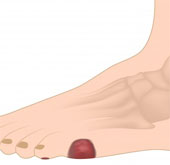
Experts from Stanford University School of Medicine (USA) have recently developed a direct drug patch to help heal wounds quickly.

UK researchers have recently discovered a relationship between height and dementia.

Strong men are often a fun topic in women's stories with the image of him moaning, grimacing when he complains non-stop because of a cold.

The researchers were able to erase the memory in mice with a beam of light in an attempt to discover how memory was recorded and thereby find ways to control them.